Introduction: What Mammals Lay Eggs
Most mammals give birth to live young, so it may seem surprising that some mammals lay eggs. But a small and remarkable group called monotremes does exactly that.
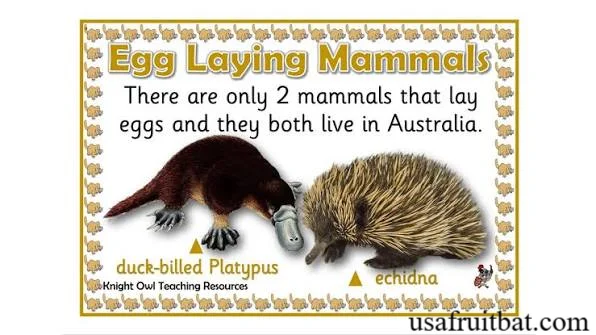
The five living mammals that lay eggs are the duck-billed platypus and four species of echidna. They are the only living egg-laying mammals known today and are found naturally in Australia and New Guinea.
These animals are still mammals because they have key mammalian characteristics, including hair and the ability to produce milk for their young. Their unusual reproduction is what makes them especially interesting to scientists and wildlife enthusiasts.
What Are Mammals That Lay Eggs Called?
Mammals that lay eggs are called monotremes.
The word refers to their unusual reproductive anatomy. Unlike placental mammals, monotremes lay soft-shelled eggs rather than giving birth to fully developed young. However, they still produce milk to nourish their offspring.
The Australian Museum classifies mammals into three major groups: monotremes, marsupials, and placental mammals. Monotremes are distinguished from the other two groups by laying eggs.
What makes monotremes different?
Monotremes share several characteristics with other mammals:
- They are warm-blooded vertebrates.
- They have hair or fur.
- Females produce milk.
- Their young depend on their mothers for nourishment.
- They have specialized mammalian anatomical features.
- Unlike most mammals, females lay eggs.
This combination of mammalian and unusual reproductive characteristics makes monotremes some of the most distinctive wildlife species on Earth.
How Many Mammals Lay Eggs?
There are five living egg-laying mammal species.
They consist of:
| Mammal | Type | Main Range |
|---|---|---|
| Platypus | Monotreme | Eastern Australia and Tasmania |
| Short-beaked echidna | Echidna | Australia, Tasmania and parts of New Guinea |
| Eastern long-beaked echidna | Echidna | New Guinea |
| Western long-beaked echidna | Echidna | New Guinea |
| Sir David’s long-beaked echidna | Echidna | New Guinea |
The Australian Museum identifies one platypus species and four living echidna species: the short-beaked echidna plus three long-beaked echidnas found in New Guinea.
How Do Egg-Laying Mammals Reproduce?
Monotreme reproduction is different from that of most mammals because females produce eggs.
After fertilization, the female lays a relatively small number of eggs. The young hatch in a highly undeveloped state and depend heavily on their mother for nourishment.
Echidnas provide a particularly interesting example. A female short-beaked echidna lays one egg, which hatches after about 10 days. The young animal remains associated with the mother’s pouch while it develops and feeds on milk. Later, when its spines develop, the mother moves it into a burrow.
How do monotremes feed their babies?
One unusual feature of monotremes is that they do not have nipples like most mammals.
Instead, milk is secreted through pores on the mother’s skin, allowing the young to obtain milk from specialized areas of the mother’s body.
So although monotremes lay eggs, they still clearly display one of the defining features of mammals: producing milk for their offspring.
5 Mammals That Lay Eggs
1. Duck-Billed Platypus
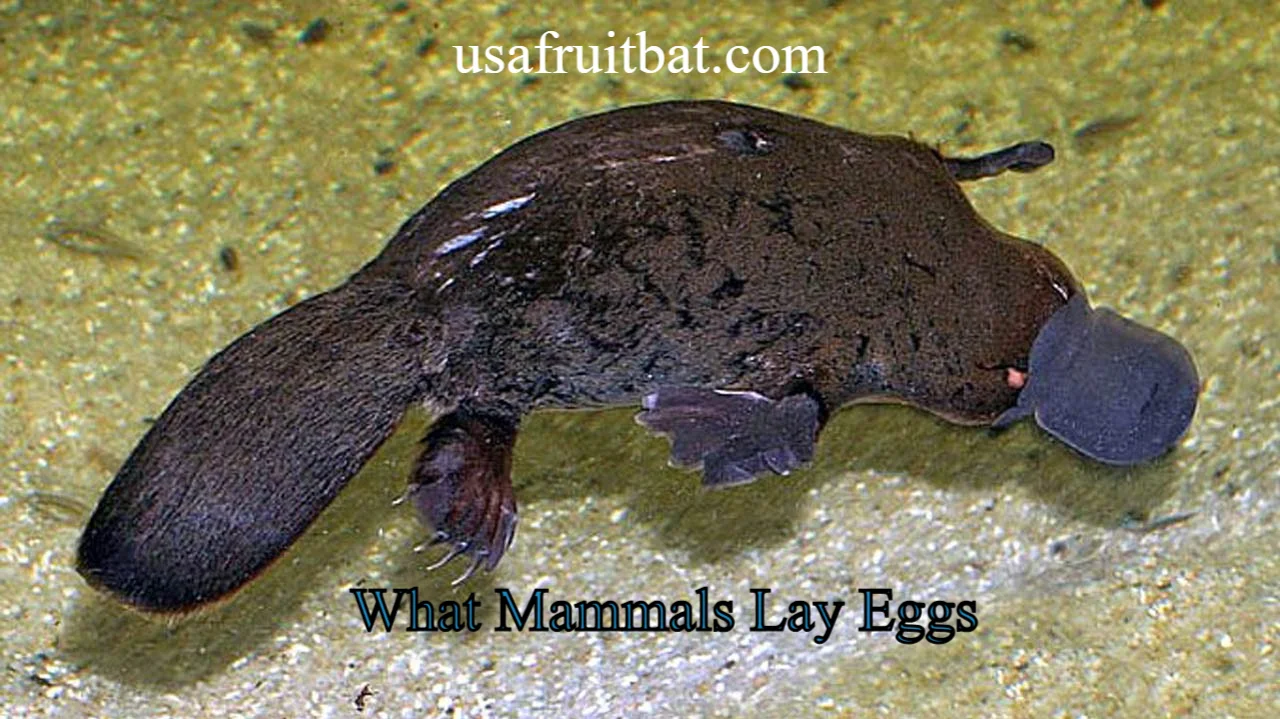
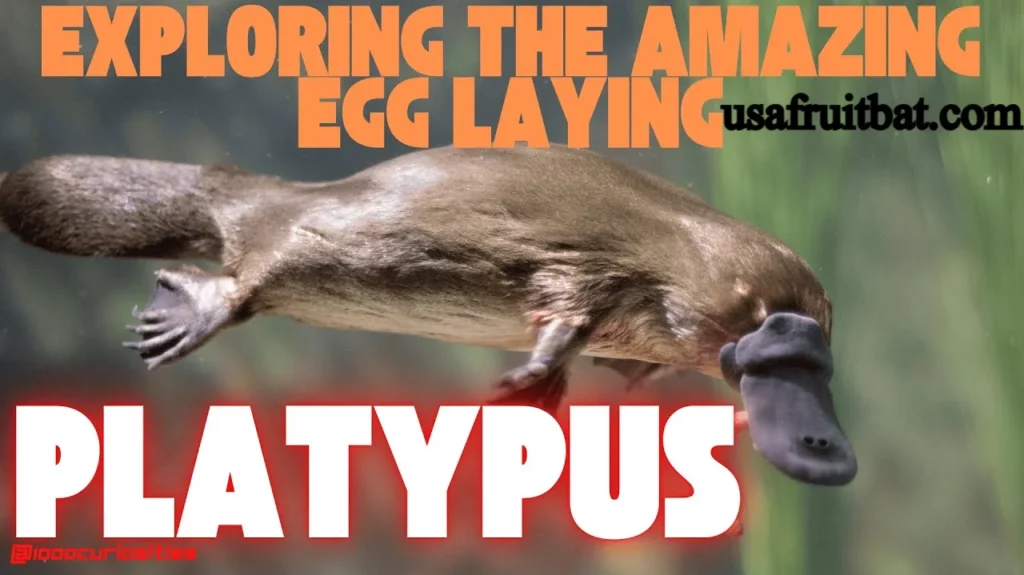
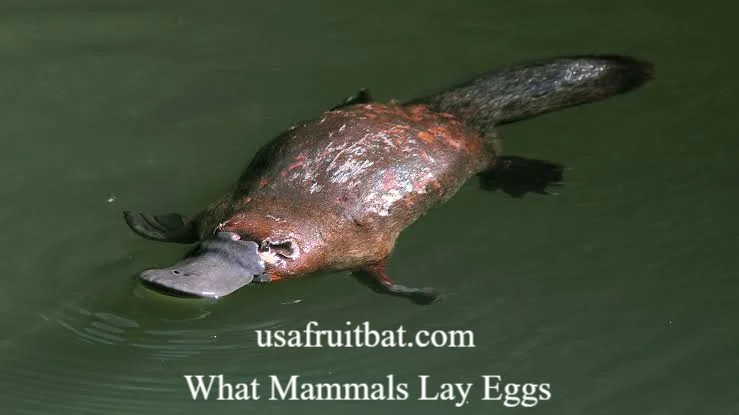
The duck-billed platypus is probably the best-known egg-laying mammal.
Its scientific name is Ornithorhynchus anatinus. It has dense waterproof fur, a broad tail, webbed feet, and a distinctive bill. The species lives in freshwater environments in eastern Australia and Tasmania.
Platypus reproduction
Female platypuses lay eggs inside a protected nesting area, usually associated with a burrow. After hatching, the young remain dependent on their mother while they develop.
A baby platypus is commonly called a puggle.
Platypus diet
Platypuses spend much of their time around freshwater habitats searching for aquatic prey. Their diet includes small aquatic animals and invertebrates.
They are especially adapted to finding food underwater, making the platypus an excellent example of how a highly unusual mammal can specialize in its environment.
Platypus habitat
Platypuses are associated with rivers, streams, and other freshwater systems. Their dependence on healthy freshwater environments makes habitat protection particularly important.
The Australian Museum currently lists the platypus as Near Threatened under the IUCN assessment cited on its species page.
2. Short-Beaked Echidna
The short-beaked echidna (Tachyglossus aculeatus) is the only echidna species native to Australia.
Unlike the aquatic platypus, it is mainly a terrestrial animal. It can live across a surprisingly wide range of habitats, including forests, woodlands, grasslands, heathlands, and arid environments.
Its body is covered with sharp spines that provide protection against predators.
Short-beaked echidna diet
The short-beaked echidna primarily feeds on ants and termites. It uses its strong claws to break into nests and its long, sticky tongue to collect prey.
Short-beaked echidna reproduction
The female lays one egg at a time. After the egg hatches, the young echidna remains with its mother while it develops.
This combination of egg laying, milk production, and a highly specialized body makes the echidna one of the most unusual mammals alive today.
3. Eastern Long-Beaked Echidna
The eastern long-beaked echidna, generally associated with Zaglossus bartoni, is one of the long-beaked echidnas native to New Guinea.
Compared with the short-beaked echidna, long-beaked echidnas have a longer snout and a different body shape. They are adapted to forested and mountainous environments.
Like other monotremes, they lay eggs and feed their offspring with milk.
Their restricted geographic range and environmental pressures make them important subjects for wildlife conservation.
4. Western Long-Beaked Echidna
The western long-beaked echidna (Zaglossus bruijni) is another egg-laying mammal found in New Guinea.
It has a long snout that helps it search for prey in soil and vegetation. Its diet includes earthworms and other small invertebrates.
The species is highly specialized and is associated with forest habitats. Habitat destruction and human activities can therefore have serious consequences for its survival.
5. Sir David’s Long-Beaked Echidna
Sir David’s long-beaked echidna, also known as the Attenborough’s long-beaked echidna or Cyclops long-beaked echidna, is one of the rarest mammals on this list.
Its scientific name is Zaglossus attenboroughi, and it is associated with the Cyclops Mountains of Indonesian New Guinea.
For many years, scientists had very little evidence of the animal’s continued existence. However, research has produced evidence suggesting that the species may still survive.
This makes it an especially important example of why wildlife surveys and habitat conservation matter.
Where Do Egg-Laying Mammals Live?
Living monotremes are naturally restricted to Australia and New Guinea.
The platypus is found in freshwater systems in eastern Australia and Tasmania, while the short-beaked echidna occupies a much broader range across Australia and Tasmania. The three long-beaked echidnas are associated with New Guinea.
This restricted distribution is one reason these animals are so interesting from an evolutionary perspective.
How Do Monotremes Lay and Hatch Their Eggs?
Monotreme eggs are different from the hard-shelled eggs commonly associated with birds.
The eggs are relatively soft and are produced by females through a reproductive system that retains characteristics unlike those of most modern mammals.
The basic process is:
- The female produces an egg.
- The egg is fertilized.
- The female lays the egg in a protected location.
- The embryo develops inside the egg.
- The young animal hatches.
- The mother provides milk while the young develops.
- The offspring eventually becomes independent.
This is a fascinating combination of mammalian biology and an ancient egg-laying reproductive strategy.
What Do Egg-Laying Mammals Eat?
The diets of monotremes differ by species.
Platypuses are closely associated with aquatic environments and feed on small aquatic animals and invertebrates.
Echidnas are primarily insectivorous. They commonly eat ants, termites, worms, grubs, and other small invertebrates. Their long, sticky tongues are particularly useful for collecting prey.
Their diets also demonstrate how differently these closely related mammals have adapted to their environments.
Are Egg-Laying Mammals Endangered?
Some egg-laying mammals face significant conservation concerns, while others have more stable populations.
For example, the platypus is currently listed as Near Threatened by the IUCN according to the Australian Museum’s current species information.
Several long-beaked echidnas face much more serious conservation challenges. Their restricted habitats, hunting pressure, habitat degradation, and other human-related threats make conservation particularly important.
Protecting these animals requires preserving their habitats rather than simply protecting individual animals.
Why Do Some Mammals Lay Eggs?
There is no simple reason that one modern mammal suddenly “decided” to lay eggs. Egg laying is an evolutionary characteristic inherited through the monotreme lineage.
Modern research has found that monotremes have a deep evolutionary history. The Australian Museum reported fossil evidence showing that monotremes were already diverse during the Cretaceous Period, with some fossils dating back more than 100 million years.
This means egg-laying mammals are not evolutionary mistakes or halfway between reptiles and mammals. They are specialized mammals with a reproductive strategy that has persisted for a very long time.
Frequently Asked Questions About Egg-Laying Mammals
Are there any mammals that lay eggs?
Yes. The only living mammals that lay eggs are monotremes: the platypus and four species of echidna.
How many mammals lay eggs?
There are five living egg-laying mammal species: one platypus and four echidnas.
Is a platypus a mammal that lays eggs?
Yes. The platypus is a mammal and one of the two major living types of monotreme, alongside echidnas. It lays eggs and produces milk for its young.
Do echidnas lay eggs?
Yes. All living echidna species are monotremes and lay eggs. The short-beaked echidna, for example, lays one egg at a time.
What is the only mammal that lays eggs?
The platypus is not the only egg-laying mammal. Echidnas also lay eggs. There are five living monotreme species in total.
What are 3 mammals that lay eggs?
Three examples are the platypus, short-beaked echidna, and western long-beaked echidna.
What are the 5 mammals that lay eggs?
The five living species are:
- Platypus
- Short-beaked echidna
- Eastern long-beaked echidna
- Western long-beaked echidna
- Sir David’s long-beaked echidna
What mammals lay eggs for kids?
For a simple explanation, kids can remember two names: platypus and echidna. Both are mammals that lay eggs, but they still produce milk for their babies.
What are two mammals that lay eggs?
The two easiest examples are the platypus and short-beaked echidna.
What is an egg-laying mammals chart?
| Mammal | Lays Eggs? | Region |
|---|---|---|
| Platypus | Yes | Australia |
| Short-beaked echidna | Yes | Australia |
| Eastern long-beaked echidna | Yes | New Guinea |
| Western long-beaked echidna | Yes | New Guinea |
| Sir David’s long-beaked echidna | Yes | New Guinea |
What are egg-laying animals?
Egg-laying animals are animals that reproduce by producing eggs from which their young develop. Birds, reptiles, amphibians, fish, insects, and monotremes are examples of animals that use egg-based reproduction, although their reproductive systems are very different.
What mammals lay eggs other than the platypus?
Echidnas lay eggs. There are four living echidna species, making them the main group of egg-laying mammals besides the platypus.
The Bottom Line
So, what mammals lay eggs? The answer is surprisingly short: the platypus and four species of echidna.
Together, these five animals make up the living monotremes. They are true mammals because they produce milk, have hair, and share other defining mammalian characteristics, yet they retain the unusual ability to reproduce by laying eggs.
Their unique biology, restricted distribution, and conservation challenges make them some of the most fascinating mammals on Earth.
Author Bio: Hamid Ali is a wildlife and nature writer covering fascinating animals, ecosystems, and conservation. He creates clear, engaging guides that make wildlife facts easy to understand.
Author Name: Hamid Ali
Email: johanharwen314@gmail.com
Also Read: