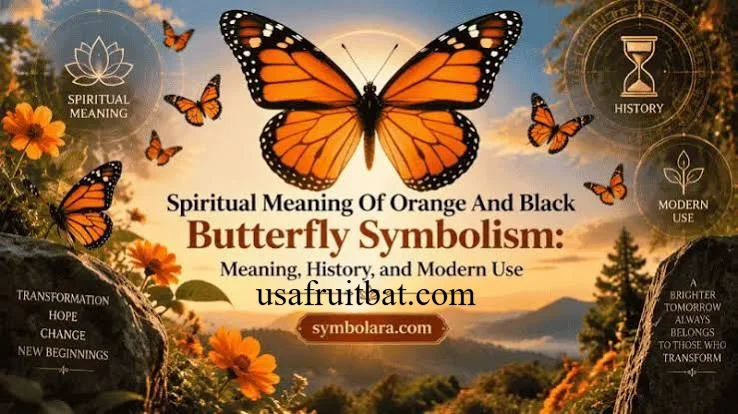
The monarch butterfly is admired for its striking orange-and-black wings, remarkable migration, and extraordinary transformation from a tiny caterpillar into a graceful flying insect. Beyond its natural beauty, it holds deep symbolic meaning for many people around the world. It is often associated with hope, personal growth, freedom, resilience, and new beginnings.
Understanding the monarch butterfly meaning can help you explore why this beautiful creature appears in spiritual traditions, artwork, tattoos, and personal stories. Some people see a monarch butterfly as a reminder of a loved one, while others connect it with overcoming challenges or embracing change. Alongside these interpretations, its fascinating biology and migration reveal why the monarch has become such a powerful symbol of life’s journey.
What Does a Monarch Butterfly Mean?
The monarch butterfly commonly symbolizes transformation, hope, renewal, and personal growth. Its life begins as a tiny egg, develops into a hungry caterpillar, and eventually emerges from a chrysalis as a butterfly. This remarkable process provides a natural example of change and development, reminding many people that difficult transitions can lead to new opportunities and a different perspective on life.
For someone experiencing a major life change, seeing a monarch butterfly may feel especially meaningful. It can serve as a personal reminder to remain patient, release outdated habits, and welcome new possibilities. Although these interpretations are subjective rather than scientifically proven messages, they demonstrate how people use nature to reflect on their experiences, emotions, relationships, and hopes for the future.
sourecs: symbolara.com
Monarch Butterfly Symbolism and Spiritual Meaning
Monarch butterfly symbolism is often connected with freedom, resilience, rebirth, and the courage to move forward. Its long migration and dramatic metamorphosis make it an appealing symbol for people navigating uncertainty or starting a new chapter. In spiritual contexts, some interpret its appearance as encouragement to trust the process of change and remain open to personal development.
The monarch butterfly spiritual meaning can also involve remembrance, connection, and inner peace. In some Mexican traditions, monarch butterflies are associated with returning souls and the remembrance of deceased loved ones, particularly around Día de los Muertos, or Day of the Dead. These cultural traditions give the butterfly a significance beyond its physical appearance, although beliefs differ among communities and individuals.
Monarch Butterfly Meaning in Different Life Situations
The meaning people attach to a monarch butterfly often depends on what they are experiencing when they see one. A sighting during a difficult period might inspire hope, while an encounter during a new beginning may feel like a reminder of growth and possibility.
Common personal interpretations include:
- During change: A reminder to embrace transitions and learn from new experiences.
- During difficult times: A symbol of perseverance, patience, and hope.
- After losing a loved one: A comforting reminder of memories, love, and emotional connection.
- At a new beginning: An encouraging symbol of freedom and personal renewal.
- During reflection: An opportunity to appreciate nature and consider your direction in life.
These interpretations can be meaningful without requiring you to believe that every butterfly sighting carries a supernatural message.
Monarch Butterfly Facts You Should Know
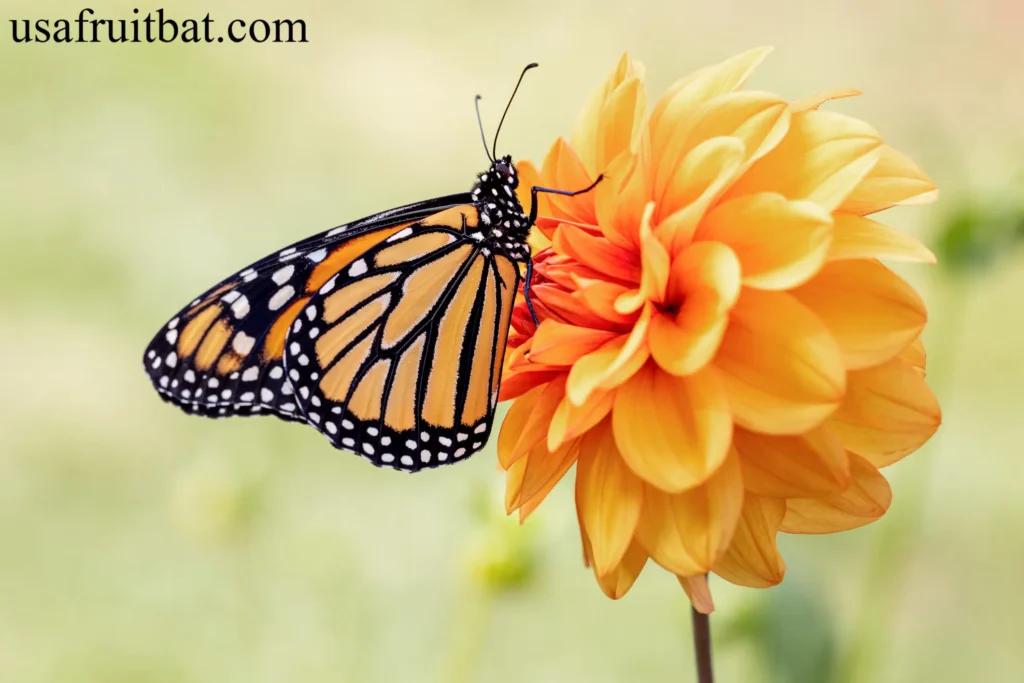
The monarch butterfly, scientifically known as Danaus plexippus, is one of the world’s most recognizable butterfly species. Its orange wings, black veins, dark borders, and white spots make it relatively easy to identify. Monarchs are especially famous for their long seasonal migration, during which some populations travel thousands of miles to reach suitable overwintering locations.
Monarchs also play a role in pollination as adults visit flowers to collect nectar. Their caterpillars depend on milkweed plants for food, making these plants essential to reproduction. Learning about monarch behavior reveals that the species is remarkable not only for its symbolism but also for its ecological importance and specialized life cycle.
| Feature | Description |
|---|---|
| Scientific name | Danaus plexippus |
| Recognizable colors | Orange, black, and white |
| Caterpillar food | Milkweed leaves |
| Adult food | Flower nectar |
| Major migration regions | North America |
| Common symbolism | Hope, transformation, and resilience |
| Life cycle | Egg, caterpillar, chrysalis, adult |
Monarch Butterfly Life Cycle Explained
The monarch butterfly life cycle has four main stages: egg, caterpillar, chrysalis, and adult butterfly. Each stage involves significant physical changes, allowing the insect to grow and eventually reproduce. The complete process usually takes several weeks in warm conditions, although temperature and other environmental factors can affect its duration.
Understanding these stages helps explain why the butterfly is so closely associated with transformation. Its development is not simply a gradual change in appearance; metamorphosis involves a fundamental reorganization of the insect’s body. Observing this process also highlights the importance of healthy habitats, suitable temperatures, and access to milkweed for successful reproduction.
Monarch Butterfly Eggs
Female monarch butterflies usually lay their tiny, cream-colored eggs individually on milkweed leaves. The eggs are small and ridged, making them easy to overlook without careful observation. Milkweed is particularly important because newly hatched caterpillars need this plant for food, so selecting an appropriate host plant gives their offspring a better chance of survival.
Under suitable conditions, monarch eggs generally hatch within a few days. The emerging caterpillar begins feeding on the eggshell and then moves on to the milkweed leaf. Gardeners who want to support monarch populations can plant appropriate native milkweed species and avoid pesticides that may harm eggs, caterpillars, and other beneficial insects.
Monarch Butterfly Caterpillar
The monarch butterfly caterpillar has distinctive black, white, and yellow stripes, along with pairs of fleshy, threadlike filaments near its front and rear. As it feeds on milkweed, it grows rapidly and sheds its outer skin several times. These growth stages, known as instars, allow the caterpillar to increase in size before preparing for metamorphosis.
Milkweed provides more than nutrition. It contains chemical compounds called cardenolides, some of which monarch caterpillars retain and use as a defense against certain predators. This specialized relationship explains why milkweed is vital to monarch reproduction. Without suitable host plants, female monarchs cannot successfully support the next generation through its early developmental stages.
Chrysalis and Metamorphosis
When the caterpillar reaches maturity, it attaches itself to a suitable surface and forms a green chrysalis. Inside, its body undergoes extensive changes as adult structures develop. This stage is often considered the most remarkable part of the monarch’s development because the insect transitions from a crawling leaf-eater into a winged adult capable of flight and reproduction.
After roughly one to two weeks under many favorable conditions, the adult butterfly emerges. Its wings are initially soft and folded, so it must allow them to expand and dry before flying. Once its wings are ready, the butterfly begins searching for nectar, mates, and suitable locations for the next generation.
Monarch Butterfly Migration Pattern Explained
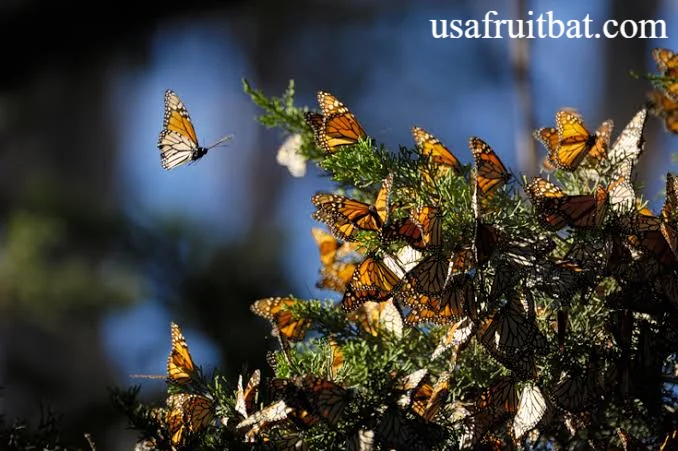
Monarch butterflies are famous for their seasonal migration, particularly populations that travel between breeding areas across the United States and Canada and overwintering sites in central Mexico. Other populations, especially those west of the Rocky Mountains, traditionally overwinter along coastal California. These journeys demonstrate the species’ remarkable ability to respond to changing seasons and environmental conditions.
Migration is influenced by temperature, daylight, food availability, and seasonal changes. Monarchs do not all complete the same journey, and migration patterns differ between populations. Some generations live only a few weeks, while the migratory generation can survive for several months. Protecting their breeding habitats and overwintering sites is essential for maintaining these remarkable journeys.
Monarch Butterfly Habitat and Diet
Monarch butterflies depend on different plants during different stages of life. Caterpillars feed almost exclusively on milkweed, while adults drink nectar from a wide variety of flowering plants. Meadows, gardens, open fields, roadsides, and other areas containing suitable vegetation can provide valuable resources when conditions are appropriate.
You can help monarchs by creating a garden with native milkweed and nectar-rich flowers suited to your local climate. Avoiding pesticides and maintaining flowering plants throughout the growing season can improve habitat quality. It is also important to choose milkweed species appropriate for your region rather than planting unsuitable varieties that may disrupt local ecological conditions.
How Long Does a Monarch Butterfly Live?
A monarch butterfly’s lifespan depends largely on the season and its generation. Many summer monarchs live approximately two to five weeks as adults, although individual lifespans vary. During this time, they feed, reproduce, and contribute to the next generation. Their lives are relatively short, but several generations can develop over a single breeding season.
The migratory generation can live considerably longer, sometimes around eight or nine months. This extended lifespan allows it to travel to overwintering locations, survive the winter period, and begin the journey north when conditions improve. Differences in lifespan reflect adaptations to seasonal migration and reproduction rather than a single fixed life expectancy for every monarch.
Blue, Purple, and Yellow Monarch Butterflies: Are They Real?
Monarch butterflies are naturally recognized by their orange wings, black veins, dark borders, and white spots. Images showing bright blue, purple, or entirely yellow monarchs often involve digital editing, artistic interpretation, unusual lighting, or confusion with another butterfly species. Understanding natural coloration helps distinguish real monarchs from imaginative designs.
Color variations can appear more dramatic in photographs than they do in person. Filters, reflections, and changes in lighting can alter how wing colors look. Although unusual-colored monarch designs can be beautiful in illustrations and decorative artwork, blue and purple are not recognized as normal natural color forms of the monarch butterfly.
Blue Monarch Butterfly
A blue monarch butterfly is commonly seen in artwork, edited photographs, or imaginative designs rather than as a naturally occurring blue form of the species. Several genuine butterfly species have blue wings, and their appearance may lead to confusion when images circulate without identification.
To identify a monarch, look for its orange wings, black veins, black borders, and white spots. These features are more reliable than the color impression created by lighting or a photograph. If you encounter a striking blue butterfly outdoors, observing its wing shape and markings can help determine whether it belongs to another species.
Purple Monarch Butterfly
Purple monarch butterflies frequently appear in fantasy illustrations, digital designs, and decorative artwork. Purple coloring may be chosen to suggest mystery, creativity, transformation, or spirituality, but these are artistic associations rather than evidence of a naturally purple monarch variety.
If you see a purple monarch image online, consider whether it has been edited or created digitally. Real monarch wings have recognizable orange-and-black patterns. Purple butterfly designs can still be meaningful for artwork or tattoos, provided they are understood as creative interpretations rather than accurate representations of the species.
Yellow Monarch Butterfly
Some monarch photographs may appear unusually yellow because of lighting, image editing, or color adjustments. Monarch caterpillars also have prominent yellow bands, which can create confusion when people compare different stages of the life cycle. Adult monarch wings, however, are characteristically orange rather than entirely yellow.
Several other butterfly species naturally display yellow wings and may be mistaken for monarchs at a glance. Examining the wing pattern, body shape, and markings is more useful than relying on color alone. Accurate identification helps people appreciate the diversity of butterflies without incorrectly labeling every orange or yellow species as a monarch.
Monarch Butterfly Drawing: A Beginner-Friendly Guide
Drawing a monarch butterfly is a useful way to study its distinctive shape and patterns. Beginners can start with a pencil, paper, an eraser, and orange and black coloring materials. The key is to sketch the basic wing outline first, then add the dark veins and white spots that make the monarch recognizable.
Symmetry is important, but both wings do not need to be perfectly identical. Use a reference photograph to observe the differences between the upper and lower wings, the position of the body, and the arrangement of the markings. Light pencil strokes make it easier to correct proportions before adding darker outlines and color.
How to Draw a Monarch Butterfly Step by Step
Follow these simple steps to create a recognizable monarch butterfly drawing:
- Draw a thin central body and add two curved antennae.
- Sketch the upper and lower wings on both sides of the body.
- Refine the wing outlines to create the monarch’s characteristic shape.
- Add black veins branching across the orange wing areas.
- Draw dark borders and small white spots around the edges.
- Color the wings orange, then deepen the black markings.
- Erase unnecessary guidelines and add gentle shading for depth.
Beginners can improve their drawings by practicing the wing shapes separately before attempting the complete butterfly. Comparing the finished sketch with a clear photograph also helps improve accuracy and attention to detail.
Monarch Butterfly Tattoo Meaning and Design Ideas
A monarch butterfly tattoo often represents transformation, resilience, freedom, and the beginning of a new chapter. People may choose this design to commemorate personal achievements, celebrate recovery from a difficult period, or express their appreciation for nature. Its recognizable wings also make it suitable for both small minimalist tattoos and detailed, colorful artwork.
Popular designs include realistic orange-and-black monarchs, delicate outlines, watercolor effects, and butterflies combined with flowers or meaningful dates. Some people choose a monarch tattoo as a personal tribute to a loved one. While these designs can carry powerful emotional meaning, the significance ultimately depends on the individual’s experiences and intentions.
How to Protect Monarch Butterflies
Monarch populations face several challenges, including habitat loss, pesticide exposure, severe weather, and reductions in suitable milkweed. Because caterpillars depend on milkweed and adults need nectar, the loss of either resource can affect their survival. Protecting breeding areas and overwintering habitats is therefore an important part of monarch conservation.
You can contribute by making small, practical changes around your home and community. Consider these actions:
- Plant native milkweed appropriate for your region.
- Grow nectar-producing flowers that bloom at different times.
- Avoid unnecessary pesticides and herbicides.
- Support local habitat restoration projects.
- Learn about monarch monitoring and community science programs.
- Preserve natural areas where butterflies can feed and reproduce.
Individual gardens cannot solve every conservation challenge, but connected patches of suitable habitat can provide valuable resources. Supporting conservation efforts also helps other pollinators and contributes to healthier local ecosystems.
Conclusion
The monarch butterfly is more than a beautiful insect. Its dramatic metamorphosis, seasonal migration, and distinctive appearance have made it a widely recognized symbol of transformation, hope, resilience, and renewal. For many people, its presence also carries personal or spiritual significance, including remembrance and connection with loved ones.
Understanding the monarch butterfly meaning becomes even more rewarding when you explore the science behind its life cycle, habitat, and migration. Whether you appreciate monarchs for their symbolism, enjoy drawing them, or want to support their conservation, learning about these remarkable butterflies offers a meaningful way to connect with the natural world.
Frequently Asked Questions
What is the meaning of a monarch butterfly?
A monarch butterfly commonly symbolizes transformation, hope, resilience, freedom, and new beginnings.
What does a monarch butterfly symbolize spiritually?
Its spiritual symbolism often includes personal growth, renewal, inner strength, and embracing change.
Is seeing a monarch butterfly a sign from a loved one?
Some people interpret a sighting as a comforting reminder of a deceased loved one, although this is a personal or cultural belief rather than a scientifically proven message.
What does a monarch butterfly caterpillar look like?
It has a striped black, white, and yellow body with distinctive pairs of threadlike filaments near its front and rear.
Where do monarch butterflies live?
Monarchs inhabit many areas of North America and other regions, using milkweed for breeding and flowering plants for nectar.
How long does a monarch butterfly live?
Many summer adults live around two to five weeks, while the migratory generation may survive for approximately eight or nine months.
Are blue or purple monarch butterflies real?
Blue and purple are not normal natural color forms of monarch butterflies, and images showing these colors are often artistic or digitally altered.
Why do monarch butterflies migrate?
Monarchs migrate in response to seasonal conditions, seeking suitable overwintering locations and resources needed for survival and reproduction.
Also Read