Introduction About: Are Bats Mammals
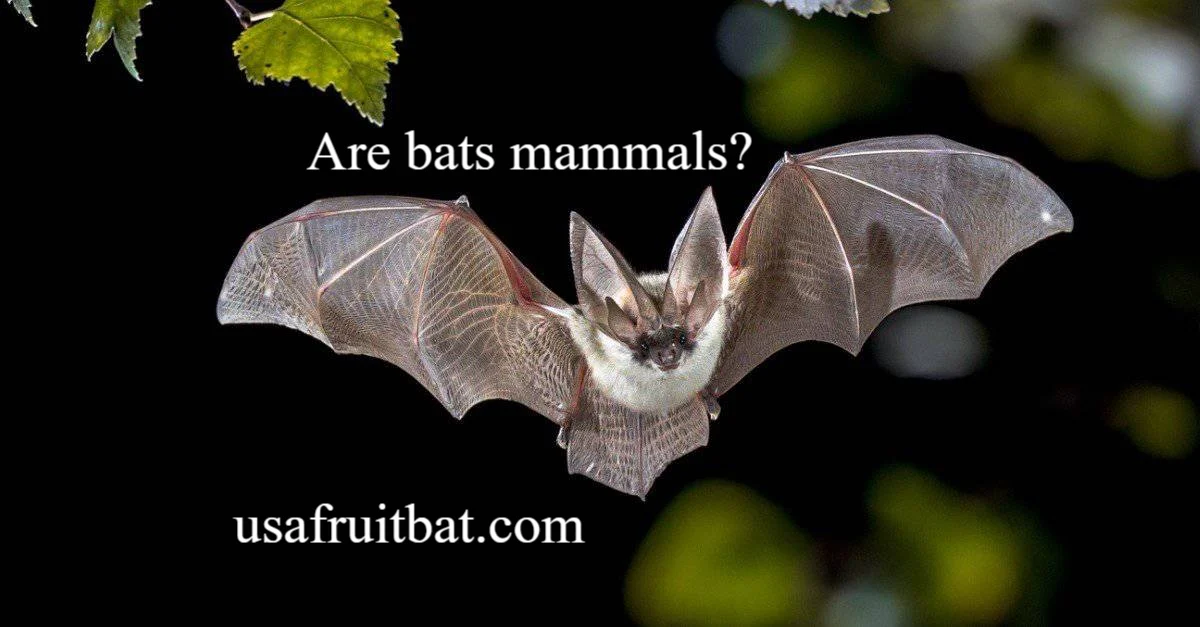
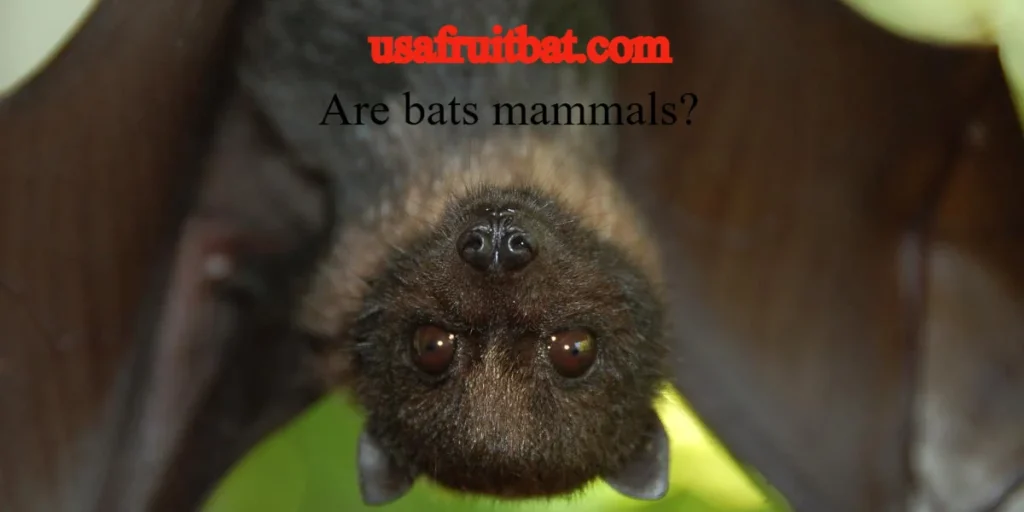
Yes, bats are mammals. In fact, bats are the only mammals capable of true, sustained powered flight. They belong to the biological order Chiroptera, a name derived from Greek roots meaning “hand-wing,” referring to their unusual wing structure.
Unlike birds, bats do not have feathers or bird-style wings. Their wings are modified forelimbs with elongated fingers connected by a thin membrane of skin. Like other mammals, bats have hair, regulate their body temperature, give birth to live young, and feed their babies milk.
Today, scientists recognize more than 1,400 bat species worldwide, making bats one of the most diverse groups of mammals. They live on every continent except Antarctica and occupy habitats ranging from forests and deserts to caves, cities, farms, and islands.
What Makes a Bat a Mammal?
The simplest answer is that bats possess the defining characteristics of mammals.
Bats share several important traits with humans, dogs, cats, whales, and other mammals:
- They have hair or fur.
- Females produce milk for their young.
- They give birth to live young.
- They are warm-blooded, meaning they regulate their internal body temperature.
- They have mammalian bones and internal anatomy.
- They breathe air with lungs.
Their ability to fly does not make them birds. Flight is simply one of the remarkable adaptations that evolved within the bat lineage.
The U.S. Fish & Wildlife Service describes bats as the only mammals capable of true flight, while gliding mammals such as flying squirrels cannot produce the same sustained powered flight.
Why Are Bats Mammals and Not Birds?
Bats and birds can both fly, but they evolved flight in very different ways.
A bird’s wings are modified forelimbs covered primarily by feathers. A bat’s wing is a flexible membrane supported by elongated arm and finger bones.
Bats also reproduce like other mammals. Female bats give birth to live babies, called pups, and nurse them with milk.
This difference is important because flight alone does not determine an animal’s biological classification.
| Feature | Bats | Birds |
|---|---|---|
| Classification | Mammals | Birds |
| Body covering | Hair/fur | Feathers |
| Babies | Live birth | Usually eggs |
| Milk production | Yes | No |
| Wings | Skin membrane | Feathered structures |
| Flight | Powered flight | Powered flight |
| Echolocation | Common in many species | Rare/not characteristic |
So, while bats and birds share the ability to fly, bats are unquestionably mammals.
How Are Bats Related to Other Mammals?
Bats belong to the order Chiroptera, one of the major groups of mammals. The name “Chiroptera” refers to their hand-like wings.
Modern bat classification is more complex than the older simple division into “megabats” and “microbats.” Bats include two major evolutionary groupings commonly recognized today: Yinpterochiroptera and Yangochiroptera.
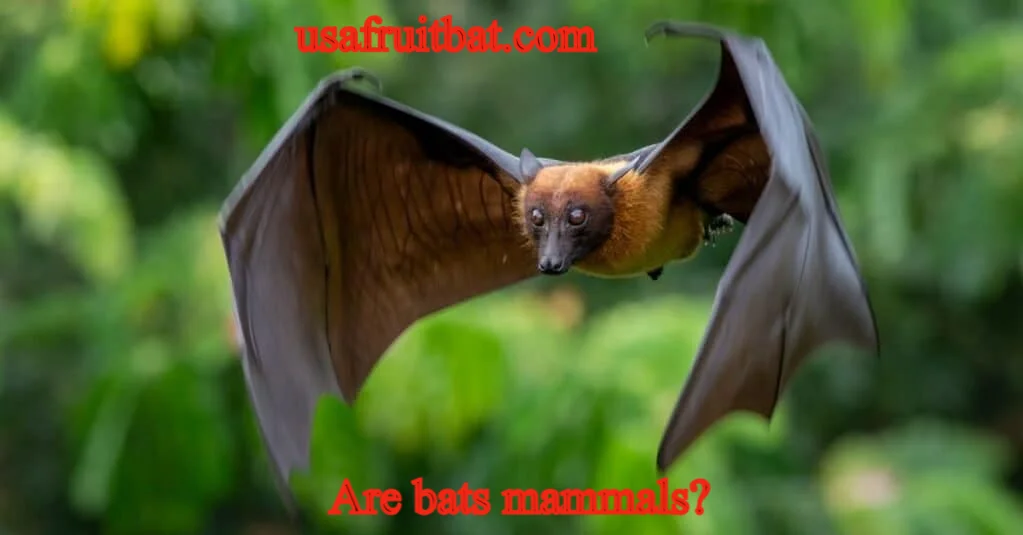
Common names such as megabats, microbats, flying foxes, and fruit bats are still useful when discussing bat biology, but they do not always correspond perfectly to modern evolutionary classification.
Bats are also not rodents. Although they are mammals like mice and rats, bats belong to their own order.
How Do Bat Wings Work?
A bat’s wing is essentially a modified mammalian hand.
The bones of the forelimb are elongated, especially the fingers. A thin skin membrane stretches across these bones and connects the arm, body, hind legs, and sometimes the tail.
This unusual design gives bats exceptional control in the air.
Their wing structure allows them to:
- Change direction quickly.
- Slow down rapidly.
- Maneuver around branches and obstacles.
- Capture flying insects.
- Navigate narrow spaces.
- Hover or make controlled movements around flowers in some species.
The Smithsonian notes that the bat wing contains blood vessels, nerves, and tendons within its thin membrane, while the elongated finger bones help support and manipulate the wing.
This is one reason bats are such successful flying mammals.
How Do Bats Fly at Night?
Most bats are nocturnal mammals, meaning they are primarily active at night.
Their combination of wing anatomy, sensory abilities, and behavior makes nighttime flight possible.
Many insect-eating bats use echolocation. They produce high-frequency sounds and listen for the echoes that return after those sounds encounter insects, vegetation, buildings, or other objects.
The returning echoes provide information about the surrounding environment.
This can help bats determine:
- Where an object is.
- How far away it is.
- Whether prey is moving.
- How they should adjust their flight path.
Not every bat relies on echolocation in exactly the same way. Fruit-eating and nectar-feeding species may depend heavily on vision, smell, and other senses, although some species also use echolocation.
What Do Bats Eat?
Bat diets vary dramatically between species.
Many bats in the United States are insectivores, meaning they primarily eat insects such as moths, beetles, flies, and other night-flying insects.
However, bats around the world have much more varied diets.
Depending on the species, bats may eat:
- Insects
- Fruit
- Nectar
- Pollen
- Fish
- Small vertebrates
- Other animals
- Blood
This diversity makes bat feeding behavior an important part of bat ecology.
In the United States, insect-eating bats can provide natural pest control by consuming agricultural and forest pests. USGS notes that bats can suppress insects that affect crops and forests, providing an ecological service that can benefit agriculture.
What Are Vampire Bats?
Vampire bats are a small group of specialized bats famous for feeding on blood.
There are only a few vampire bat species, and they are native to the Americas. They do not represent typical bat feeding behavior.
Rather than sucking blood like a straw, vampire bats make a small wound and lap blood from the surface. Their specialized teeth and saliva help them obtain and consume their unusual food source.
Despite their reputation, vampire bats are only a tiny part of the enormous diversity of bat mammals.
The majority of bats are not blood-feeding animals.
Where Do Bats Live?
Bats are found across much of the world, including the United States, but they are absent from Antarctica.
Their habitat depends heavily on species and climate.
Bat roosts may include:
- Caves
- Abandoned mines
- Hollow trees
- Rock crevices
- Forests
- Buildings
- Bridges
- Attics
- Barns
- Other protected structures
Some bats use different locations for different purposes. A summer maternity colony, for example, may require a warm and protected roost suitable for raising young, while hibernating bats need specific environmental conditions.
The U.S. Fish & Wildlife Service notes that bats may use caves, trees, buildings, rock crevices, and other structures as roosting locations.
Do Bats Hibernate or Migrate?
It depends on the species.
Some bats survive winter by hibernating. During hibernation, their metabolism and body temperature can decrease substantially, helping them conserve energy when insects and other food sources are scarce.
Other species migrate to warmer areas where food remains available.
In North America, hibernation is particularly important for many insect-eating bats. Unfortunately, hibernating species are also especially vulnerable to white-nose syndrome, a fungal disease that disrupts normal hibernation.
USGS reports that white-nose syndrome has killed millions of North American bats since its discovery in 2006. By 2025, confirmed cases had been reported in 41 U.S. states and five Canadian provinces.
How Do Bats Reproduce?
Bat reproduction has several interesting features.
Female bats generally give birth to one or a small number of pups at a time. In many species, females form maternity colonies, where they gather to give birth and raise their young.
Newborn bats are dependent on their mothers for food and protection.
As pups develop, they grow rapidly and eventually learn the skills necessary for independent survival, including flying and finding food.
In some North American species, females synchronize reproduction with seasonal food availability. This allows mothers to raise young when insects and other resources are abundant.
How Long Do Bats Live?
Bats can live surprisingly long lives for their body size.
Lifespan varies considerably between species, but some bats can live for decades. Bat Conservation International notes that bats can live much longer than similarly sized mammals, and some Brandt’s myotis have been documented living for more than 40 years.
That is particularly remarkable because small mammals such as many rodents generally have much shorter lifespans.
However, young bats face significant risks from predators, disease, food shortages, habitat disturbance, and other environmental pressures.
How Do Bats Help Humans and Ecosystems?
Bats are much more than nighttime animals flying around caves.
Their ecological roles include natural insect control, pollination, and seed dispersal.
Insect-eating bats can reduce populations of insects that affect crops and forests. Fruit- and nectar-feeding bats can transport pollen between plants and disperse seeds, helping forests and other ecosystems regenerate.
These services make bats valuable parts of healthy ecosystems.
For example, USGS reports that bats can naturally suppress crop pests, while Bat Conservation International highlights their roles in insect control, pollination, and seed dispersal.
Their ecological importance also means that declining bat populations can have consequences beyond the bats themselves.
What Threats Do Bats Face?
Bats face different threats depending on their species and location.
Major threats include:
- White-nose syndrome – A fungal disease that has caused severe mortality among hibernating bats in North America.
- Habitat loss – Destruction or alteration of forests, caves, wetlands, and other important habitats.
- Roost disturbance – Human activity can disrupt maternity colonies and hibernation sites.
- Climate change – Changing temperatures, precipitation, and food availability can affect bat survival.
- Wind-energy interactions – Some flying bats can be killed through collisions or barotrauma associated with wind turbines.
- Pesticide exposure and declining insect populations – Reduced prey availability can affect insect-eating species.
USGS continues to monitor bat populations and investigate ways to improve resilience against white-nose syndrome and other stressors.
Are Bats Important to the United States?
Yes. Bats are an important component of U.S. wildlife and ecosystems.
North America has numerous bat species that help control insects, support ecosystems, and contribute to scientific research.
However, several U.S. bat populations face serious conservation challenges. As of the USGS’s 2025 science strategy, 12 North American bat species had been affected by white-nose syndrome, including endangered species and a proposed endangered species.
Protecting caves, forests, maternity colonies, and other bat habitats is therefore an important part of wildlife conservation.
Are Bats the Only Mammals That Can Fly?
Yes—bats are the only mammals capable of true powered flight.
This distinction matters because several other mammals can glide.
Flying squirrels, for example, can move between trees using a membrane that allows them to glide. But they cannot generate sustained powered flight with flapping wings.
Bats evolved a completely different solution: their modified forelimbs and flexible wing membranes generate powered flight.
That makes bats unique among mammals.
15 Quick Facts About Bats
Here are the key facts to remember:
- Bats are mammals.
- Their scientific order is Chiroptera.
- Bats are not birds.
- Bats are not rodents.
- They are the only mammals capable of true powered flight.
- Their wings are modified forelimbs.
- Their fingers are highly elongated to support the wing membrane.
- Most bats are active at night.
- Many bats use echolocation.
- Many U.S. bats eat insects.
- Some bats eat fruit, nectar, pollen, fish, or small animals.
- Only a few bat species feed on blood.
- Bats live in habitats ranging from caves and forests to buildings and bridges.
- Some species hibernate while others migrate.
- Bats provide important ecological services such as insect control, pollination, and seed dispersal.
Final Answer: Are Bats Mammals?
Yes, bats are mammals—not birds, rodents, or marsupials.
Their classification is based on their mammalian characteristics, including hair, live birth, milk production, lungs, and mammalian anatomy. Their extraordinary ability to fly evolved through specialized forelimbs, elongated fingers, and a flexible wing membrane.
From insect-eating bats in the United States to fruit bats and flying foxes in tropical regions, bats represent an exceptionally diverse group of mammals. They also play important ecological roles through insect control, pollination, and seed dispersal.
Understanding these animals is especially important as conservation challenges such as white-nose syndrome, habitat loss, and other environmental pressures continue to affect bat populations.
6. FAQ
Are bats mammals or birds?
Bats are mammals, not birds. They have hair, give birth to live young, produce milk, and have other mammalian characteristics. They are also the only mammals capable of true powered flight.
What are 10 characteristics of bats?
Ten notable bat characteristics are: they are mammals, belong to Chiroptera, have hair, produce milk, give birth to live young, have modified forelimbs, possess flexible wing membranes, are generally nocturnal, many use echolocation, and many species live in social colonies.
Why are bats mammals and not birds?
Bats are mammals because they have mammalian traits such as hair, live birth, milk production, and mammalian skeletal anatomy. Their wings evolved from modified forelimbs rather than from the feathered structures seen in birds.
Are bats rodents?
No. Bats are not rodents. They belong to the order Chiroptera, while rodents belong to the order Rodentia. They are both mammals but represent different evolutionary groups.
Are bats mammals or marsupials?
Bats are mammals, but they are not marsupials. They belong to the order Chiroptera and are generally classified among placental mammals.
Are bats the only mammals that can fly?
Yes. Bats are the only mammals capable of true powered flight. Mammals such as flying squirrels can glide, but they cannot sustain powered flight like bats.
What are bats related to?
Bats are mammals within the order Chiroptera. They are not closely related to rodents simply because some species look small and mouse-like. Modern genetic and anatomical research places bats within the mammalian evolutionary tree as their own major lineage.
Author Bio: Hamid Ali is an SEO content writer and digital marketing professional specializing in research-based informational content.
He focuses on wildlife, science, and educational topics, making complex information simple and easy to understand.
His work prioritizes accuracy, reliable sources, reader value, and clear, trustworthy explanations.
Author Name: Hamid Ali
Email: johanharwen314@gmail.com
Also Read