Introduction
Picture a bat with wings wider than your arm span, gliding silently over a moonlit forest. That image alone explains why megabat size fascinates so many people online. You have probably seen those viral photos claiming to show a bat the size of a human, and you may have wondered if they are real or just clever editing. The truth is even more interesting than the myth. Megabats, also called flying foxes or fruit bats, include some of the largest bat species on the planet, yet many of them weigh less than a can of soda. In this article, you will learn exactly how big megabats get, which species hold the records, why megabat size varies so much, and how these creatures compare to microbats. By the end, you will understand the real numbers behind the headlines and see why megabat size keeps surprising researchers.
What Is a Megabat, Exactly
Before diving into numbers, you need to understand what a megabat actually is. Megabats belong to the family Pteropodidae, and this family includes roughly one hundred and seventy species found across Africa, Asia, and Oceania. You will often hear them called flying foxes because their long snouts and large eyes resemble a fox’s face. Unlike microbats, megabats mostly eat fruit, nectar, and pollen instead of insects. They also rely on sharp eyesight and a strong sense of smell rather than echolocation to find food at night.
How Big Is a Megabat Really
This is the question most people search for, and the honest answer is that it depends heavily on the species. When people ask about megabat size, they usually picture the giant flying foxes with wingspans that stretch over five feet. That description is accurate for a few record holding species, but it does not represent the whole group. You will find enormous variation once you look across all one hundred and seventy megabat species.
Quick Direct Answer
The largest megabats have wingspans up to five and a half feet and weigh around two to three pounds, while the smallest megabats weigh as little as thirteen grams, roughly the weight of a few paperclips.
The Largest Megabat Species
Here is a look at the giants that make megabat size such a popular topic.
- Giant Golden Crowned Flying Fox – Considered the largest bat in the world, this species has a recorded wingspan of five feet and six inches, though its body weighs only about two point six pounds. It lives exclusively in the forests of the Philippines.
- Great Flying Fox – This species can weigh up to one point four five kilograms, or about three point two pounds, with a wingspan reaching five point six feet, making it one of the heaviest megabats known.
- Indian Flying Fox – A widespread species across South Asia with a wingspan around four feet, often seen roosting in massive colonies in city trees.
- Lyle’s Flying Fox – Found in Thailand, Cambodia, and Vietnam, this bat has a wingspan stretching from three to nearly five feet and weighs at least one pound.
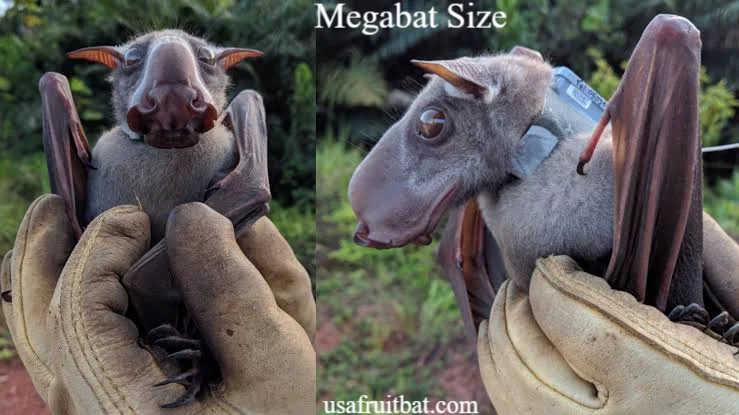
- Hammer Headed Bat – Known for the largest wingspan among mainland African bats, this species stands out for its unusual, elongated head shape.
I find it interesting that even among these giants, the body itself stays fairly light. That long wingspan is mostly stretched skin and bone structure, not bulk. So when you imagine megabat size, think long and light rather than heavy and dense.
The Smallest Megabats Might Surprise You
Here is where megabat size gets genuinely surprising. Not every megabat is huge.
- The spotted winged fruit bat is the smallest megabat on record, with a body length of only about two inches and a weight of roughly thirteen grams.
- A scientific review from 2004 found that twenty eight percent of all megabat species weigh less than fifty grams.
- Many megabats fit comfortably in the palm of your hand, despite belonging to the same family as five foot wingspan giants.
This range shows why you cannot judge megabat size by name alone. The word “mega” refers to the family classification, not a guarantee of massive body size.
Megabat Size Comparison Table
| Species | Wingspan | Body Weight | Region |
|---|---|---|---|
| Giant Golden Crowned Flying Fox | Up to 5.6 ft | 2.6 lbs | Philippines |
| Great Flying Fox | Up to 5.6 ft | 3.2 lbs | Papua New Guinea |
| Lyle’s Flying Fox | 3 to 4.9 ft | 1+ lb | Thailand, Cambodia, Vietnam |
| Indian Flying Fox | Around 4 ft | 1.5 to 2.5 lbs | South Asia |
| Spotted Winged Fruit Bat | About 11 in | 0.03 lb (13g) | Borneo, Malaysia |
This table makes megabat size easy to compare at a glance, and it shows just how wide the gap is between the largest and smallest members of the family.
Megabats vs Microbats: Size Is Not the Whole Story
You might assume megabats are always bigger than microbats since the prefix means large. That assumption is only partly true. Some microbat species actually grow longer than the smallest megabats. Researchers originally split bats into these two groups based on body size, but scientists now know the real differences lie in navigation, diet, and skull structure rather than size alone. Microbats use echolocation to hunt insects in complete darkness, while most megabats depend on vision and smell to locate fruit and flowers.
Why Megabat Size Varies So Much
Several factors shape how large a megabat grows.
- Diet availability – Species with access to large, energy rich fruit tend to grow bigger over generations.
- Habitat and competition – Islands with fewer predators sometimes allow bats to evolve larger bodies over time.
- Flight efficiency – Smaller bats can maneuver through dense forest canopies more easily than large flying foxes.
- Roosting behavior – Species that roost in massive open colonies often show different size patterns than solitary roosters.
Understanding these factors helps explain why megabat size is not a fixed number but a spectrum shaped by evolution and environment.
Do Megabats Pose Any Danger to Humans
Despite their intimidating wingspans, megabats are almost entirely harmless to people. They do not hunt animals or attack humans. Their diet of fruit and nectar actually makes them valuable pollinators and seed spreaders across tropical ecosystems. Conservationists note that habitat loss and hunting, not aggressive behavior, are the real threats these bats face today. If you ever see a large flying fox resting in a tree, it is far more interested in ripe mangoes than in bothering you.
Fresh Insight: Why Megabat Size Keeps Trending Online
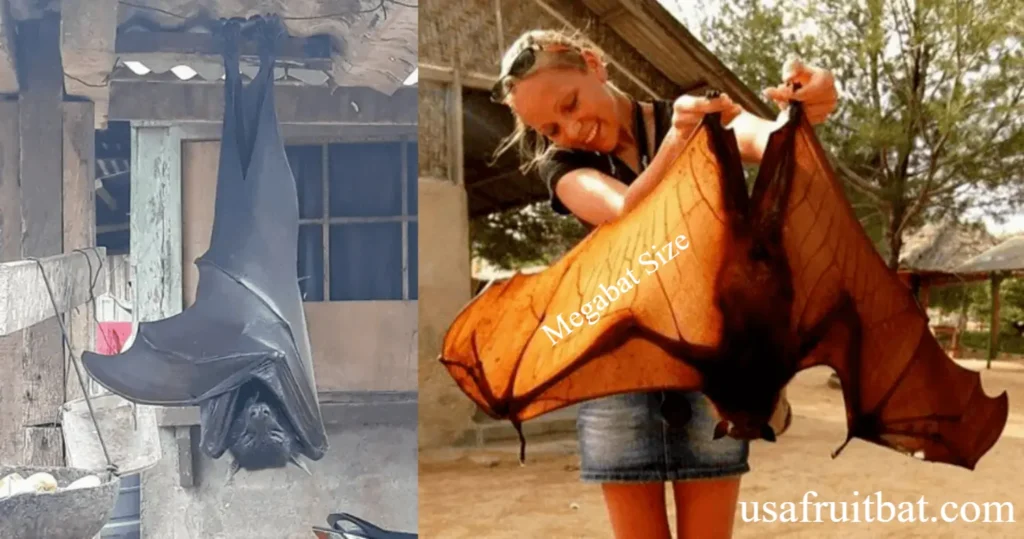
Every year, photos of unusually large bats resurface on social media, often stretched or angled to exaggerate megabat size. Fact checking organizations regularly confirm that while the photos are real bats, the perceived scale is often distorted by camera angle or forced perspective. This recurring trend shows how much curiosity surrounds megabat size, and it highlights why accurate, well sourced information matters more than viral captions.
Frequently Asked Questions
What is the biggest megabat in the world? The Giant Golden Crowned Flying Fox holds the record, with a wingspan reaching five feet and six inches, making it the largest bat species known.
How much does the average megabat weigh? Weight varies widely by species, ranging from about thirteen grams for the smallest megabats to over three pounds for the largest flying foxes.
Is megabat size always bigger than microbat size? Not always. Some microbat species grow longer than the smallest megabats, so the size difference is not consistent across every species.
Do megabats use echolocation like microbats? Most megabats do not use echolocation. They rely on strong eyesight and smell to find fruit and navigate at night.
Where do the largest megabats live? The largest megabat species are found mainly in Southeast Asia and the Pacific islands, including the Philippines and Papua New Guinea.
Are megabats dangerous to humans? No, megabats are herbivorous and pose no real threat to humans. They feed on fruit, nectar, and pollen.
Why is it called a megabat if some species are small? The name reflects the family classification, Pteropodidae, rather than a strict size rule, which is why some megabats stay quite small.
What is the smallest megabat species? The spotted winged fruit bat is the smallest known megabat, with a body length of roughly two inches and a weight around thirteen grams.
Conclusion
Megabat size turns out to be far more layered than a single viral photo suggests. Yes, some flying foxes stretch their wings past five feet and rank among the largest bats alive. Yet many megabats stay small enough to rest in your palm, proving that this family is defined by more than sheer scale. Now that you know the real numbers behind megabat size, you can spot exaggerated claims online and appreciate these gentle, fruit loving giants for what they truly are. If you found this breakdown helpful, share it with a friend who still believes those stretched out bat photos, and keep exploring the fascinating world of bats.
Author Name: Hamid Ali
Email: johanharwen314@gmail.com
About the Author: Hamid Ali is a wildlife content writer who enjoys turning complex animal science into clear, engaging reading for everyday curious minds. He focuses on nature, biodiversity, and conservation topics, aiming to make accurate information accessible to readers everywhere.
Also Read