Introduction
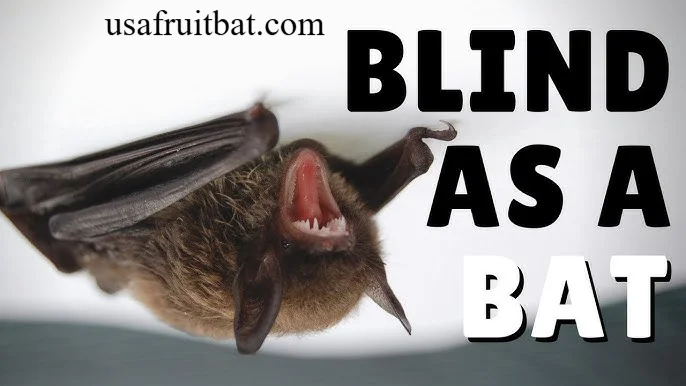
No, bats are not blind. Every single bat species on earth has fully working eyes, and most bats can see quite well. You have probably grown up hearing the phrase “blind as a bat,” and it makes sense why. Bats fly at night, dart around in the dark, and use a mysterious skill called echolocation. It all sounds like something only a sightless animal would need. But science tells a very different story.
In this article, you will learn exactly how bat vision works, why the “are bats blind” myth started in the first place, and what makes bat eyesight so much more advanced than most people assume. You will also see how bats combine sight and sound to survive, hunt, and fly through pitch black caves without ever crashing into a wall.
Are Bats Blind? Breaking Down The Myth
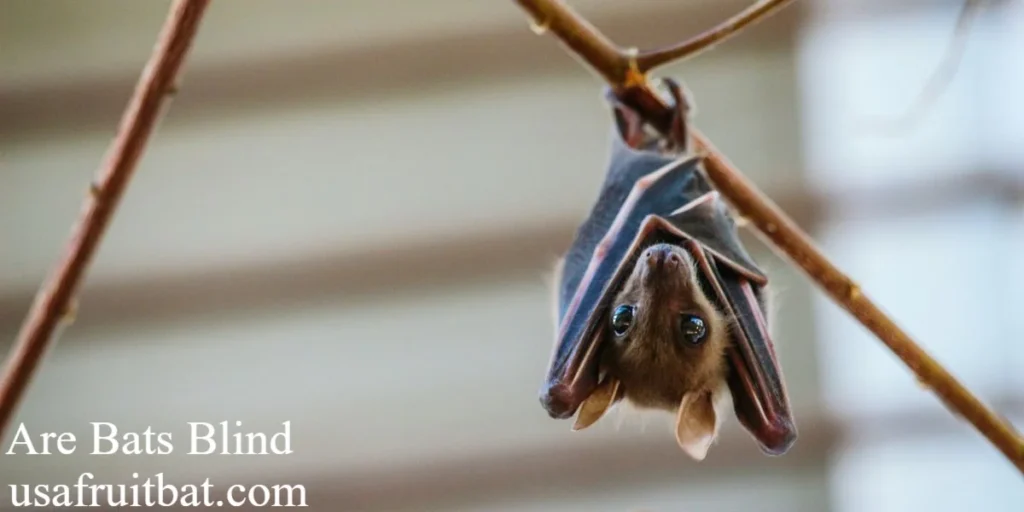
The question “are bats blind” has confused people for centuries. It is such a common belief that it turned into a popular saying used to describe someone with poor eyesight. But when researchers actually studied bat eyes under a microscope, they found something surprising. Bats have small but fully developed eyes, complete with retinas, lenses, and optic nerves, just like humans and other mammals.
So why does this myth stick around? Mostly because bats are nocturnal and use echolocation, a built in sonar system that lets them “see” using sound. Because this ability seems almost supernatural, people assumed bats must be relying on it because their eyes do not work. That assumption is simply wrong.
Are Bats Blind Or Can They Actually See Well?
Here is something that might surprise you. Some bats do not just see well, they see better than you do. Certain fruit eating bat species have night vision that outperforms human eyesight by a wide margin. Their eyes are built to gather as much light as possible, which helps them spot fruit, flowers, and nectar in near total darkness.
Not every bat species has the same visual power though. Vision quality changes a lot depending on the type of bat and what it eats. This is where the two major bat families come into the picture.
The Two Main Types Of Bats And Their Eyesight
Scientists divide bats into two broad groups, and each group answers the “are bats blind” question a little differently.
Megabats (Fruit Bats and Flying Foxes)
- Have large, well developed eyes
- Rely heavily on sight rather than echolocation
- Some species can see in color
- A few can even detect ultraviolet light
- Struggle to fly on completely moonless nights because they depend so much on their eyes
Microbats (Insect Eating Bats)
- Have smaller eyes compared to megabats
- Depend mainly on echolocation to hunt insects in flight
- Still use their eyes to detect light, shapes, and distant landmarks
- Use vision as a backup system when sound waves are not enough
I find this split fascinating because it shows bats are not one single type of animal with one fixed way of seeing the world. They adapted differently based on what they needed to survive.
How Bat Vision Compares To Human Vision
A simple table makes this comparison much easier to understand.
| Feature | Fruit Bats (Megabats) | Insect Bats (Microbats) | Humans |
|---|---|---|---|
| Eye size | Large | Small | Medium |
| Night vision strength | Excellent, often better than humans | Moderate, light and shape detection | Weak in total darkness |
| Color vision | Some species yes | Mostly no | Yes |
| UV light detection | Some species yes | Rare | No |
| Main navigation tool | Eyesight | Echolocation | Eyesight |
This table alone answers the “are bats blind” question clearly. Bats are not blind, they simply use different combinations of sight and sound depending on their species.
Echolocation Versus Eyesight: How Bats Really Navigate
Many people assume echolocation replaces vision completely. It does not. Bats actually blend both senses together, switching between them depending on the situation.
| Situation | Sense Bats Rely On More |
|---|---|
| Hunting fast moving insects in total darkness | Echolocation |
| Spotting fruit or flowers at dusk | Eyesight |
| Detecting large obstacles or predators from a distance | Eyesight |
| Navigating tight spaces like caves | Echolocation |
| Judging exact distance to a small flying insect | Echolocation |
Researchers studying bat behavior found that when both light and sound cues are available, bats often choose whichever sense gives them the clearest information at that moment. That is not the behavior of a blind animal. That is the behavior of a highly adaptable one.
Why Do People Still Believe The “Are Bats Blind” Myth?
A few reasons explain why this misconception refuses to disappear.
- Bats are active at night, so we rarely see their eyes in daylight
- Echolocation feels mysterious, almost like a superpower, so people assume it replaces sight entirely
- Bats sometimes fly very close to people, which looks clumsy but is actually them curiously investigating movement, not evidence of poor eyesight
- Old folklore and Halloween imagery paint bats as creepy, blind, cave dwelling creatures
- The phrase “blind as a bat” has been repeated in pop culture for so long that people stopped questioning it
Once you understand these reasons, the “are bats blind” myth starts to make a lot less sense.
What Research And Experts Say About Bat Vision
Genetic studies on bat vision genes have looked closely at more than one hundred bat species to understand how their eyesight evolved. Researchers examined specific genes responsible for detecting light and color, including the ability to see ultraviolet light. Their findings showed that many bat species kept strong, functional vision genes, while others gradually lost certain visual abilities as they became more dependent on echolocation. This tradeoff between senses depended heavily on each species’ habitat, diet, and roosting habits.
Wildlife agencies studying bats in the field have also confirmed that several fruit bat species possess night vision roughly three times sharper than average human eyesight. That statistic alone should put the “are bats blind” myth to rest for good.
Bat conservation groups, wildlife biologists, and university researchers all agree on one core point. Bats are sensory specialists, not blind creatures stumbling through the dark. They combine sight, sound, smell, and even touch sensitive wing membranes to build a complete picture of their surroundings.
Quick Facts That Prove Bats Are Not Blind
- All known bat species have functional eyes
- Some fruit bats have night vision about three times stronger than human vision
- Certain bat species can detect ultraviolet light
- Flying foxes can see in color
- Insect eating bats use eyesight to spot large landmarks and avoid predators
- Bats blend echolocation and vision rather than relying on just one sense
Are Bats Blind? What This Means For You
If you ever come across a bat in your attic, garden, or a nearby cave, remember it is not stumbling around blindly. It sees you, hears you, and is likely using both senses at once to judge whether you are a threat. This is actually one reason bats rarely fly straight into people. Their combined sensory system is far too advanced for that kind of clumsy mistake.
Conclusion
So, are bats blind? Not even close. Bats have working eyes, and depending on the species, their eyesight ranges from decent to genuinely impressive. Fruit bats can see in color, detect ultraviolet light, and outperform human night vision. Insect eating bats lean more on echolocation but still use their eyes as a valuable backup tool. The old saying “blind as a bat” is nothing more than an outdated myth built on misunderstanding.
Next time someone repeats that phrase around you, you will know exactly how to set the record straight. Found this interesting? Share it with a friend who still believes the “are bats blind” myth, and let them see the truth for themselves.
Frequently Asked Questions
Are bats blind? No. Every bat species has fully functional eyes, and many bats see quite well, especially fruit eating species with excellent night vision.
Why do people say bats are blind? The myth likely started because bats are nocturnal and use echolocation, which made people wrongly assume their eyes do not work.
Can bats see in the dark? Yes. Bats have eyes adapted for low light conditions, and some fruit bats have night vision far stronger than human eyesight.
Do bats see in color? Some megabat species, including certain flying foxes, can see in color. Most insect eating microbats have more limited color vision.
Can bats see ultraviolet light? Yes, certain bat species can detect ultraviolet light, which helps them locate flowers, fruit, and other food sources at night.
Do bats rely only on echolocation to navigate? No. Bats combine echolocation with eyesight, switching between the two senses depending on the situation and their surroundings.
Which bats have the best eyesight? Megabats, also known as fruit bats or flying foxes, generally have the sharpest eyesight among all bat species.
Do all bats use echolocation? No. Many fruit bat species do not echolocate at all and rely mainly on their eyesight and sense of smell instead.
Is the phrase “blind as a bat” scientifically accurate? No, it is not. Bats are not blind, and the saying is considered a myth rather than a scientific fact.
Are bats blind during the day? No. Bats can still see during the day, though most species are inactive and rest in dark roosts to avoid predators and bright light.
Also Read
- 13 Amazing Types of Bats in Ohio You Must Know
- Adorable Cute Types of Bats You Will Instantly Love
- Baby Pallid Bat: Amazing Facts You Never Knew
About The Author: Hamid Ali is a content writer who enjoys breaking down animal myths and wildlife facts into simple, easy to understand articles. He focuses on researching accurate, up to date information so readers get the real story, not just popular assumptions.
Author Name: Hamid Ali
Email: johanharwen314@gmail.com