Introduction
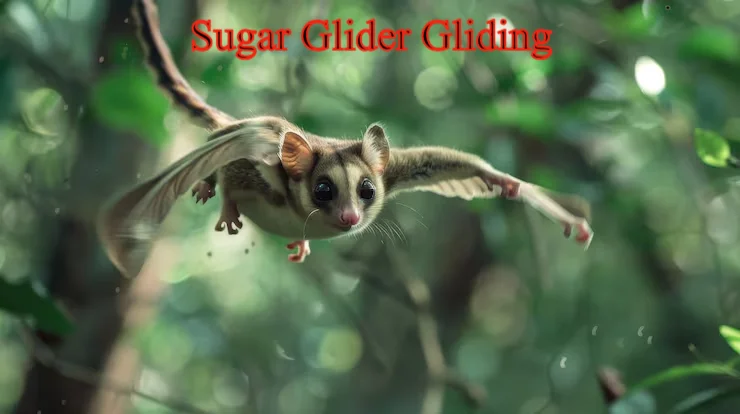
Have you ever watched a small animal move from one tree to another without wings? It can look almost magical. Sugar glider gliding is one of the most fascinating abilities in the animal world. These tiny marsupials cannot truly fly, but they can travel smoothly through the air by gliding between trees.
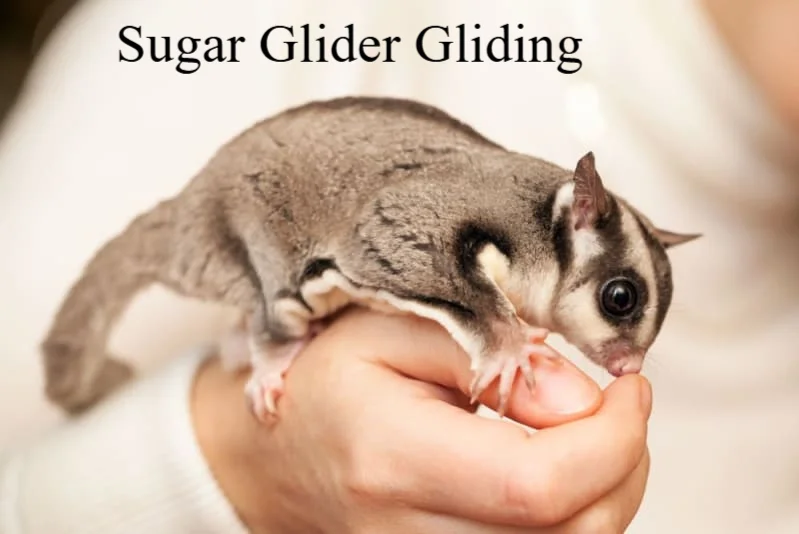
A sugar glider uses a special membrane of skin that stretches between its front and back legs. This membrane acts like a natural parachute and helps the animal control its movement through the air. In the wild, this ability helps sugar gliders find food, escape danger, and move through forest canopies without coming down to the ground.
In this guide, you will learn exactly how sugar glider gliding works, how far a sugar glider can travel, why gliding is important for survival, and what risks can affect captive sugar gliders. You will also discover interesting facts, research insights, and practical information about these remarkable animals.
What Is Sugar Glider Gliding?
Sugar glider gliding is a form of controlled aerial movement that allows sugar gliders to travel from one elevated point to another.
Sugar gliders do not have wings. Instead, they have a skin membrane called the patagium. This membrane stretches from the wrists to the ankles on both sides of the body.
When a sugar glider jumps from a tree, it spreads its legs wide. The patagium catches the air and creates a surface that supports the animal during its glide.
The sugar glider then uses its body, legs, and tail to control direction and balance.
How Does a Sugar Glider Glide?
The gliding process usually follows several simple steps.
- The sugar glider climbs to a high point.
- It identifies a landing area.
- It jumps into the air.
- It spreads its legs.
- The patagium catches the air.
- The tail helps control balance.
- The animal adjusts its body to change direction.
- It lands on a tree or another stable surface.
This process happens very quickly. A successful glide requires strong coordination and accurate judgment.
How Far Can a Sugar Glider Glide?
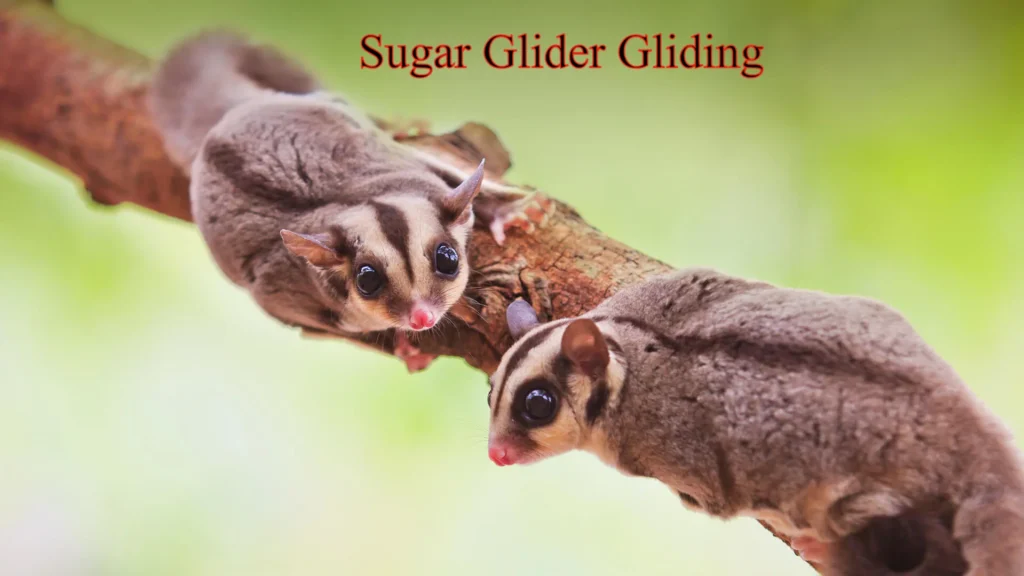
One of the most common questions about sugar glider gliding is how far these animals can travel.
Research and wildlife observations show that sugar gliders can glide impressive distances compared with their small body size. Many glides may cover tens of meters, while longer glides can reach distances of around 50 meters or more under suitable conditions.
The exact distance depends on several factors.
| Factor | Effect on Gliding |
|---|---|
| Starting height | Higher positions can support longer glides |
| Wind conditions | Wind can help or disrupt movement |
| Body position | Good posture improves control |
| Landing target | Larger targets are easier to reach |
| Physical condition | Healthy muscles support better movement |
A sugar glider does not simply jump and hope for the best. Its body continuously responds to air resistance and changing direction.
This ability is especially important in dense forests where trees provide natural pathways.
Why Do Sugar Gliders Glide?
Gliding gives sugar gliders several important survival advantages.
Finding Food
Sugar gliders eat a varied diet in the wild. Their food can include nectar, insects, tree sap, and other natural resources.
Gliding helps them move between food sources without repeatedly climbing down and climbing back up trees.
Avoiding Predators
The forest floor can expose small animals to predators. Moving through the canopy can reduce some risks.
A quick glide may allow a sugar glider to escape from danger and reach another tree.
Saving Energy
Climbing every tree can require significant energy. Gliding provides an efficient way to travel through a forest.
This does not mean gliding requires no energy. However, it can help sugar gliders move across gaps more efficiently.
Exploring a Larger Area
Sugar gliders need access to different trees and food sources. Gliding allows them to explore a wider area.
This ability may also help them locate nesting areas and interact with other sugar gliders.
The Science Behind Sugar Glider Gliding
Sugar gliders belong to a group of animals that evolved special adaptations for life in trees.
The patagium is the most obvious adaptation. However, several other body features also support successful gliding.
Lightweight Body
Sugar gliders have small and relatively lightweight bodies. This helps them move through the air more easily than a heavier animal.
Flexible Limbs
Their limbs allow them to stretch the gliding membrane and control their body position.
Strong Tail Control
The tail plays an important role in balance. It can help stabilize the body during movement.
Sharp Vision
Sugar gliders are nocturnal animals. They depend heavily on their senses when moving through their environment at night.
These adaptations work together. The patagium alone would not create such effective aerial movement without the rest of the body supporting it. animals.sandiegozoo.org
Can Sugar Gliders Change Direction While Gliding?
Yes. Sugar gliders can make adjustments while moving through the air.
They change the position of their limbs and body to influence airflow. Small movements can change the direction of the glide.
Their tails also support balance.
This ability makes sugar gliding more advanced than a simple uncontrolled fall. The animal actively manages its movement.
However, sugar gliders cannot gain altitude while gliding. They need a higher starting point and gradually move downward toward their destination.
Sugar Glider Gliding in the Wild vs Captivity
Wild sugar gliders live in environments that naturally support climbing and gliding.
Trees provide height, branches, and suitable landing areas. Young sugar gliders also develop physical skills by exploring their environment.
Captive sugar gliders face a different situation.
A pet sugar glider may glide inside a room, but an indoor environment can contain hazards.
These may include:
- Ceiling fans
- Open windows
- Mirrors
- Hard furniture
- Other pets
- Hot surfaces
- Unsecured doors
A sugar glider may not understand every danger in a human home.
If you keep a sugar glider as a pet, you should create a controlled environment before allowing supervised exercise outside its enclosure.
Common Risks During Sugar Glider Gliding
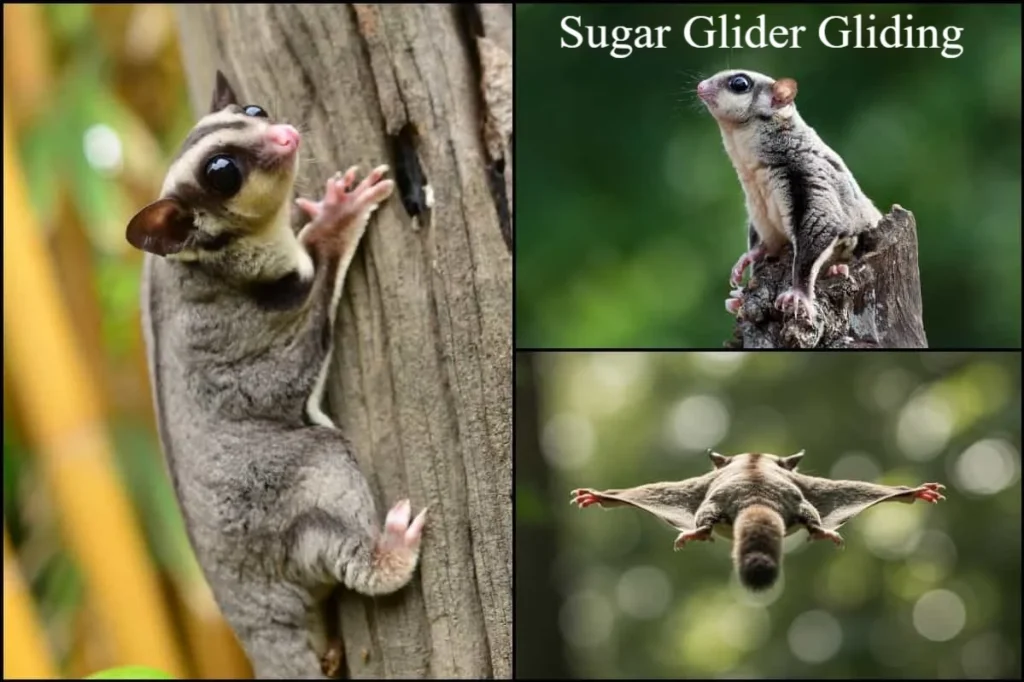
Gliding is natural, but it still involves risks.
Falls
A poor landing can cause injury. A sugar glider may lose balance or miss its target.
Unexpected Obstacles
Wild environments contain branches and natural obstacles. Indoor environments can contain even more dangerous objects.
Stress
A frightened sugar glider may jump suddenly. Stress can make its movement less predictable.
Unsafe Heights
High furniture and large rooms can create situations that are difficult for a captive sugar glider to manage safely.
For this reason, you should never assume that every glide will be successful.
Natural ability does not remove all risk.
What Experts Often Emphasize About Sugar Glider Care
Wildlife and exotic animal specialists commonly emphasize that sugar gliders are highly active and social animals.
Their environment should support movement, climbing, and natural behaviors.
A suitable habitat often needs:
- Safe climbing structures
- Appropriate space
- Secure sleeping areas
- Mental stimulation
- A nutritionally suitable diet
- Social interaction when appropriate
- Regular veterinary care from an experienced professional
The most important lesson is simple. A sugar glider should have opportunities to move naturally without being placed in dangerous situations.
A cage that is too small can limit activity. At the same time, unrestricted access to an unsafe room can create serious hazards.
Balance matters.
Interesting Sugar Glider Gliding Statistics and Facts
Sugar gliders may be small, but their movement abilities are impressive.
Here are several useful facts.
| Sugar Glider Fact | Information |
|---|---|
| Main movement skill | Controlled gliding |
| Active period | Mostly nocturnal |
| Main gliding structure | Patagium |
| Typical habitat | Forested environments |
| Body adaptation | Lightweight and agile |
| Travel advantage | Movement between trees |
One particularly interesting point is the difference between flying and gliding.
A bird produces powered flight through wing movement. A sugar glider does not create powered flight.
Instead, it uses gravity, height, body position, and air resistance to travel.
That distinction makes sugar glider gliding a unique example of animal adaptation.
How Young Sugar Gliders Learn to Glide
Young sugar gliders do not become expert gliders instantly.
They gradually develop strength, coordination, and confidence.
Their early development involves:
- Learning to climb safely.
- Building muscle strength.
- Exploring nearby surfaces.
- Practicing controlled jumps.
- Developing balance.
- Improving landing accuracy.
Experience plays an important role. A healthy environment allows young animals to develop natural movement patterns.
This is another reason why environmental enrichment matters for captive animals.
Fresh Perspective: Why Sugar Gliding Still Fascinates Researchers
Animal movement continues to interest scientists because it can reveal how species adapt to their environment.
Sugar gliders provide a valuable example of how evolution can produce an efficient movement system without traditional wings.
Their gliding behavior also offers inspiration for research into biomechanics, robotics, and animal locomotion.
Scientists study how animals control movement because natural systems can inspire new technologies.
The sugar glider remains especially interesting because such a small mammal can travel significant distances using only body structure and natural physics.
Conclusion
Sugar glider gliding is an extraordinary example of natural adaptation. These small marsupials use their patagium, limbs, and tail to move smoothly between elevated locations.
Gliding helps them find food, avoid some dangers, conserve energy, and explore their forest environment.
The science behind their movement is simple to understand but impressive to observe. Sugar gliders cannot truly fly, yet their controlled aerial movement allows them to travel through the trees with remarkable agility.
If you own or plan to own a sugar glider, understanding this natural behavior is essential. You should provide safe opportunities for climbing and movement while protecting your pet from household hazards.
What do you find most fascinating about sugar gliders: their gliding distance, their body adaptations, or their incredible nighttime lifestyle?
Frequently Asked Questions
Can sugar gliders really fly?
No. Sugar gliders cannot truly fly. They glide by using a skin membrane called the patagium.
How far can a sugar glider glide?
Sugar gliders can travel tens of meters during a glide. Longer glides may reach around 50 meters or more in suitable conditions.
What helps a sugar glider glide?
The patagium creates surface area, while the limbs and tail help control balance and direction.
Can sugar gliders glide upward?
No. A sugar glider needs a higher starting point and gradually moves downward during the glide.
Do sugar gliders glide at night?
Yes. Sugar gliders are mainly nocturnal and often move through their environment after dark.
Is it safe to let a pet sugar glider glide around the house?
It can be risky if the area contains hazards. You should supervise the animal and secure dangerous objects before allowing exercise.
Why do sugar gliders glide?
Gliding helps them travel between trees, search for food, explore their environment, and avoid some threats.
Do young sugar gliders learn how to glide?
Yes. Young sugar gliders gradually develop strength, coordination, balance, and confidence.
Author Name: Hamid Ali
Email: johanharwen314@gmail.com
About the Author: Hamid Ali is a wildlife writer passionate about educating readers on animal behavior and conservation. He enjoys breaking down complex nature topics into simple, engaging content that helps people connect with the natural world around them.
Also Read