Introduction
If you have spent any time researching dividend investing, chances are you have come across the SCHD ETF. It has become one of the most talked about funds among income focused investors, and for good reason. This fund has built a reputation for combining steady dividend growth with reasonable risk, making it a favorite among retirees, long term investors, and anyone who wants their money to work for them.
In this article, I will walk you through everything you need to know about the SCHD ETF. We will cover what it is, how it performs, its top holdings, and how it stacks up against popular alternatives like VOO and SPY. By the end, you will have a clear picture of whether SCHD ETF deserves a place in your investment portfolio.
What Is SCHD ETF?
The SCHD ETF, officially known as the Schwab US Dividend Equity ETF, is a fund managed by Charles Schwab. It tracks the Dow Jones US Dividend 100 Index, which focuses on companies with a strong history of paying and growing dividends.
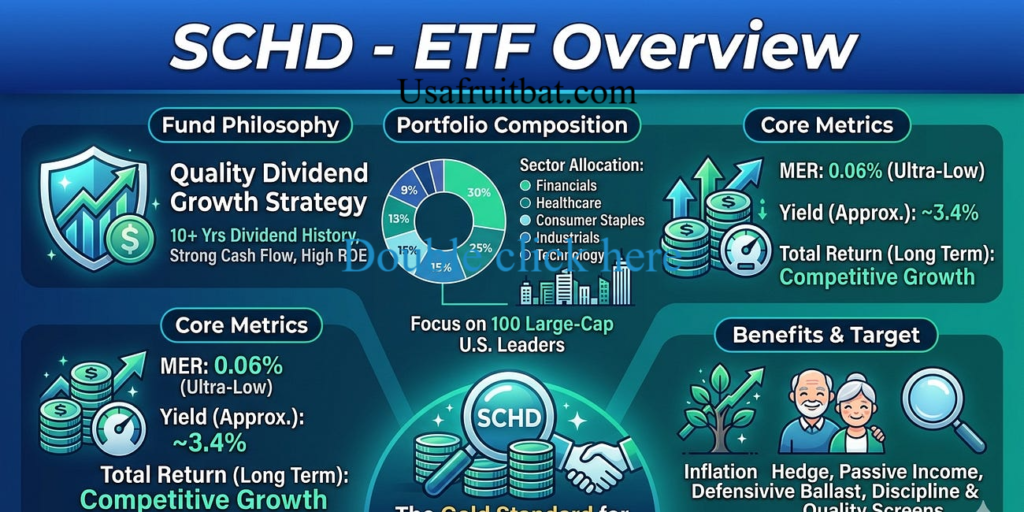
Unlike funds that chase the highest possible yield, SCHD ETF prioritizes quality. It selects companies based on financial strength, profitability, and consistent dividend payments over at least ten years. This approach filters out weaker companies and keeps the portfolio focused on businesses that can sustain their payouts.
What Does SCHD Stand For?
SCHD stands for Schwab US Dividend Equity ETF. The name itself tells you exactly what the fund is about. It is a Schwab product, it invests in US companies, and its main focus is dividend equity, meaning stocks that regularly pay dividends to shareholders.
Is SCHD a Good Investment?
This is probably the question most people ask before diving deeper. The honest answer depends on your financial goals.
SCHD ETF tends to appeal to investors who want a combination of income and moderate growth. It is not designed to deliver explosive returns like a tech heavy growth fund. Instead, it aims for steady, reliable performance backed by companies with strong fundamentals.
Here is what makes SCHD ETF attractive to many investors.
- Consistent dividend growth history
- Lower expense ratio compared to many actively managed funds
- Exposure to financially healthy, established companies
- A track record of resilience during market downturns
That said, no investment is perfect, and we will cover the risks a bit later.
What Companies Are in SCHD?
SCHD ETF holds around 100 companies, spread across sectors like healthcare, technology, consumer goods, energy, and financial services. Some of the well known names typically found in the portfolio include companies like Home Depot, Coca Cola, Chevron, Pfizer, and Verizon.
The fund rebalances periodically, so exact holdings can shift, but the overall focus remains the same. It looks for companies with strong balance sheets, consistent earnings, and a history of returning value to shareholders through dividends.
What Is the SCHD Dividend Yield?
The dividend yield of SCHD ETF usually falls in the range of three to four percent, though this can fluctuate based on market conditions and share price movements. Compared to the broader market average, this yield is considered attractive for income focused investors.
It is worth checking the current yield directly through Schwab’s official fund page or your brokerage platform, since yields change regularly based on stock prices and dividend adjustments.
How Often Does SCHD Pay Dividends?
SCHD ETF pays dividends quarterly, meaning investors receive payouts four times a year. This schedule works well for those who want predictable income without the complexity of managing monthly payout funds, which sometimes come with higher volatility or different tax treatment.
What Is SCHD’s Expense Ratio?
One of the biggest selling points of SCHD ETF is its low expense ratio, which sits around 0.06 percent. This means for every ten thousand dollars invested, you pay roughly six dollars annually in fees. Compared to actively managed funds that can charge one percent or more, this cost efficiency allows more of your returns to stay in your pocket.
How Has SCHD Performed Historically?
Since its launch in 2011, SCHD ETF has delivered solid long term returns, often outperforming many dividend focused peers. While past performance never guarantees future results, the fund has shown resilience during market corrections, largely due to its focus on financially stable companies.
Investors often praise SCHD ETF for its balance of income and capital appreciation, making it a well rounded choice rather than a purely defensive or purely aggressive fund.
Is SCHD Better Than VOO?
This comparison comes up often, and the answer really depends on your goals.
VOO tracks the S&P 500 and leans more toward growth, especially given its heavy weighting in technology giants. SCHD ETF, on the other hand, focuses purely on dividend paying value stocks.
If you want maximum growth potential, VOO may edge ahead. If you prioritize income and stability, SCHD ETF often makes more sense. Many investors actually choose to hold both for balance.
Is SCHD Better Than SPY?
Similar to the VOO comparison, SPY also tracks the S&P 500 and offers broader market exposure. SCHD ETF trades growth potential for dividend consistency and lower volatility.
If your priority is passive income and reduced risk exposure, SCHD ETF tends to be the stronger choice. If you want exposure to the entire market including high growth sectors, SPY might suit you better.
Is SCHD Better Than VYM?
VYM, another popular dividend ETF, offers broader diversification with more holdings. SCHD ETF, in comparison, takes a more selective approach with tighter quality screening. Many investors find SCHD ETF slightly more consistent in dividend growth, while VYM offers wider sector exposure.
Who Should Invest in SCHD?
SCHD ETF tends to suit investors who value income stability and long term wealth building. This includes retirees seeking passive income, young investors building a dividend growth portfolio, and anyone looking to diversify beyond growth stocks.
What Are the Risks of Investing in SCHD?
No investment comes without risk, and SCHD ETF is no exception.
- Dividend cuts can happen if underlying companies face financial trouble
- The fund leans toward value stocks, which may underperform during strong growth markets
- Sector concentration can create imbalance during certain economic cycles
Diversifying your overall portfolio helps manage these risks effectively.
Can SCHD Be Used for Passive Income?
Yes, many investors use SCHD ETF specifically for passive income. Its quarterly dividend payments, combined with a history of dividend growth, make it a reliable option for building consistent cash flow over time.
Is SCHD Good for Retirement Investing?
SCHD ETF is often considered a strong candidate for retirement portfolios. Its focus on stable, dividend paying companies aligns well with the income needs of retirees, while still offering potential for gradual growth.
How Do I Buy SCHD ETF?
Buying SCHD ETF is simple. You can purchase shares through most major brokerage platforms, including Schwab, Fidelity, Vanguard, and other online trading apps. Simply search for the ticker symbol SCHD, decide how many shares you want, and place your order like any other stock purchase.
Final Thoughts
The SCHD ETF continues to stand out as one of the most reliable dividend focused funds available today. With its low expense ratio, strong dividend growth history, and focus on financially healthy companies, it offers a compelling option for investors seeking steady income and long term stability.
Before investing, take time to evaluate your financial goals and risk tolerance. If passive income and portfolio stability matter to you, SCHD ETF is certainly worth researching further. What matters most is choosing an investment strategy that aligns with your personal financial journey.
This article is for informational purposes only and does not constitute financial advice. Always consult a licensed financial advisor before making investment decisions.
Frequently Asked Questions
Is SCHD a monthly dividend ETF?
No, SCHD ETF pays dividends quarterly, not monthly.
What sector does SCHD focus on most?
SCHD ETF is diversified but often has notable exposure to healthcare, consumer goods, and financial sectors.
Does SCHD ETF reinvest dividends automatically?
Most brokerage platforms allow you to enable automatic dividend reinvestment for SCHD ETF if you choose that option.
Is SCHD ETF suitable for beginners?
Yes, its straightforward strategy and low cost structure make SCHD ETF approachable for new investors.
How many holdings does SCHD ETF have?
SCHD ETF typically holds around 100 companies, selected based on dividend quality and financial strength.
Does SCHD ETF outperform the S&P 500?
Performance varies by period. During certain market conditions, SCHD ETF has outperformed broader index funds, while in strong growth markets, it may lag behind.
Usafruitbat.com
Email: johanharwen314@gmail.com
Author Name: Hamid Ali
About the Author: Hamid Ali is a finance writer passionate about simplifying investing concepts for everyday readers. He focuses on dividend investing, ETFs, and long term wealth building strategies, helping readers make informed financial decisions with confidence.