The white-tailed deer (Odocoileus virginianus) is the most widespread wild deer in the Western Hemisphere, found from southern Canada through the United States and Mexico into northern South America. It is a common sight at forest edges, in suburban yards, and along rural roads at dusk. Yet its story is more complicated than its familiarity suggests: it nearly disappeared a century ago, and today many regions struggle with too many of them.
This guide covers how to identify whitetails, where they live, what they eat, how they breed, and how they are managed.
What Is a White-Tailed Deer?
A white-tailed deer is a medium-sized, hoofed herbivore in the family Cervidae, named for the bright white underside of its tail. When alarmed, the animal raises its tail like a flag, flashing the white as it bounds away.
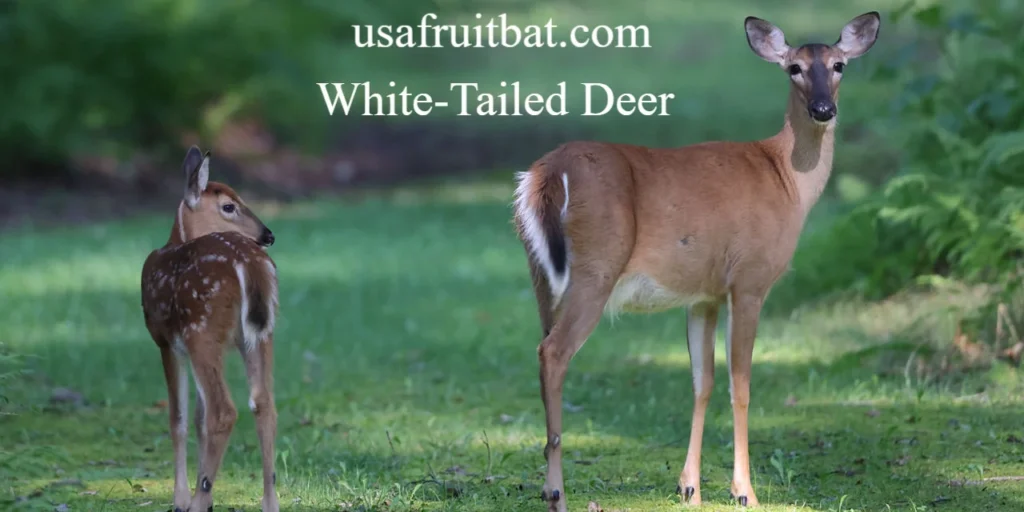
Its coat changes with the seasons. In summer it is a thin, reddish-brown; in winter it turns a thicker grayish-brown that insulates against cold. The chin, throat, belly, and the rings around the eyes stay pale year-round.
Whitetail vs. white-tailed: These are the same animal. “Whitetail deer,” “white tail deer,” and “white-tailed deer” are interchangeable. “Whitetail” is simply the shorthand used by hunters, biologists, and wildlife agencies.
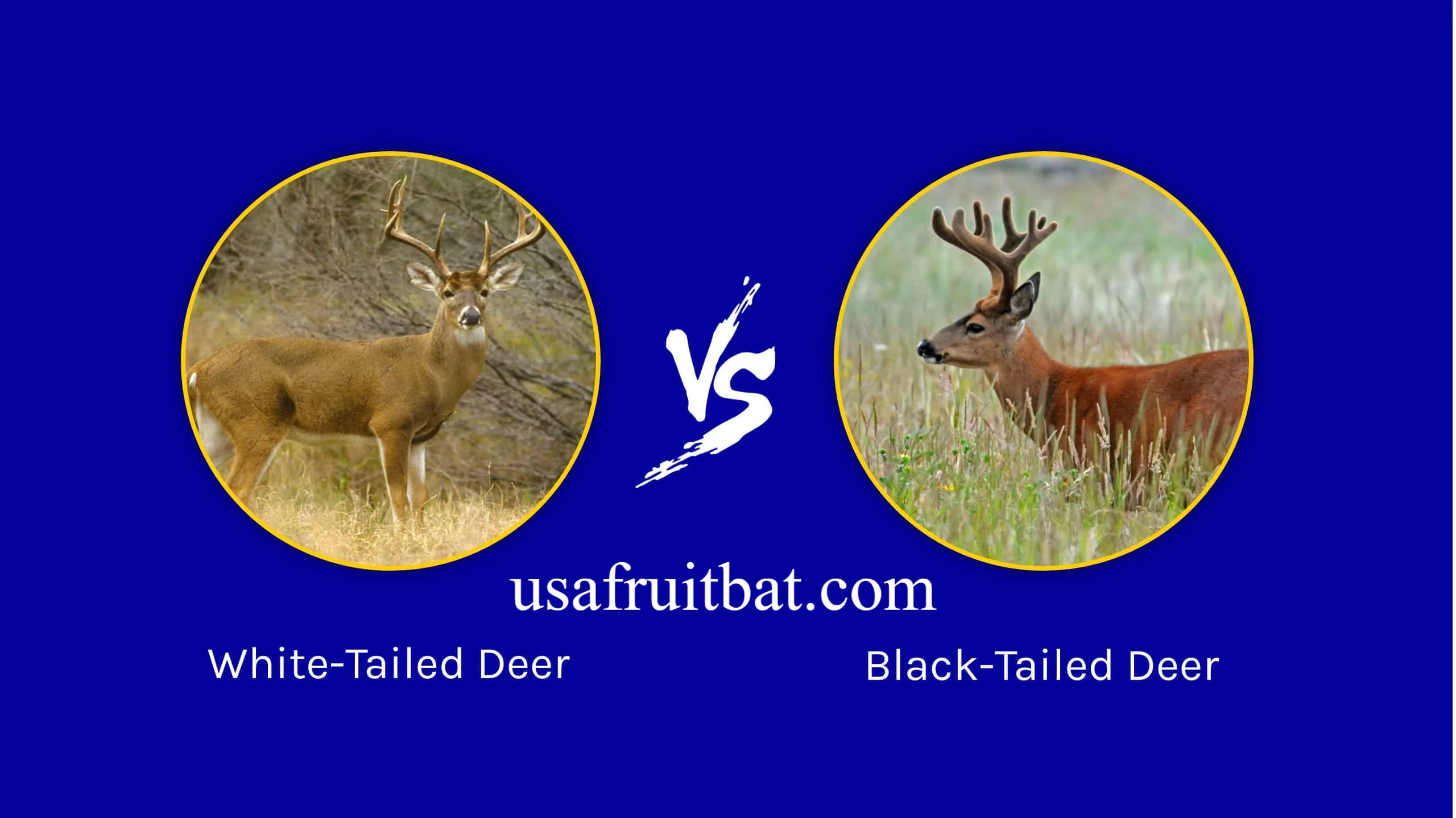
Family tree: Whitetails belong to the deer family alongside mule deer, elk, moose, and caribou. Within the genus Odocoileus, the closest relative is the mule deer, which has larger ears, a black-tipped tail, and forked antlers.
How Big Is a White-Tailed Deer? Bucks vs. Does
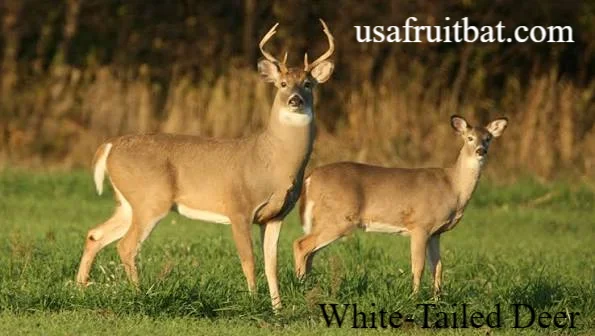
Adult whitetails stand roughly 2.5 to 3.5 feet at the shoulder. Size varies strongly with region and food quality, with northern deer generally larger than southern ones. Weights of 100 to 200 pounds are typical for adult males in many areas, and exceptional northern bucks can exceed that. Does are noticeably lighter.
| Feature | Bucks (male deer) | Does (female deer) |
|---|---|---|
| Typical build | Heavier, thick neck in the rut | Lighter, slimmer |
| Antlers | Yes, shed and regrown yearly | No |
| Social grouping | Bachelor groups, then solitary in the rut | Family groups with fawns |
| Role in reproduction | Breeds with receptive does | Gives birth and raises fawns |
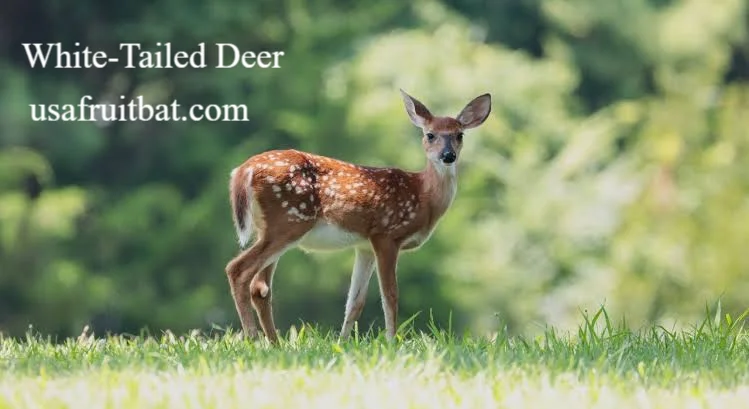
Young males are called bucks, females does, and the young fawns. A newborn fawn has a reddish coat with white spots that provide camouflage.
Where Do White-Tailed Deer Live? Range and Habitat
White-tailed deer live across nearly all of the contiguous United States, much of southern Canada, Mexico, and Central America, and into northern South America. They are scarce or absent in parts of the arid Southwest and the high Rockies, where mule deer take over. The species also has been introduced to places like Finland and New Zealand.
They thrive in habitat that mixes cover with food. Typical settings include:
- Deciduous and mixed forests with a brushy understory
- Forest edges, field borders, and farmland
- Swamps, river bottoms, and coastal thickets
- Suburban neighborhoods and parks with scattered woodlots
Because deer favor edges, human land use has often helped them. Farms provide crops, and suburban landscaping provides a buffet of ornamental plants. Most deer live their whole lives in a small home range, though some populations migrate seasonally. In snowy northern regions, deer may travel to sheltered “wintering yards” of conifers, where tree cover reduces snow depth and wind.
What Do White-Tailed Deer Eat?
Whitetails are herbivores that browse on a wide range of plant foods, shifting what they eat with the season. As ruminants, they have a four-chambered stomach that ferments tough plant material.
- Spring and summer: Tender leaves, forbs, grasses, and agricultural crops such as alfalfa
- Fall: Acorns and other hard mast, fruits, apples, and nuts, which build fat reserves before winter
- Winter: Twigs, buds, evergreen foliage, waste corn, and, when food is scarce, lichens and fungi
An adult deer eats several pounds of forage a day. That appetite is why dense deer populations can reshape forests by suppressing young trees and wildflowers, a problem foresters call over-browsing.
White-Tailed Deer Behavior and Communication
Whitetails are most active at dawn and dusk, a pattern known as crepuscular behavior. Many people call them nocturnal, but they are better described as twilight-active, and they shift toward night where hunting or human traffic is heavy.
Deer rely on their senses and on a quiet vocabulary:
- Snort-wheeze: A sharp alarm blast that warns others of danger
- Tail flagging: A visual signal that sends the herd bolting
- Grunts and bleats: Contact calls between does and fawns, and from bucks in the rut
- Scent: Glands on the legs, face, and between the hooves leave chemical messages
- Rubs and scrapes: Bucks rub trees with their antlers and paw the ground to advertise dominance
Does and their offspring form tight matriarchal groups, while bucks often travel together in loose bachelor groups until the breeding season pushes them apart.
How Fast Can a White-Tailed Deer Run and Jump?
A frightened whitetail can sprint at roughly 30 miles per hour, and it can leap a fence about eight feet high. Widely cited figures also credit them with bounds of up to 30 feet in length. They swim well, too. These abilities, plus acute hearing and smell, are the main defenses against predators.
Breeding, Rut and Life Cycle
The deer rut, or mating season, peaks in autumn, usually October through December, with November the busiest month across much of the U.S. Timing shifts by latitude, and southern populations can breed later.
During the rut, bucks become restless, travel widely, spar with rivals, and follow does that are ready to breed. Each doe is receptive for only a short window. A doe’s gestation period is about seven months (roughly 200 days), so most fawns arrive in late spring or early summer, commonly May through July.
Life cycle at a glance:
- Birth: A first-time doe usually has one fawn; experienced does often have twins, and triplets occur in good habitat.
- Hiding stage: Fawns lie still and nearly scentless in cover while the doe feeds nearby.
- Weaning: Fawns begin eating plants within weeks and wean in the fall.
- Maturity: Many does breed at about a year and a half; bucks usually take part in breeding more actively at older ages.
- Lifespan: Wild whitetails often live only a few years because of hunting, vehicles, and disease, but some reach ten years or more.
Antler Growth, Shedding and Tines
Only bucks grow antlers, which are true bone that drop off and regrow every year. After shedding in winter, new antlers begin growing in spring, covered in a blood-rich skin called velvet. By late summer the velvet dries and the buck rubs it off, leaving hard antlers for the rut. After breeding, testosterone drops and antlers are shed, usually between December and March.
Whitetail antlers have a main beam with unbranched points, called tines, rising from it. That differs from the forking pattern of mule deer. Antler size depends on age, nutrition, and genetics rather than a simple tine count, so counting points is a poor way to judge a buck’s age.
White-Tailed Deer Predators
Natural predators of adult deer include coyotes, bobcats, mountain lions, gray wolves, and black bears, while fawns are the most vulnerable. Coyotes and bobcats take many fawns in their first weeks, which is why a doe hides her young so carefully. The biggest source of adult deaths in most regions, however, is people: through regulated hunting and vehicle collisions.
How Many White-Tailed Deer Are There? Population and Conservation
The U.S. whitetail population is commonly estimated at around 30 million, though the exact figure depends on the source and year. That is a dramatic recovery. Unregulated market hunting and habitat loss had reduced deer to a small fraction of their historic numbers by the early 1900s. Hunting seasons, bag limits, restocking, and habitat protection helped them rebound, and the effort is often cited as a landmark success of American wildlife management.
Today the concern in many areas is the opposite of decline. Deer overabundance can mean:
- Lost forest regeneration and damaged native plants
- Crop and garden losses
- More deer-vehicle collisions
- Greater disease transmission within dense herds
State wildlife agencies set seasons and harvest limits as a core game management tool, with input from groups such as the National Deer Association (formerly the Quality Deer Management Association) and the U.S. Fish and Wildlife Service. Localized declines still occur, for example from overhunting in a given area or severe winters. One subspecies, the Florida Key deer, remains federally protected as endangered.
Disease and Public Health
Deer play a role in several health topics worth knowing:
- Lyme disease: Adult blacklegged ticks feed on deer, which helps sustain tick populations, but small mammals like mice are the main source of the bacteria.
- Chronic wasting disease (CWD): A fatal prion disease found in deer in many states, tracked closely by state agencies and the USDA.
- SARS-CoV-2: In 2021, USDA surveys found antibodies to the virus in a notable share of sampled wild whitetails in several states, showing the animals can be exposed to it. Scientists continue to study what this means.
White-Tailed Deer Hunting and Venison
Whitetails are the most hunted big game animal in North America. Hunting is regulated by state, with licenses, seasons, and tags that vary widely, so check your state wildlife agency before planning a hunt. Venison, or deer meat, is a lean red meat prized for its flavor, and proper field dressing and cooling matter for quality and safety. In CWD zones, follow local testing and carcass-handling guidance.
FAQ Section
What is a male white-tailed deer called?
A male white-tailed deer is called a buck. Bucks grow antlers each year, typically shedding them in winter and regrowing them in spring and summer.
What is the scientific name of the white-tailed deer?
The scientific name is Odocoileus virginianus. It is the only species of white-tailed deer, though it includes many regional subspecies.
How do you draw a white-tailed deer?
Start with simple shapes: an oval for the body, a smaller oval for the chest, and a tapered shape for the head. Add slim legs, large ears, and a tail with a white underside, then add antlers if drawing a buck. Observing photos of a deer in a relaxed stance helps with proportions.
What does a female white-tailed deer look like?
A female, or doe, is smaller and slimmer than a buck and has no antlers. She shares the same reddish-brown summer and grayish-brown winter coat, and is usually seen with fawns or a family group.
What is the difference between white tailed deer and whitetail deer?
There is no difference. “Whitetail deer” is a shortened form of “white-tailed deer” and refers to the same species, Odocoileus virginianus.
What family does the white-tailed deer belong to?
It belongs to the deer family, Cervidae, within the order Artiodactyla (even-toed hoofed mammals). Its relatives include mule deer, elk, moose, and caribou.
What is the range of the white-tailed deer?
The range stretches from southern Canada across most of the United States and Mexico, through Central America, and into northern South America. They are less common in the arid West and high mountains.
How big is a white-tailed deer?
Adults stand about 2.5 to 3.5 feet at the shoulder. Bucks often weigh roughly 100 to 200 pounds or more, and does are lighter. Northern deer tend to be larger than southern deer.
Author BIo: Hamid Ali is a wildlife and nature writer who researches animal behavior, habitats, conservation, and species biology. He creates clear, evidence-based guides that help readers better understand wildlife and the natural world.
Author Name: Hamid Ali
Email: johanharwen314@gmail.com
Also Read: