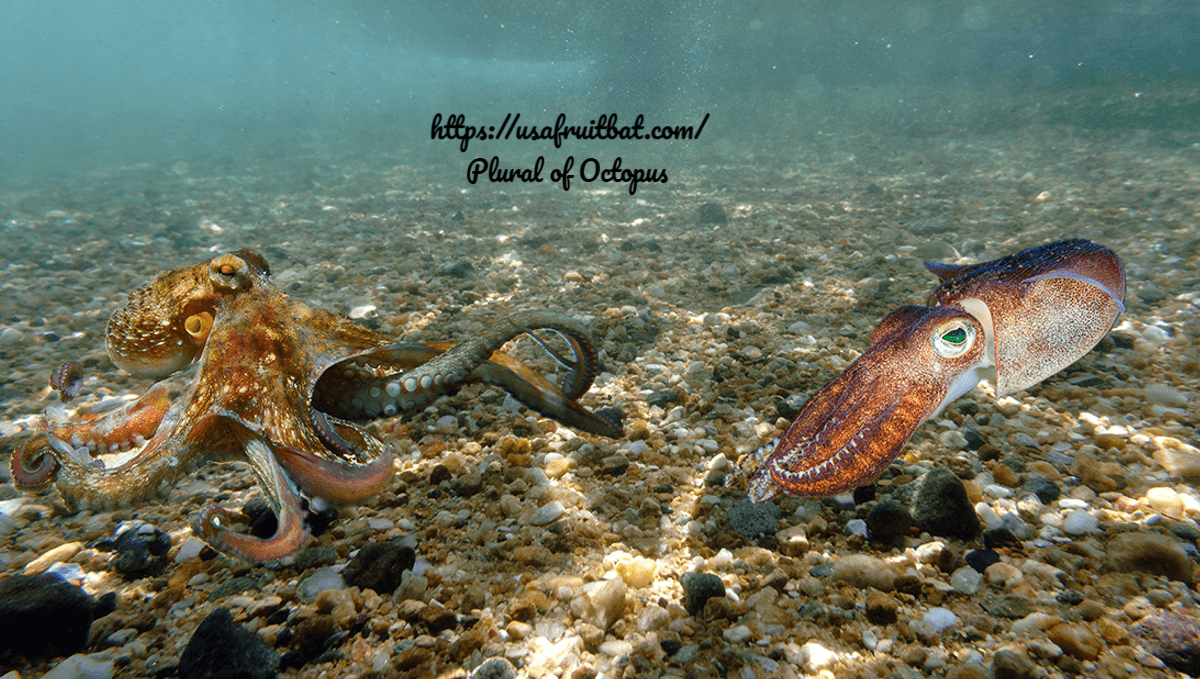
The standard plural of octopus in modern English is octopuses. “Octopi” is widely used and listed in major dictionaries as a variant. “Octopodes” is the plural that matches the word’s Greek roots, but it’s rare in everyday writing.
That answer surprises many people. Most of us learned “octopi” somewhere along the way, probably from a teacher, a cartoon, or a trivia night. The story behind these three forms says a lot about how English borrows words, and why “the rule” isn’t as simple as it sounds.
What Is the Plural of Octopus?
When you’re talking about more than one of the eight-armed sea creatures, the form to reach for is octopuses. It follows the ordinary English pattern of adding -es to a noun ending in -s, just as bus becomes buses and platypus becomes platypuses.
Some quick examples:
- “The aquarium keeps three octopuses in the same tank.”
- “Octopuses can squeeze through gaps no wider than their beaks.”
- “Researchers studied how octopuses use tools.”
This is the plural you’ll see most often in modern journalism, science writing, and publishing, in both American and British English.
Is “Octopuses” or “Octopi” Correct?
Short answer: Both appear in standard dictionaries, but “octopuses” is the preferred and most defensible choice.
Octopuses is fully correct. Octopi is not an error in the sense of being a misspelling, and Merriam-Webster and other major dictionaries record it as an accepted variant. But style-conscious editors and language writers generally favor octopuses, mainly because octopi rests on a shaky historical assumption (more on that below).
If you’re writing an academic paper, a news story, a school assignment, or anything that will be copyedited, use octopuses. If you’re chatting casually, nobody will bat an eye at octopi.
Why Do People Say “Octopi”?
Short answer: Because it looks like a Latin word, and many English speakers apply the Latin -us → -i pattern automatically.
English has borrowed a lot of Latin nouns and kept their Latin plurals: cactus/cacti, nucleus/nuclei, fungus/fungi, radius/radii. Since octopus ends in -us and sounds Latinate, the leap to octopi feels natural. The word’s scientific use in Latin-heavy biology only reinforces that impression.
There are a few reasons the habit stuck:
- Classroom folklore. Generations of students were told that Latin-looking words take Latin endings.
- Analogy. Pluralizing by pattern is how most people handle unfamiliar words.
- Sound. Octopi is shorter and easier to say than octopuses, which has three unstressed syllables in a row toward the end.
- Repetition. Once a form is common enough, it becomes normal, whatever its pedigree.
The catch is that the analogy fails. Octopus isn’t a native Latin word at all.
Where Does the Word “Octopus” Come From?
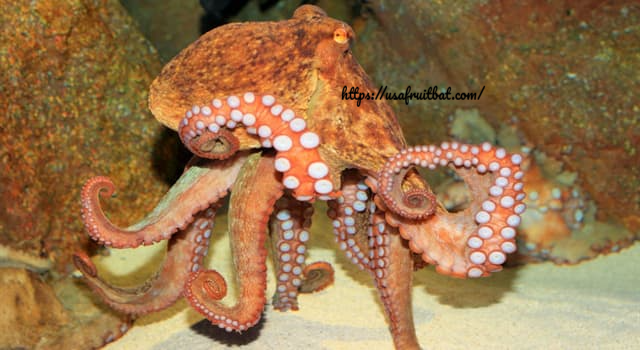
The etymology of octopus leads to Ancient Greek, not Latin. It comes from oktō (“eight”) and pous (“foot”), literally “eight-foot.” The word entered English in the mid-18th century through New Latin, the Latinized vocabulary used by naturalists and scientists to name organisms. That’s why it wears a Latin-looking -us ending even though its roots are Greek.
This matters because a plural formed with -i belongs to Latin’s second-declension nouns. Greek pous belongs to a different pattern altogether, and its plural is podes. So applying -i to a Greek-derived word is what linguists sometimes call a false Latin plural, a pattern that looks learned but doesn’t follow the source language.
A few other Greek-derived words hit the same snag: platypus (plural platypuses, not platypi) and hippopotamus (plural hippopotamuses, with hippopotami as a variant).

What Does “Octopodes” Mean?
Short answer: “Octopodes” is the plural that follows the word’s Greek grammar. It means the same thing as “octopuses,” just in a more learned form.
Take the Greek pous and form its plural, podes, and you get octopodes (pronounced roughly ok-TOP-uh-deez). It’s the “historically faithful” plural, which is why word enthusiasts like to cite it.
Is octopodes a correct plural? Yes, dictionaries do list it. Is it practical? Rarely. In most contexts it will sound like an affectation, or confuse readers who’ve never seen it. You’ll run into it in etymology discussions, crosswords, and the occasional pedantic argument, and that’s about it.
There’s a useful side note here. The scientific order the animals belong to is called Octopoda, from the same Greek roots, and it sits within the class Cephalopoda, the group that also includes squid and cuttlefish. So the Greek influence is baked into the biology even if it’s absent from everyday plurals.
Octopuses vs. Octopi vs. Octopodes
| Form | Origin logic | Dictionary status | Best for |
|---|---|---|---|
| Octopuses | English rule (add -es) | Standard, first-listed | Nearly all writing and speech |
| Octopi | Latin -us → -i pattern (misapplied) | Accepted variant | Casual use; recognize it, but don’t rely on it |
| Octopodes | Greek plural of pous | Accepted, rare | Etymology, wordplay, learned contexts |

The practical gap between these forms is much bigger than their spelling suggests. One is the default. One is a widely used alternative. One is a curiosity.
Which Plural of Octopus Should You Use?
Short answer: Use octopuses unless you have a specific reason not to.
Here’s a simple way to decide:
- Writing for school, work, or publication? Choose octopuses.
- Talking with friends? Octopuses still works, and octopi won’t raise eyebrows.
- Discussing word origins or playing with language? Octopodes is the fun one to bring up.
- Following a style guide? Check it. Most defer to a standard dictionary, and octopuses is the safe choice.
US vs. UK usage. American and British English agree here. The Oxford dictionaries and Merriam-Webster both treat octopuses as the main plural, so you don’t need to change anything based on your audience.
Food and culture. When octopus is on the menu, it’s typically a mass noun, so no plural is needed: “We ordered grilled octopus.” Plurals only come up when you’re counting animals.
What about a group? There’s no universally official collective noun. “A group of octopuses” is perfectly clear, and you’ll occasionally see playful coinages online. Stick with the plain wording for anything formal.
A bonus tip on squid. Since we’re in the cephalopod family, note that squid commonly stays unchanged in the plural (“five squid”), though squids is also accepted, especially when talking about different species.
Original Take: Why This Debate Won’t Die
The octopus plural argument lasts because it sits at the intersection of two things people care about: sounding educated and being right. Octopi sounds educated, but octopuses is right. The real lesson is bigger than one word: in English, “the fancy version” is often the wrong one, and ordinary English rules usually win.
For writers, a good habit is to check what the word’s actual source language is before borrowing its plural pattern. When in doubt, the English -es ending is rarely a mistake.
6. Custom FAQ Section
The plural of octopus is finally clarified: what’s the final answer?
The standard plural is octopuses. Octopi is a common variant that dictionaries accept, and octopodes is a rare, Greek-based form. If you want one word to use everywhere, choose octopuses.
What does the Oxford dictionary say is the plural of octopus?
Oxford’s dictionaries give octopuses as the standard plural and note that octopi and octopodes also occur. Since dictionary entries are updated over time, check the current online entry if you need to cite it.
What is the plural of octopus in English?
In English, the plural of octopus is octopuses. It’s formed the same way as bus/buses and platypus/platypuses.
What is the plural of octopus in Greek?
The word octopus comes from Greek oktōpous, and its Greek-form plural is oktōpodes, which gives English octopodes. In everyday modern Greek, the animal is called chtapodi (χταπόδι), and the plural is chtapodia (χταπόδια).
How do you pronounce the plural of octopus?
- Octopuses: OK-tuh-poo-siz (US) or OK-tuh-puh-siz (UK)
- Octopi: OK-tuh-pie
- Octopodes: ok-TOP-uh-deez
Exact vowel sounds vary by accent, and dictionary audio clips are the best way to hear them.
What is the plural of octopus in American English?
American English uses octopuses as the standard plural, with octopi accepted as a variant.
What does Merriam-Webster say about the plural of octopus?
Merriam-Webster lists octopuses as the primary plural and also records octopi and octopodes as variants. That reflects real-world usage: the first is preferred, and the others are recognized.
What is the plural of octopus in Arabic?
The Arabic word for octopus is akhṭabūṭ (أخطبوط). Its plural is commonly given as akhṭabūṭāt (أخطبوطات), and a broken plural, akhāṭib (أخاطب), is also listed in some dictionaries. Arabic dictionaries and native speakers are the best authority on regional preference.