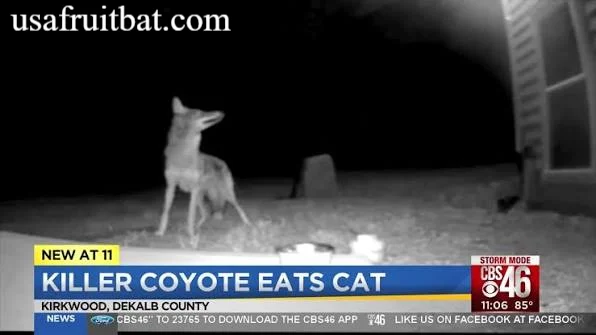
Adult coyotes have few natural predators. Gray wolves and cougars are the most important ones, and both kill coyotes regularly where their ranges overlap. Bears, golden eagles, great horned owls, and alligators take coyotes occasionally, often pups or weakened animals. Humans, through hunting, trapping, and vehicles, cause more coyote deaths than any wild animal.
Coyotes (Canis latrans) are often seen as the hunters, not the hunted. That makes sense, since they are adaptable carnivores that thrive from Alaskan forests to Arizona deserts to the edges of major cities. But “few predators” is not the same as “no predators,” and the details change by region, season, and the coyote’s age.

Who Actually Preys on Coyotes? A Quick Overview
Not every animal that kills a coyote eats it. Biologists separate two situations:
- True predation: the animal kills the coyote and eats it.
- Interference competition: the animal kills the coyote to remove a rival, then leaves the carcass.
This distinction matters because several big carnivores that “hunt” coyotes are mostly eliminating competition for food and territory.
| Animal | Threat to coyotes | Who is most at risk |
|---|---|---|
| Gray wolf | High, mostly competition-driven | Adults and pups |
| Cougar (mountain lion) | Moderate to high | Adults and juveniles |
| Black and grizzly bears | Low | Pups, den intrusions |
| Golden eagle | Low | Pups and small juveniles |
| Great horned owl | Low | Very young pups |
| Canada lynx / bobcat | Low, mostly competition | Pups |
| American alligator | Low, local | Coyotes near water |
| Humans | Very high | All ages |
How Coyote Behavior Shapes Their Risk
Coyotes are flexible. They live alone, in pairs, or in small family groups, and what people call a coyote pack is usually a breeding pair and their offspring. Group living helps them defend dens and chase off threats, but a lone animal crossing wolf or cougar territory is exposed.
Their habits also reduce risk. Coyotes are often most active at dawn, dusk, and night, and they use dens, brush, and broken terrain to stay hidden. In areas with many predators, they tend to avoid the places those predators favor.
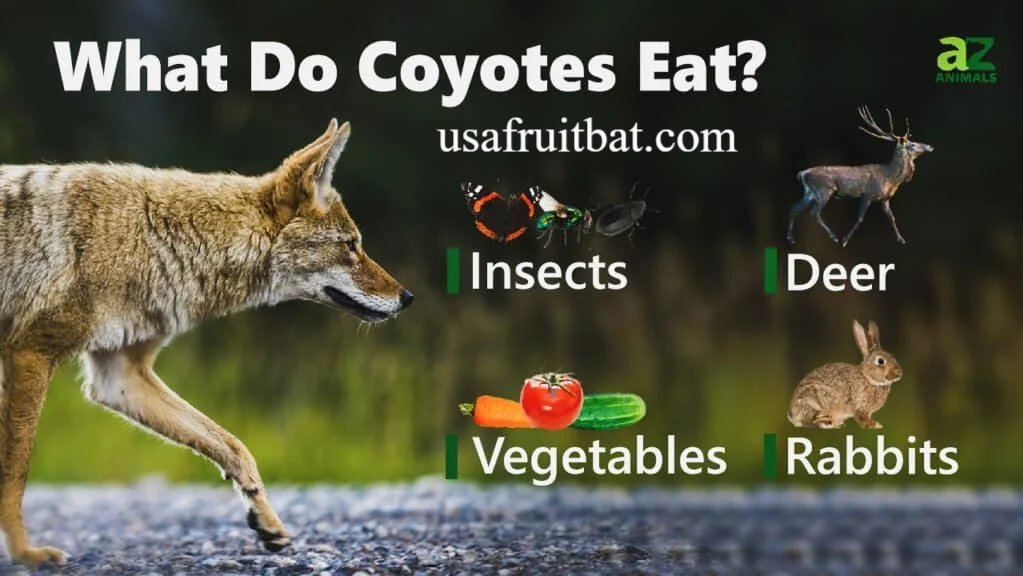
What Do Coyotes Eat?
Coyotes are omnivores in practice, though they lean heavily toward meat. Their diet is one reason they have spread so widely.
- Small mammals: mice, voles, ground squirrels, and rabbits make up much of the diet in many regions.
- Larger prey: deer fawns in spring and early summer, and occasionally moose calves. Healthy adult deer are rarely taken by one coyote, though groups sometimes hunt weakened or snow-bound animals.
- Other animals: birds, snakes, amphibians, fish, and insects.
- Plants: berries, fruit, and seeds.
- Carrion: roadkill and the leftovers of other predators’ kills.
Their diet shows how coyotes sit in the food chain. They are mid-level predators: hunters of small and medium animals, and prey for a few larger carnivores.
Where Do Coyotes Live?
The coyote range covers most of North America, including nearly all of the contiguous United States, Canada, and Mexico, with populations extending into Central America. Coyotes occupy grasslands, deserts, forests, mountains, farmland, and suburbs.
Their habitat expansion over the last century is closely tied to predator loss. When wolves and cougars were heavily reduced across much of the country, coyotes filled the gap and moved into regions where they were once rare, including the eastern U.S. This is also why coyote predator relationships look different in the West, where large carnivores persist, than in many eastern suburbs, where almost nothing but humans and cars limits them.
Coyote Predators: Who Hunts Them?
Gray Wolves
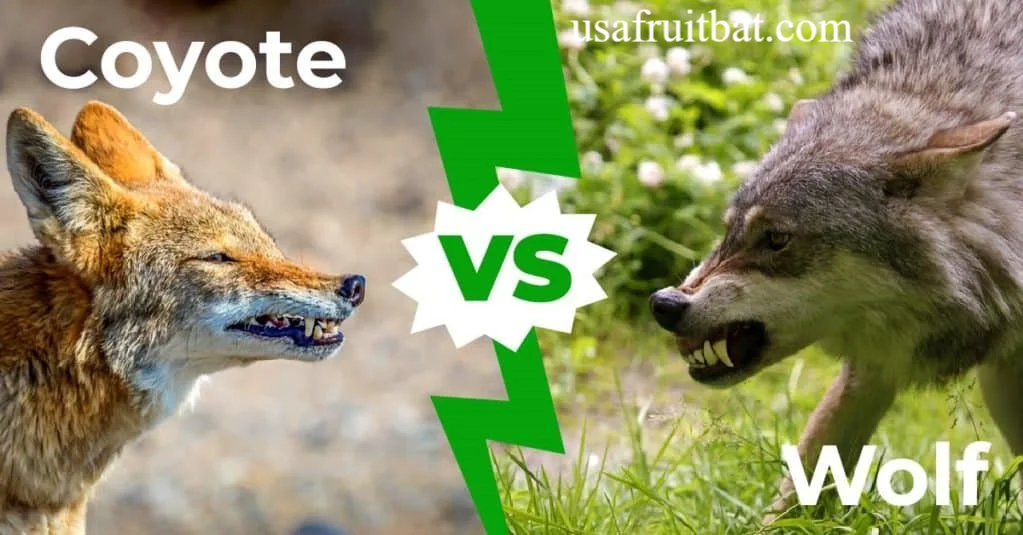
Wolves are the most serious natural threat. They are larger, hunt in packs, and see coyotes as competitors. Researchers studying Yellowstone National Park after wolves were reintroduced in 1995 documented coyote declines in parts of the northern range, driven largely by wolf aggression. Wolves frequently kill coyotes near carcasses and den areas, and they often leave the bodies uneaten.
Wolves don’t wipe coyotes out, though. Coyotes adapt by shifting their territories, hunting smaller prey, and keeping their distance.
Cougars
Cougars, also called mountain lions, are ambush predators weighing many times more than a coyote. They can kill coyotes at kills, near dens, or when the opportunity arises. Coyotes do show up in cougar diets in parts of the West, but deer and other large prey make up most of what cougars eat, so coyotes are an occasional meal.
Bears
Black bears and grizzly bears seldom hunt coyotes. Their usual interaction is competition: a bear takes over a carcass, and coyotes retreat. Bears may kill pups if they raid a den or catch an adult off guard, but this is uncommon and poorly documented compared with wolf and cougar predation.
Canada Lynx (and Bobcats)
The Canada lynx is mainly a snowshoe hare specialist and lives in northern forests where coyotes are not always common. Lynx and bobcats are more likely to compete with coyotes than to eat them, and any predation would most likely involve pups. If you saw this listed as a major predator elsewhere, treat it as an exaggeration: coyotes are generally the more dominant animal in those encounters.
American Alligators
In the Southeast, alligators share swamps, rivers, and shorelines with coyotes. A coyote drinking, hunting, or crossing water near an alligator can become prey. Documented cases exist, but alligator predation on coyotes is a local, opportunistic event and not a population-level factor.
Other Coyote Predators and Threats
Birds of prey. Golden eagles and great horned owls can take coyote pups, especially when pups are small and outside the den. Adult coyotes are too large for most raptors.
Humans. This is the main factor. Hunting, trapping, government and private predator control, and collisions with vehicles account for a very large share of coyote mortality in many regions. Coyote hunting is legal in much of the U.S., often with few restrictions, and the pressure is constant.
Disease and parasites. Sarcoptic mange, canine distemper, parvovirus, and other illnesses can weaken or kill coyotes, especially pups.
Starvation and harsh weather. Pups born in poor years, or coyotes injured and unable to hunt, are vulnerable.
Other coyotes. Territorial fights between coyotes can be deadly.
Why Coyote Pups Face the Highest Risk
Coyote pups are born in spring, in litters that commonly number around five or six, though size varies with food supply. Pups are the most likely victims of eagles, owls, bears, and bobcats. Both parents, and often older siblings, guard the den and bring food. Many pups still die in their first year from disease, starvation, or accidents.
Coyote Predators and the Food Chain
Coyotes occupy the middle of the food chain. Wolves and cougars sit above them as apex predators in many regions, and coyotes control rodents, rabbits, and some smaller carnivores below them.
This produces a pattern ecologists call mesopredator release. Where large predators are absent, coyotes often become more abundant, which can raise pressure on ground-nesting birds, small mammals, and smaller predators such as foxes. Where wolves return, coyote numbers and behavior can shift, with ripple effects through the system.
Their overall coyote population is large and widespread rather than in decline. Local drops happen after wolf recovery, heavy control programs, or mange outbreaks, but as of October 2026, there is no evidence that natural predators are limiting coyotes across their range.
Frequently Asked Questions
What eats coyotes in the desert?
Desert coyotes face cougars, golden eagles and great horned owls (for pups), and occasionally bobcats. The biggest threats are people, vehicles, and disease. Wolves are largely absent from desert regions, so cougars are the main large natural predator.
What do coyotes eat?
Coyotes eat rodents, rabbits, birds, reptiles, amphibians, fish, insects, fruit, and carrion. They also take deer fawns and, sometimes, injured or weakened larger animals. Their flexible diet lets them live almost anywhere.
Do lions eat coyotes?
African lions do not meet coyotes. In North America, the equivalent animal is the cougar, also called the mountain lion, and it does kill and sometimes eat coyotes.
Do coyotes eat foxes?
Yes. Coyotes kill red foxes, gray foxes, and kit foxes, mainly to remove competitors, and they sometimes eat them. Foxes often avoid areas with high coyote activity.
Do bears eat coyotes?
Rarely. Black bears and grizzlies mostly steal food from coyotes. A bear may kill a pup or an unwary adult, but bears are a minor predator of coyotes.
Do wolves eat coyotes?
Wolves kill coyotes often where the two overlap, but they usually do it to eliminate competition and do not always eat the carcass. Wolves are the most significant natural predator of coyotes.
Do coyotes eat deer?
Yes, mostly fawns in late spring and summer. Adult deer are harder prey, though coyotes sometimes hunt them in groups, especially in deep snow or when the deer is sick or injured. Coyotes also eat deer carrion.
Do coyotes eat raccoons and possums?
Yes, though neither is a main food. Coyotes will kill raccoons and opossums when the chance arises, especially in suburban and urban areas, and they scavenge their remains.
Conclusion
Coyotes are hunters first, but they are not at the top. Wolves and cougars are their main natural threats, while bears, golden eagles, great horned owls, and alligators play smaller or local roles. People remain the largest cause of coyote deaths. Because coyotes are adaptable, they continue to do well across North America despite all of it.
Author Bio: Hamid Ali is a wildlife writer covering coyotes, predators, animal behavior, habitats, and North American ecosystems. He focuses on clear, research-based insights that help readers understand wildlife and the complex relationships within nature.
Also Read: