What is a mariana fruit bat?
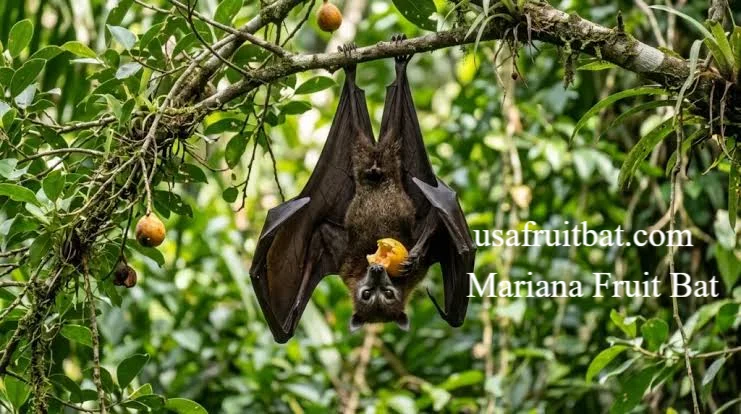
Have you ever seen a bat with a face that looks almost like a small fox? That is exactly what a mariana fruit bat looks like, and it is one of the most fascinating animals living on a tiny cluster of Pacific islands. The mariana fruit bat, known scientifically as Pteropus mariannus, is a large fruit eating bat found only in the Mariana Islands and the atoll of Ulithi.
Locals in Guam call it fanihi, and it holds deep cultural meaning for the Chamorro people. This article walks you through everything you need to know about the mariana fruit bat, including its diet, habitat, size, threats, and the surprising numbers behind its population today. By the end, you will understand why this island giant deserves your attention.
Quick facts about the mariana fruit bat
Before we go deeper, here is a fast snapshot you can scan in seconds.
| Feature | Detail |
|---|---|
| Scientific name | Pteropus mariannus |
| Common names | Mariana flying fox, fanihi |
| Weight | 0.6 to 1.1 pounds (270 to 500 grams) |
| Forearm length | 5.3 to 6.1 inches |
| Diet | Fruit, flowers, occasional leaves |
| Habitat | Native forests, mangroves, coconut groves |
| Conservation status | Endangered under IUCN, Threatened under US law |
| Range | Guam, Rota, Saipan, Tinian, and other Mariana Islands, plus Ulithi |
Where do mariana fruit bats live?
The mariana fruit bat is endemic to the Mariana archipelago, which means you will not find it naturally anywhere else on earth except this island chain and the nearby atoll of Ulithi. These bats roost in colonies on cliffs, forest canopies, and coconut groves, usually in spots sheltered from strong winds.
I find it remarkable that an animal this large depends entirely on such a small stretch of islands. If something goes wrong on even one island, the whole species feels the impact. Below is a look at where these bats are found and roughly how many live there.
| Island | Approximate Population |
|---|---|
| Rota | 2,500 to 3,000 |
| Anatahan | Around 3,000 |
| Pagan | Around 2,500 |
| Agrihan | Around 1,000 |
| Guam | Under 100 |
| Saipan | Under 100 |
| Tinian | Under 25 |
| Aguijan | Around 50 |
These numbers shift often because typhoons, hunting, and habitat changes affect colonies quickly. A mariana fruit bat colony can grow after a good breeding season and then shrink again after a single storm.
What does a mariana fruit bat look like?
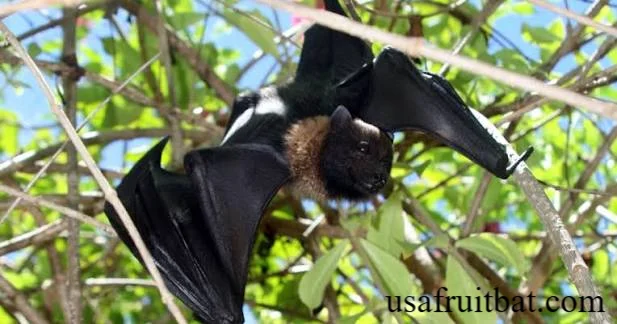
A mariana fruit bat has a distinct appearance that sets it apart from smaller insect eating bats. You will notice these traits right away.
- A face resembling a small fox or dog, with rounded ears and large eyes
- Dark brown to black fur on the belly, often flecked with gray hairs
- Golden or bright brown fur across the shoulders and neck
- A wingspan that can stretch close to three feet
- No echolocation ability, since it relies on sharp eyesight and smell instead
Males tend to be slightly bigger than females. Unlike the small bats you might picture flitting around a backyard, the mariana fruit bat is a large, bulky flier built for long distance travel between islands.
What does a mariana fruit bat eat?
The mariana fruit bat is a frugivore, meaning fruit makes up most of its diet. It also eats flowers and occasionally nibbles on leaves when food is scarce.
Here are some of its favorite foods.
- Breadfruit
- Papaya
- Figs
- Pandanus fruit
- Coconut sap and flowers
- Cycad seeds
A single mariana fruit bat can eat close to forty percent of its body weight in fruit during one night of foraging. That is an enormous amount of food for an animal its size, and it explains why these bats play such a huge role in spreading seeds across the forest.
Why does the mariana fruit bat matter to the ecosystem?
You might wonder why anyone should care about one species of bat on a small group of islands. Here is the answer. The mariana fruit bat acts as a keystone seed disperser and pollinator. When it eats fruit, it carries seeds far from the parent tree and drops them in new locations, helping forests recover after typhoons and other disasters.
Without the mariana fruit bat, native trees on these islands would struggle to spread their seeds naturally. Few other animals in the region do this job as efficiently. Losing this bat would mean losing a quiet engine that keeps the island forests alive.
Why is the mariana fruit bat endangered?
This is where the story turns sad. The mariana fruit bat is listed as Endangered by the IUCN Red List and as Threatened under the US Endangered Species Act. Several forces have pushed this species toward decline over the past century.
- Hunting and poaching: The bat is considered a traditional delicacy in the region, and illegal hunting still happens despite federal protection since the 1980s.
- Habitat loss: Agriculture, military development, and urban growth have destroyed large areas of native forest.
- Invasive species: The brown tree snake, accidentally introduced to Guam, preys heavily on bats and their young.
- Natural disasters: Typhoons and volcanic eruptions on islands like Anatahan and Pagan can wipe out entire colonies overnight.
- Toxic accumulation: Some bats feed on cycad seeds, which contain compounds linked to a serious neurological illness in animals that rely on them too heavily.
On Guam specifically, wildlife experts have recorded fewer than one hundred mariana fruit bats remaining, with some recent counts showing numbers as low as forty individuals in the last known colony. That is a staggering drop from the thousands that once lived across the island before firearms became common.
How many mariana fruit bats are left today?
Researchers estimate the total population across the entire Mariana archipelago at somewhere between seven thousand and nine thousand bats, based on surveys conducted over the past two decades. According to the United States Fish and Wildlife Service, the northern islands hold the majority of surviving bats, since they are largely uninhabited by humans and see far less hunting pressure.
Experts from the Fish and Wildlife Service note that a conservative reading of survey data shows real declines on the islands that once held the largest colonies. This tells us the mariana fruit bat population is not stable, even if total numbers sound reasonably high on paper.
How does a mariana fruit bat behave?
Understanding bat behavior helps explain why conservation is tricky. Consider these behavioral facts.
- Mariana fruit bats live in colonies that can hold up to two thousand individuals on healthy islands.
- Males form harems with several females or live alone nearby.
- The species is nocturnal, sleeping during the day and foraging at night.
- These bats can fly long distances between islands but generally stay close to their home colony.
- Mothers typically care for a single pup at a time.
What is being done to protect the mariana fruit bat?
Conservation groups and government agencies have taken real steps to protect this species. Guam and the Commonwealth of the Northern Mariana Islands both enforce laws against hunting fruit bats. The species also holds Appendix I status under CITES, meaning international commercial trade is banned.
Protected areas such as the Ritidian Unit on Guam give bats a safer place to roost away from heavy hunting pressure. Wildlife officers continue running population surveys every few years to track how colonies are doing, and public education campaigns aim to reduce illegal hunting in local communities.
Personally, I think the most powerful tool here is simple awareness. When island communities understand how important the mariana fruit bat is for their own forests, protection becomes something people want, not just a rule they follow.
Final thoughts on the mariana fruit bat
The mariana fruit bat is more than an unusual looking animal with a fox like face. It is a forest guardian, a cultural symbol, and a species standing at a genuine crossroads. Hunting, habitat loss, and invasive predators have already pushed populations dangerously low on islands like Guam, yet stronger colonies on Rota and the northern islands show that recovery is still possible.
If you care about wildlife conservation, the mariana fruit bat is a story worth following closely. Share this article with someone who loves nature, and consider supporting organizations working to protect Pacific island wildlife. Every bit of awareness helps this remarkable species stay part of our world.
Frequently Asked Questions
What is a mariana fruit bat? A mariana fruit bat is a large fruit eating bat native to the Mariana Islands and Ulithi atoll. It has a fox like face, large eyes, and a diet built mostly around fruit and flowers.
Is the mariana fruit bat dangerous to humans? No. The mariana fruit bat does not attack people and has no interest in human food beyond occasional cultivated fruit. It poses no real threat to humans.
Why is the mariana fruit bat endangered? Hunting, habitat destruction, invasive predators like the brown tree snake, and severe weather events have all contributed to its declining numbers over the past century.
How many mariana fruit bats are left in the world? Current estimates place the total population somewhere between seven thousand and nine thousand across the entire Mariana archipelago, though numbers on islands like Guam remain critically low.
What does a mariana fruit bat eat? It eats mostly fruit such as breadfruit, papaya, and figs, along with flowers and occasional leaves when fruit is scarce.
Where can you find a mariana fruit bat? You can find this species only in the Mariana Islands, including Guam, Rota, Saipan, Tinian, and several northern islands, plus the atoll of Ulithi.
How big does a mariana fruit bat get? An adult mariana fruit bat weighs between 0.6 and 1.1 pounds and has a wingspan that can reach close to three feet.
Does the mariana fruit bat use echolocation? No. Unlike many smaller bats, the mariana fruit bat relies on strong eyesight and a sharp sense of smell to find food at night.
usafruitbat.com
Author Name: Hamid Ali
Email: johanharwen314@gmail.com
About the Author: Hamid Ali is a wildlife content writer who enjoys turning complex conservation research into stories that everyday readers can understand and enjoy. He focuses on endangered species, island ecosystems, and the small actions that help protect them.