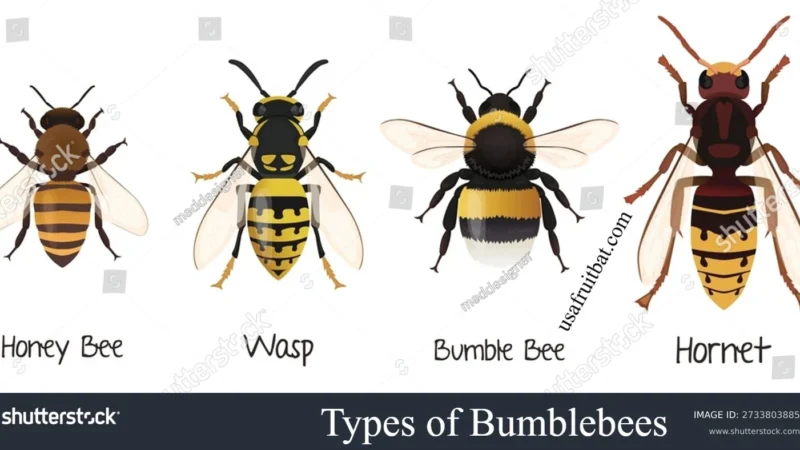
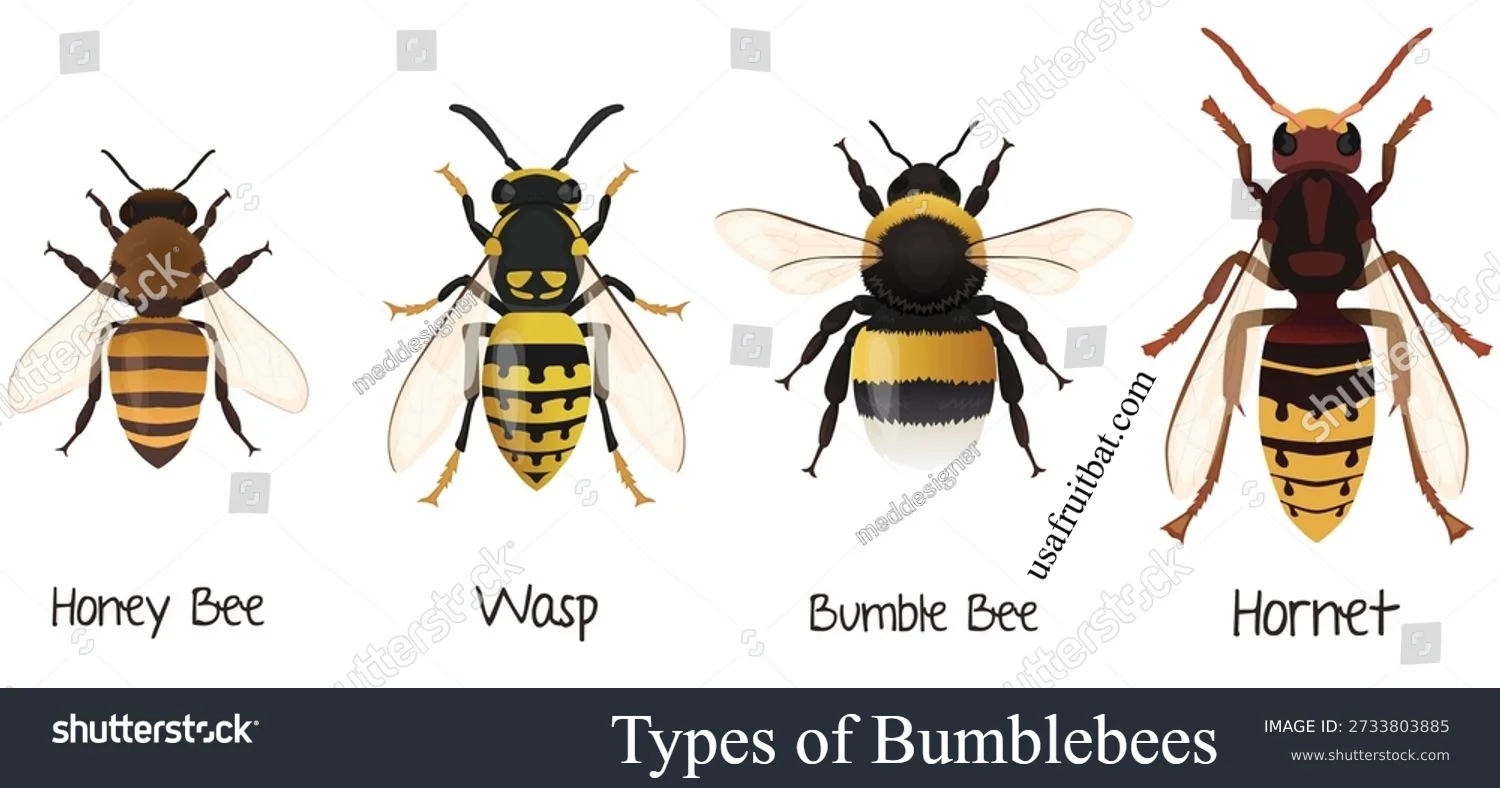
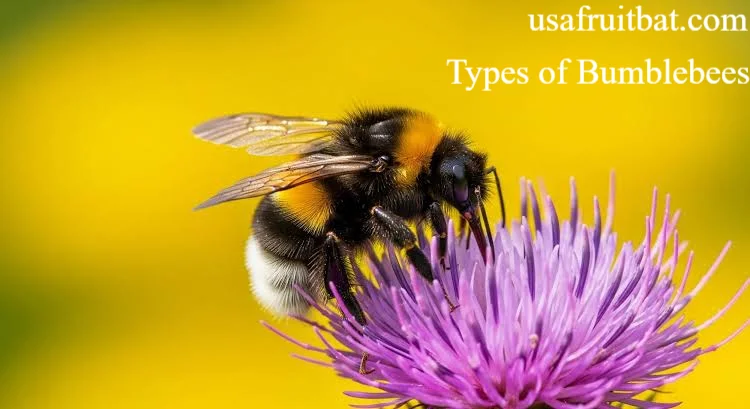
Bumblebees are among the most recognizable wild pollinators. Their round bodies, dense hair, loud buzzing, and colorful bands make them relatively easy to notice, but identifying the exact species can be surprisingly difficult.
There are roughly 270 bumblebee species worldwide, according to the Bumblebee Conservation Trust. In the UK, 24 species are currently found, while the United States has dozens of native bumblebee species with distributions that vary considerably by region.
This guide explores common types of bumblebees, including North American species such as the common eastern, American, two-spotted, brown-belted, tri-colored, black and gold, western, and rusty patched bumble bees. It also covers familiar UK species such as the buff-tailed, white-tailed, tree, and early bumblebees.
How Many Types of Bumblebees Are There?
There are around 270 recognized bumblebee species worldwide, although the exact number can change as taxonomy and species research develop. All belong to the genus Bombus.
Bumblebees are primarily associated with temperate and cooler regions. Their diversity is particularly notable across the Northern Hemisphere.
For identification purposes, it helps to remember that a species can look different depending on its caste. A queen, worker, and male from the same species may have different sizes or markings.
In the UK, for example, the Bumblebee Conservation Trust currently recognizes 24 species, including 18 social species and six cuckoo bumblebee species.
The U.S. Fish and Wildlife Service also provides a North American Bee Distribution Tool that allows users to explore bee species records across the United States, Canada, and Mexico.
Common North American Bumblebee Species
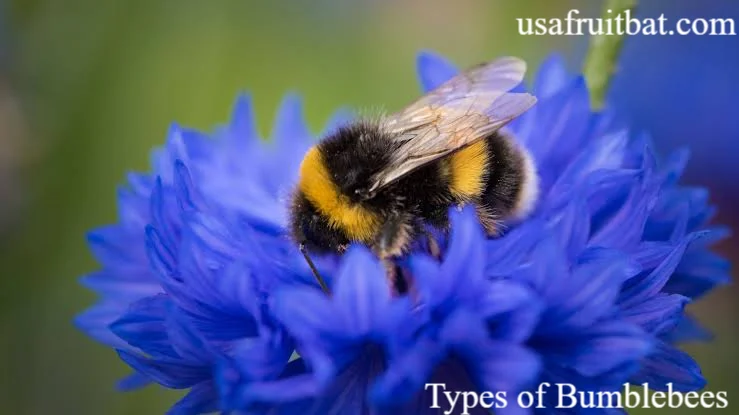
North American bumblebees include many species with overlapping colors and ranges. That makes location, markings, body shape, and sometimes the caste important when making an identification.
1. Common Eastern Bumble Bee
Scientific name: Bombus impatiens
The common eastern bumble bee is one of the familiar bumblebees of eastern North America. It occurs across much of the eastern United States and is also widely encountered in managed landscapes.
The species is adaptable and can live in a variety of environments, including gardens, parks, farmland, and forest edges. Its combination of yellow and black hair can help distinguish it from other species, although close-looking species can make identification challenging.
The U.S. Fish and Wildlife Service describes Bombus impatiens as common across much of the eastern United States.
2. American Bumble Bee
Scientific name: Bombus pensylvanicus
The American bumble bee is a large, conspicuous species with a mostly dark body and yellow markings around the thorax and abdomen.
It has historically occupied a broad area of the United States. The species is associated with open habitats and can be found visiting a range of flowering plants.
The U.S. Fish and Wildlife Service describes it as a large, fuzzy pollinator and notes that workers forage on flowers such as coneflowers and milkweeds.
Its populations have declined substantially in parts of its historical range, making it an important species for conservation monitoring.
3. Two-Spotted Bumble Bee
Scientific name: Bombus bimaculatus
As its common name suggests, the two-spotted bumble bee has distinctive yellow markings that help separate it from some similar species.
It occurs primarily in eastern North America and can be encountered in gardens, meadows, and other areas containing flowering plants.
When identifying this species, look carefully at the abdominal pattern rather than relying only on the overall yellow-and-black appearance.
4. Brown-Belted Bumble Bee
Scientific name: Bombus griseocollis
The brown-belted bumble bee is widespread and recognizable by the brownish band across part of its abdomen.
This species can be confused with other bumblebees with brown or rusty markings. Comparing the exact position of the band and the surrounding hair color is therefore more useful than simply calling a bee “brown.”
5. Tri-Colored Bumble Bee
Scientific name: Bombus ternarius
The tri-colored bumble bee is particularly striking because of its combination of black, yellow, and reddish-orange markings.
It is associated with northern parts of North America and is often found visiting flowers in meadows, gardens, and other open habitats.
Its bold coloration makes it one of the easier bumblebee species to recognize when viewed from above.
6. Black and Gold Bumble Bee
Scientific name: Bombus auricomus
The black and gold bumble bee is a large species with predominantly dark coloration and noticeable yellow or golden markings.
It can occur across parts of eastern and central North America. Because several large bumblebees can appear mostly black at a distance, identification should include the exact location and pattern of the yellow hairs.
7. Western Bumble Bee
Scientific name: Bombus occidentalis
The western bumble bee is native to western North America and has experienced serious declines in parts of its historical range.
Its appearance can vary geographically, but it generally has a dark body with lighter abdominal markings. It occurs in a range of western habitats, particularly where suitable flowers and nesting resources are available.
The species is among the bumblebees receiving conservation attention in the United States.
8. Rusty Patched Bumble Bee
Scientific name: Bombus affinis
The rusty patched bumble bee is one of the best-known conservation cases involving North American bumblebees.
The species was listed as federally endangered in the United States in 2017. Historically, it occurred across a large part of the eastern United States and upper Midwest as well as parts of Canada.
Workers and males typically have a distinctive rusty-colored patch on the abdomen. However, queens do not have the same obvious rusty patch, making queen identification more difficult.
Because it can resemble species such as the brown-belted bumble bee, photographs from several angles can be valuable for identification.
Common UK Bumblebee Species
The UK has 24 currently recognized bumblebee species. Eight are particularly common and widespread: buff-tailed, white-tailed, common carder, red-tailed, early, garden, heath, and tree bumblebees.
Buff-Tailed Bumblebee
Scientific name: Bombus terrestris
The buff-tailed bumblebee is one of the UK’s most common and widespread species.
Queens can emerge from late winter or early spring, and the species can be found in gardens, parks, and countryside. It usually nests underground, often using old rodent holes.
Its golden-yellow bands and buff-colored tail on queens are useful identification features.
White-Tailed Bumblebee
Scientific name: Bombus lucorum
The white-tailed bumblebee is another widespread UK species.
It has yellow bands and a pale tail, but distinguishing it from closely related species can require careful examination because several bumblebees have similar color patterns.
Tree Bumblebee
Scientific name: Bombus hypnorum
The tree bumblebee is unusual among familiar UK bumblebees because it commonly nests above ground, including in bird boxes and roof spaces. Colonies can contain up to about 150 workers.
It is widely found in gardens, parks, and countryside.
Early Bumblebee
Scientific name: Bombus pratorum
The early bumblebee is a relatively small species and is one of the UK’s common and widespread bumblebees.
Queens can emerge from hibernation from March onward. The species often nests in old rodent nests and can have relatively small colonies of up to around 100 workers.
Bumblebee Identification Chart
A simple identification chart can help narrow down what you have seen:
| Feature | What to Look For |
|---|---|
| Tail color | White, buff, red, orange, or another pale shade |
| Abdominal bands | Count and note their position |
| Thorax | Look for yellow, black, brown, or reddish hair |
| Body size | Compare the bee with nearby flowers |
| Face | Hair color and face shape can help |
| Legs | Females have pollen baskets |
| Location | Geographic range can eliminate unlikely species |
| Habitat | Garden, woodland, meadow, grassland, or urban area |
The Bumblebee Conservation Trust recommends paying particular attention to tail color and banding pattern, while also considering legs, antennae, face, hair, and distribution.
How to Tell Different Bumblebees Apart
The best approach is to combine appearance with geography rather than relying on color alone.
Start with these steps:
- Look at the abdomen.
Note whether the tail is white, buff, red, orange, or another color. - Count the bands.
Record how many yellow or pale bands appear on the thorax and abdomen. - Check the thorax.
Some species have distinctive yellow or black thoracic patterns. - Consider body size.
Queens are usually larger than workers, so size alone cannot identify a species. - Check your location.
A species must occur in your region to be a likely identification. - Look at the habitat.
Gardens, meadows, forests, wetlands, and urban areas can support different species. - Take several photographs.
Top, side, and head photographs can make identification substantially easier. The U.S. Fish and Wildlife Service specifically recommends multiple photographic angles when documenting potentially rare bumblebees.
Where Do Bumblebees Live?
Bumblebees live in many habitats where flowering plants provide nectar and pollen.
Depending on the species, you may find them in:
- Gardens
- Meadows
- Grasslands
- Forest edges
- Parks
- Farms
- Mountain habitats
- Coastal areas
- Urban landscapes
Their nests can also differ considerably.
Many species nest underground in abandoned rodent burrows or similar cavities. Others use surface vegetation, abandoned nests, or structures above ground.
For example, tree bumblebees commonly use bird boxes and roof spaces in the UK.
What Do Bumblebees Eat?
Bumblebees primarily collect nectar and pollen from flowers.
Nectar provides energy for adult bees, while pollen supplies important nutrients for developing larvae.
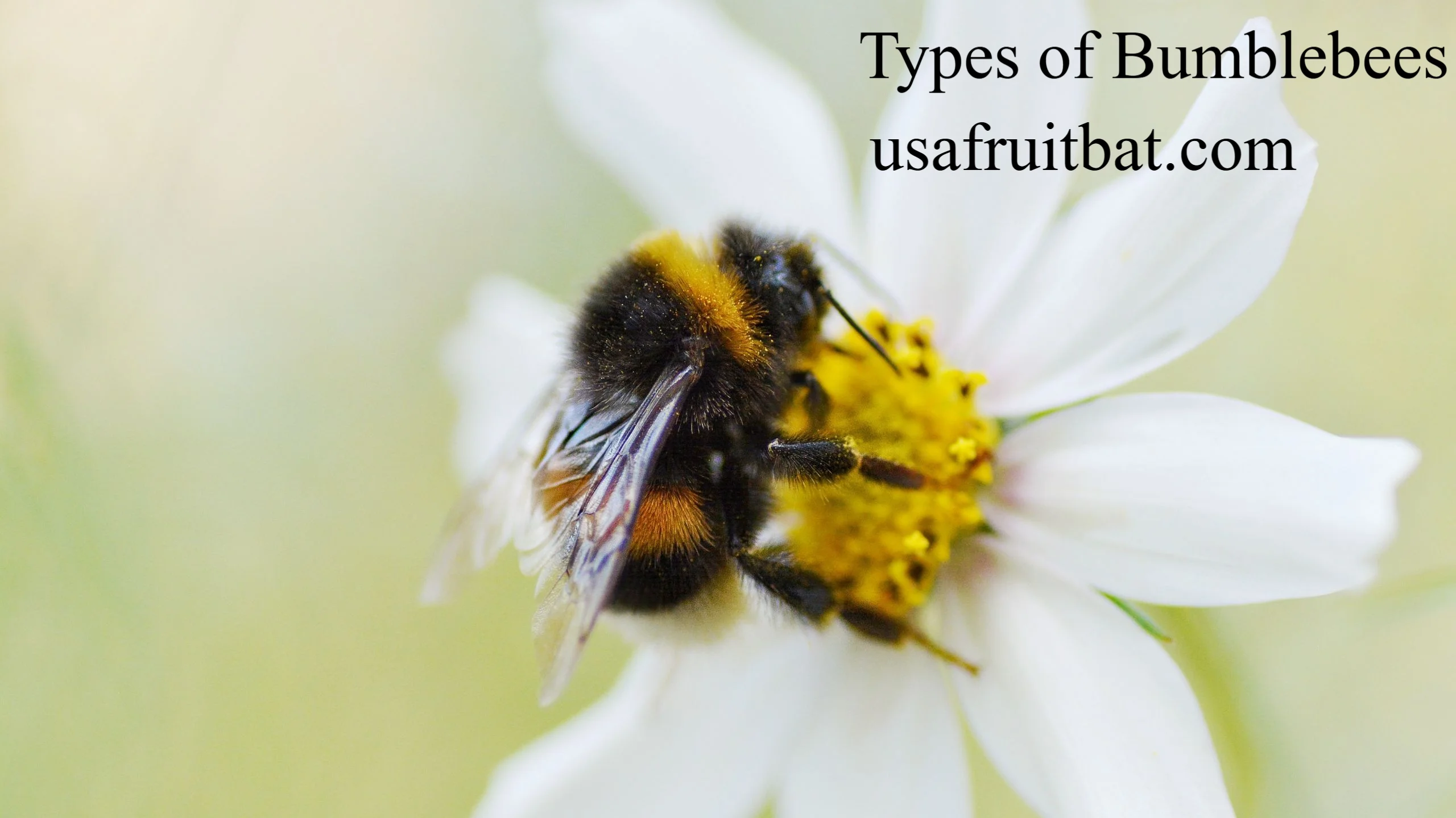
Their fuzzy bodies also make them highly effective pollinators. Some bumblebees can perform buzz pollination, in which they vibrate their flight muscles to help release pollen from certain flowers. This behavior is particularly useful for crops such as tomatoes.
Bumblebee Colony and Life Cycle
A typical social bumblebee colony begins with a queen.
The general cycle is:
- A queen emerges after winter.
- She searches for a suitable nesting site.
- She begins producing eggs.
- The first workers emerge.
- Workers collect nectar and pollen.
- The colony grows.
- New queens and males are produced.
- New queens mate and eventually overwinter.
- The old colony naturally ends.
Not every bumblebee follows this pattern. Cuckoo bumblebees have a different lifestyle because they exploit the nests of other bumblebee species rather than establishing conventional worker-producing colonies.
What Are Cuckoo Bumblebees?
Cuckoo bumblebees are social parasites within the bumblebee group.
Instead of maintaining their own normal worker caste, they invade the nests of host bumblebee species and use the host workers to raise their offspring.
This makes them particularly interesting when studying bumblebee behavior and conservation.
Their survival can also depend heavily on the availability of their host species. If a host population declines, a specialized cuckoo bumblebee can face additional pressure.
Do Bumblebees Sting?
Yes, female bumblebees can sting, but they are generally not aggressive when left undisturbed.
Queens and workers have stingers. Unlike honey bee workers, bumblebees have smooth stingers and can potentially sting more than once.
Male bumblebees do not have stingers.
The best way to avoid a defensive response is to give bees and their nests plenty of space and avoid deliberately disturbing them.
Bumblebee vs Honey Bee vs Carpenter Bee
Bumblebees are sometimes confused with other large bees.
| Feature | Bumblebee | Honey Bee | Carpenter Bee |
|---|---|---|---|
| Body | Round and very hairy | Smaller and slender | Large, often robust |
| Abdomen | Usually fuzzy | More visibly segmented | Often shiny and less hairy |
| Social behavior | Many species live in colonies | Highly social colonies | Mostly solitary |
| Nest | Various cavities | Managed or wild hives | Tunnels in wood |
| Pollination | Excellent pollinators | Important pollinators | Important pollinators |
One visual clue is the abdomen. Bumblebees generally have a fuzzy appearance, whereas carpenter bees often have a noticeably shiny, relatively hairless abdomen.
Are Bumblebees Endangered?
Some bumblebee species are threatened or declining, but conservation status varies considerably by species and region.
The rusty patched bumble bee is federally endangered in the United States. The Franklin bumble bee (Bombus franklini) has one of the most restricted distributions of any North American bumblebee and is also a major conservation concern.
The U.S. Fish and Wildlife Service currently identifies several bumblebees as species of conservation concern or under review, including the rusty patched, Franklin, American, western, variable cuckoo, and Suckley cuckoo bumblebees.
Threats can include:
- Habitat loss
- Pesticide exposure
- Disease
- Climate-related changes
- Reduced floral resources
- Loss of nesting sites
- Other environmental pressures
How Can You Help Bumblebees?
You can support local bumblebee populations without doing anything complicated.
Plant Native Flowers
Choose plants that provide nectar and pollen across different seasons. Native plants suited to your local climate are especially useful.
Avoid Unnecessary Pesticides
Reducing pesticide use around flowering plants can help protect visiting pollinators.
Leave Some Natural Habitat
A completely manicured yard may provide fewer nesting opportunities. Leaving some leaf litter, grass, native vegetation, and undisturbed areas can create useful habitat.
Support Citizen Science
Photographs and observations submitted to recognized biodiversity and citizen-science projects can help researchers monitor species distributions.
The U.S. Fish and Wildlife Service’s North American Bee Distribution Tool uses occurrence data to help assess bee species distributions and richness across North America.
FAQ Section
What are the most common bumblebee species?
In the UK, the Bumblebee Conservation Trust identifies eight common and widespread species: buff-tailed, white-tailed, common carder, red-tailed, early, garden, heath, and tree bumblebees.
In North America, common species vary by region. The common eastern bumble bee (Bombus impatiens) is widespread across much of the eastern United States.
How many types of bumblebees are there?
There are around 270 bumblebee species worldwide. The exact number can change as scientific classification develops.
What are the main bumblebee species in North America?
North America has many species, including the common eastern, American, two-spotted, brown-belted, tri-colored, black and gold, western, and rusty patched bumble bees.
The U.S. Fish and Wildlife Service currently reports 48 bumblebee species across the United States.
What is a tree bumblebee?
The tree bumblebee (Bombus hypnorum) is a common UK species that frequently nests above ground, including in bird boxes and roof spaces.
What is a buff-tailed bumblebee?
The buff-tailed bumblebee (Bombus terrestris) is one of the UK’s common and widespread bumblebees. Queens have a characteristic buff-colored tail, while workers and males generally have white tails that can sometimes show a narrow buff border.
What is a white-tailed bumblebee?
The white-tailed bumblebee (Bombus lucorum) is one of the UK’s common and widespread species. It belongs to the group of bumblebees identified partly by their pale tail and yellow banding.
What is an early bumblebee?
The early bumblebee (Bombus pratorum) is a small, widespread UK species. Queens can emerge from hibernation from March, and the species commonly nests in old rodent nests.
How can I identify a bumblebee?
Start by examining the tail color, abdominal bands, thorax pattern, body size, face, legs, and geographic location. Taking clear photographs from multiple angles can make identification easier.
Author Bio: Hamid Ali is a wildlife and nature writer covering animal behavior, species identification, and conservation. His work focuses on making wildlife research clear, practical, and accessible for everyday readers.
Also Read: