
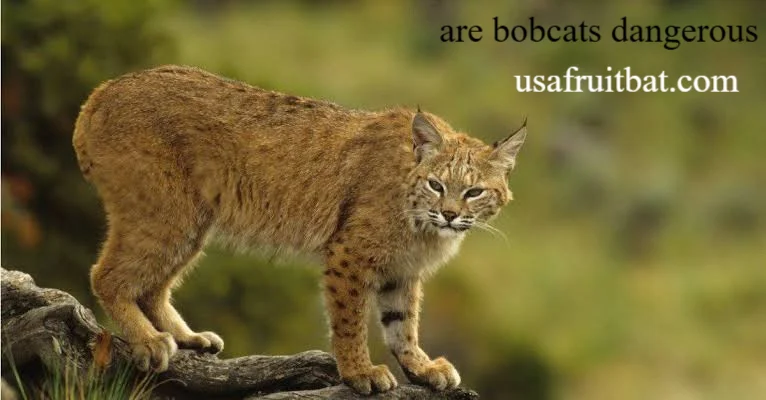
For humans, bobcats are not considered a serious danger. Healthy bobcats avoid people, and attacks are extremely rare. The real risks are a sick or rabid animal, a mother defending kittens, or an animal cornered at close range. Small pets and poultry face a much higher risk than people do.
Are Bobcats Dangerous to Humans?
Short answer: Rarely. A typical adult bobcat weighs roughly 15 to 30 pounds and preys on rabbits, rodents and birds, not people. Serious unprovoked attacks are rare enough that many wildlife professionals may never see one in a career, and most “charging” reports involve an animal that was sick, cornered, protecting kittens or reacting to a nearby dog.
Wildlife officials in Arizona put it plainly. An Arizona Game and Fish Department spokesperson said bobcats generally want to stay far from people, so a bobcat that behaves aggressively toward humans or pets almost always turns out to have rabies.
Being small does not make a wild cat harmless, though. Bobcats have sharp claws and a strong bite, and even a defensive scratch can become infected. Treat every bobcat as a wild predator to respect from a distance.
Why Do Bobcats Sometimes Attack?
Almost every documented incident falls into one of four categories.
1. Rabies or illness. This is the most serious cause. In early May 2026, a rabid bobcat attacked three people and three dogs near Prescott, Arizona, over roughly a day. The animal was killed by a resident’s German shepherd, and state wildlife officials confirmed it tested positive for rabies. On August 29, 2026, another rabid bobcat mauled a family dog and charged at a woman near Pine, Arizona, according to local reporting. Officials described the Prescott behavior as extremely rare and urged residents to keep pets vaccinated.
2. Protecting kittens. A mother bobcat with young can be unpredictable. In Calgary in June 2025, a mother bobcat knocked a woman down after being startled. Authorities called it an isolated, unusual event.
3. Being cornered. A bobcat with no escape route may lash out. Give it space and an exit.
4. Habituation and food conditioning. Bobcats that lose their caution around people, often because someone feeds them or leaves out pet food, become bolder. Arizona officials specifically warn people never to feed wildlife. This is the one cause every homeowner can control.
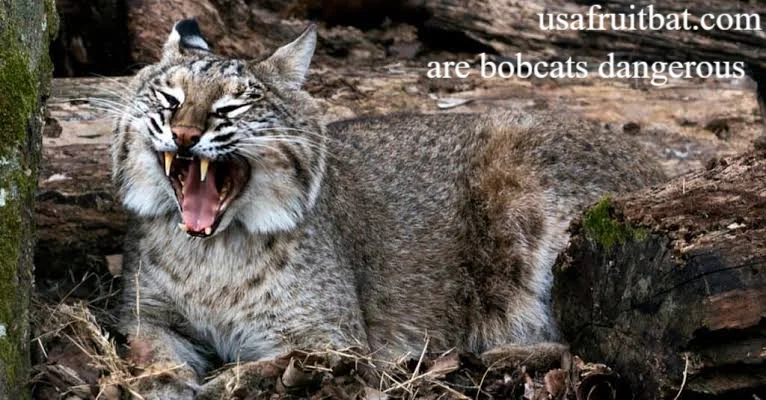
Are Bobcats Dangerous at Night?
They are more active at night, not more dangerous. Bobcats are mostly nocturnal and crepuscular, meaning most hunting happens at night, dawn and dusk. Your odds of seeing one are higher then, and so are the risks for small pets left outside. A bobcat that is active at midday is not automatically sick, but one that acts unafraid, stumbles or approaches people should be reported.
Are Bobcats Dangerous to Dogs, Cats and Other Pets?
Short answer: Yes for small and unsupervised animals; much less so for large dogs on a leash. California’s wildlife agency acknowledges that bobcats may prey on pets and livestock, which is why depredation permits exist. Domestic fowl are among the most commonly taken animals.
| Animal | Risk level | Why |
|---|---|---|
| Chickens, ducks, rabbits | High | Natural prey; uncovered coops are easy targets |
| Outdoor cats | Moderate to high | Similar in size to typical prey; most vulnerable at dawn, dusk and night |
| Small dogs (under about 20 lb) | Moderate | Most at risk when unattended in a yard |
| Medium and large dogs | Low | Bobcats usually avoid them, but confrontations can happen |
| Livestock (calves, goats, sheep) | Low to moderate | Mostly young or small animals |
Analysis: The Prescott case shows why vaccination matters more than size. All three large dogs involved were vaccinated, and the officials involved still stressed rabies prevention. A brave dog can save an owner but can also be badly injured, so do not let your dog engage a wild animal.
Why Is There a Bobcat Near My House?
Short answer: Because your neighborhood offers food, cover and water.
Bobcats are one of the most adaptable wild cats in North America, living in forests, deserts, scrubland and suburbs. Their territory in developed areas often overlaps with yards, greenbelts and canyons. In California, that includes Southern California suburbs that border open land.
Common draws include:
- Rabbits, rodents and birds (their natural prey)
- Unsecured chicken coops and rabbit hutches
- Pet food or water left outside
- Brush piles, woodpiles and crawl spaces that make good dens
A sighting alone is not a threat. It usually means a bobcat is passing through, which is normal wildlife behavior. Young bobcats disperse at about 8 months old, so a wandering juvenile is common in spring and summer.
What Should You Do If You See a Bobcat?
- Stay calm and keep your distance. Do not approach, corner or try to photograph it up close.
- Make yourself look big and make noise. Shout, clap or use an air horn, and back away slowly.
- Leave it an escape route. Never block its path.
- Pick up small children and pets and move indoors if you can do so calmly.
- Do not run or turn your back suddenly if it is close.
- Report odd behavior. Unafraid, disoriented or aggressive animals should be reported to authorities.
- Seek medical care after any bite or scratch. Arizona officials note that treatment can include an anti-rabies vaccine.
How Do You Keep Bobcats Away From Your Home and Pets?
Prevention is about removing reasons for a bobcat to stay.
- Keep pets inside from dusk to dawn, and walk dogs on a leash.
- Secure chickens and rabbits in enclosures with solid roofs and sturdy wire.
- Remove attractants: pet food, bird seed spillage, standing water and dense cover close to the house.
- Use deterrents: motion-activated lights and sprinklers can discourage visits.
- Never feed wildlife. California’s wildlife agency notes that removing food, water, den sites and cover is the way to solve the root of the problem, since removing an animal only helps temporarily.
- Vaccinate pets against rabies.
Relocating a problem bobcat is not the fix people expect. Under California guidance, trapping and moving wildlife is not a legal option, and animals taken under a depredation permit must be released on site or euthanized immediately.
When Should You Call Wildlife Authorities?
Call your state wildlife agency (in California, the Department of Fish and Wildlife) if a bobcat:
- Shows no fear of people and approaches them
- Looks ill, uncoordinated or is acting erratically
- Has attacked a person or pet
- Is a kitten alone and in obvious distress (do not touch it)
If someone was bitten or scratched, get medical attention first, then report it. Authorities may want the animal tested for rabies.
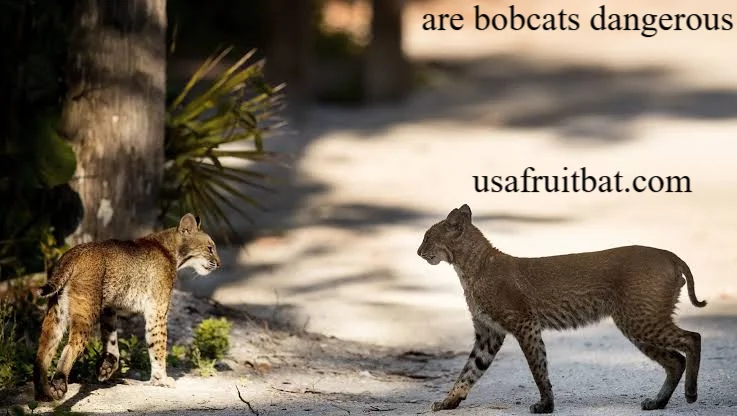
Are Bobcats Endangered?
No. The IUCN lists the bobcat as Least Concern, and it is regulated under CITES Appendix II to monitor international trade. California’s wildlife department recently completed a five-year study that estimated a stable statewide population of about 62,000. California banned bobcat hunting and trapping statewide under Assembly Bill 1254, with limited exceptions such as depredation permits.
Populations can still shift locally because of habitat loss, vehicle strikes and rodenticide poisoning, so coexistence matters even for a healthy species.
Can You Keep a Bobcat as a Pet?
Not realistically. Wild bobcats are not domesticated, and their instincts to hunt, mark and defend territory do not fade in captivity. Rules on keeping them vary by state and are heavily restricted in many places, including California, so check with your state wildlife agency. If you care about bobcats, support accredited wildlife sanctuaries and licensed wildlife rehabilitation centers rather than owning one.
Frequently Asked Questions
Are bobcats dangerous to humans?
Rarely. Healthy bobcats avoid people, and attacks are extremely rare. When they happen, they typically involve rabies, illness, a mother protecting kittens or an animal that has been fed by people.
Are bobcats dangerous to humans at night?
Not more than during the day. Bobcats are most active at night, dawn and dusk, so encounters are more likely then, but their behavior toward people is the same. Keep pets in and use motion-activated lights.
Are bobcats dangerous to dogs?
Mostly to small dogs, especially when unattended. Large dogs are seldom targeted, but a rabid bobcat can attack dogs of any size, so keep vaccinations current and leash your dog.
Are bobcats dangerous to cats?
Yes, outdoor cats can be prey, particularly at dawn, dusk and night. Keeping cats indoors, or in a secure enclosure, removes most of the risk.
Are bobcats dangerous on Reddit?
Online threads, including on Reddit, mix real warnings, pet-loss stories and harmless sighting videos. Treat them as anecdotes, not data. Wildlife agencies consistently say bobcats are shy of humans but can threaten small pets and poultry.
Are bobcats dangerous to pets?
They can be. Chickens, rabbits and outdoor cats face the highest risk, followed by small dogs. Secure enclosures, indoor time at night and removing food sources greatly reduce it.
How fast can a bobcat kill a human?
This is not how bobcat attacks work. An adult bobcat typically weighs 15 to 30 pounds and does not treat people as prey. Injuries from bites and scratches, plus the risk of rabies, are the real concern, so seek medical care after any contact.
Are bobcats endangered?
No. The IUCN classifies bobcats as Least Concern, and California’s wildlife department estimates a stable statewide population of about 62,000.
Author Bio: Hamid Ali is a wildlife and nature writer covering wild animals, animal behavior, and human-wildlife interactions. His work focuses on clear, research-based guides that help readers better understand and safely coexist with wildlife.
Also Read: