Yes, some bumble bees can sting, but they usually do not want to sting people. Only female bumblebees, including queens and workers, have stingers. Male bumblebees do not have stingers and cannot sting.
Bumblebees generally prefer to fly away when they encounter people. According to the Xerces Society, stings are uncommon and are more likely when a bumblebee feels threatened, such as when someone steps on it, swats at it, or gets too close to its nest.
That makes understanding bee behavior useful. A large, fuzzy bumblebee flying around your garden is usually much more interested in finding nectar and pollen than bothering you.
Can Bumble Bees Sting Humans?
Yes. Female bumblebees can sting humans, but they rarely choose to do so.
Bumblebees use their stingers mainly as a defense mechanism. A worker or queen may sting if she believes she or her nest is under threat. Simply seeing a bumblebee near flowers does not normally mean you are in danger.
The best response is to give the insect some space. If a bumblebee flies near you, avoid hitting or grabbing it. Move away calmly and allow it to continue foraging.
The Xerces Society notes that bumblebees generally prefer to fly away rather than sting people.
Why Do Bumble Bees Sting?
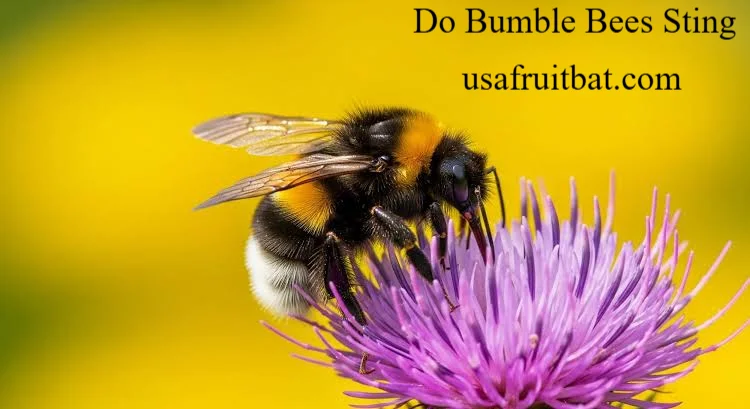
Bumblebees sting primarily to defend themselves or their nest.
A bee visiting a flower is usually focused on collecting food. Problems are more likely when the insect feels directly threatened. Examples include:
- Stepping on a bumblebee
- Swatting at one
- Accidentally grabbing one
- Disturbing a nest
- Walking directly into a nest area
- Blocking or repeatedly disturbing a bee
Bumblebees have an important job as pollinating insects. They collect nectar and pollen from flowers and return resources to their nest.
Because stinging does not help a bee collect food, it is generally a defensive behavior rather than an attack.
Do Male Bumble Bees Sting?
No. Male bumblebees cannot sting.
Only female bumblebees have stingers. This is because the bee stinger evolved from a structure associated with female reproduction, so males do not possess the anatomy required to sting.
Bumblebee colonies contain females that perform different jobs. Workers gather food and maintain the nest, while queens establish colonies and produce offspring. Males have a different reproductive role.
Interestingly, male bumblebees can sometimes behave in ways that look threatening. They may fly toward people or buzz around them, but their lack of a stinger means they cannot actually sting.
Can Bumble Bees Sting More Than Once?
Yes. A female bumblebee can sting more than once.
This is one of the biggest differences between bumblebees and honeybees.
A bumblebee’s stinger is not designed like the familiar barbed stinger of a honeybee. As a result, a bumblebee can withdraw its stinger and potentially sting again. The Xerces Society specifically notes that bumblebees can sting more than once.
That does not mean bumblebees normally sting repeatedly. A bee that feels threatened will often try to escape rather than continue attacking.
Do Bumble Bees Die When They Sting?
No, a bumblebee does not normally die after stinging.
Female bumblebees can withdraw their stinger after a sting and may be able to sting again. This differs from the common honeybee worker, whose barbed stinger can remain embedded in mammalian skin and cause fatal injury to the bee when it flies away.
The important distinction is that a bumblebee and a honeybee have different stinger structures.
So, if you see a bumblebee after it has stung something, it does not necessarily mean the bee will die.
Do Bumble Bee Stings Hurt?
Yes, a bumblebee sting can hurt.
A sting can cause immediate pain, burning, redness, and swelling around the affected area. The severity varies from person to person.
For most people, a normal local reaction remains limited to the area around the sting and improves with time. Mayo Clinic notes that typical bee sting symptoms can include sharp burning pain, a welt, and swelling.
However, a small percentage of people can experience a serious allergic reaction to insect venom.
Seek emergency medical help if a sting causes symptoms such as:
- Trouble breathing
- Swelling of the lips, face, tongue, or throat
- Widespread hives
- Dizziness or fainting
- A weak or rapid pulse
- Severe difficulty swallowing
- Other signs of anaphylaxis
Anaphylaxis can be life-threatening and requires immediate emergency treatment.
What Should You Do After a Bumblebee Sting?
If you experience a mild bumblebee sting, first move away from the area so you are not stung again.
For a mild reaction, basic care may help reduce discomfort:
- Move away from the bee and its nest.
- Wash the affected area with soap and water.
- Apply a cold compress to help reduce swelling and discomfort.
- Avoid scratching the area.
- Monitor your symptoms.
Mayo Clinic says most insect stings are mild, although some can produce severe allergic reactions.
If you develop symptoms of anaphylaxis, seek emergency medical care immediately. Anyone who has been prescribed an epinephrine auto-injector should use it as directed for a severe allergic reaction and seek emergency care.
How Can You Avoid Bumblebee Stings?
The easiest way to avoid bee stings is to leave bumblebees alone.
Try these simple precautions:
- Do not swat at flying bees.
- Do not grab bees with your hands.
- Watch where you step outdoors.
- Avoid disturbing visible nests.
- Give bees space while they forage.
- Keep children from poking or chasing bees.
- Wear shoes when walking through areas with flowering plants.
- Move slowly if a bee flies close to you.
You do not need to panic when a bumblebee approaches. Remaining calm and giving it room is generally safer than trying to hit it.
The Xerces Society similarly recommends allowing bees to forage without slapping or grabbing them.
Are Bumble Bees Aggressive?
Bumblebees are generally not aggressive toward people.
They are defensive rather than naturally interested in attacking humans. A bumblebee visiting a flower is normally focused on collecting nectar and pollen.
The situation can change when a nest is disturbed. Because bumblebees live in colonies, workers may defend their nest when they perceive a serious threat.
This is why it is particularly important not to poke, kick, shake, or otherwise disturb a suspected bee nest.
Bumble Bees vs. Honeybees
Bumblebees and honeybees are both important pollinators, but their behavior and biology are different.
| Feature | Bumblebees | Honeybees |
|---|---|---|
| Can females sting? | Yes | Yes |
| Can males sting? | No | No |
| Can females sting more than once? | Yes | Workers generally cannot pull away without losing the stinger |
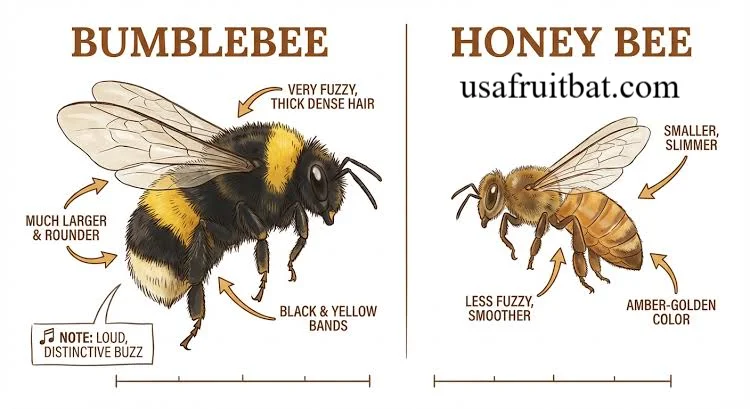
| Body appearance | Large and fuzzy | Smaller and usually slimmer |
| Social behavior | Social colonies | Highly social colonies |
| Main food collection | Nectar and pollen | Nectar and pollen |
| Pollination | Highly effective pollinators | Important pollinators |
Bumblebees are particularly valuable because their ability to vibrate their flight muscles while gripping flowers can release pollen that is difficult for some other insects to access.
The U.S. Fish and Wildlife Service describes bumblebees as important pollinators for crops including tomatoes, blueberries, cranberries, and clover.
Bumble Bees vs. Wasps
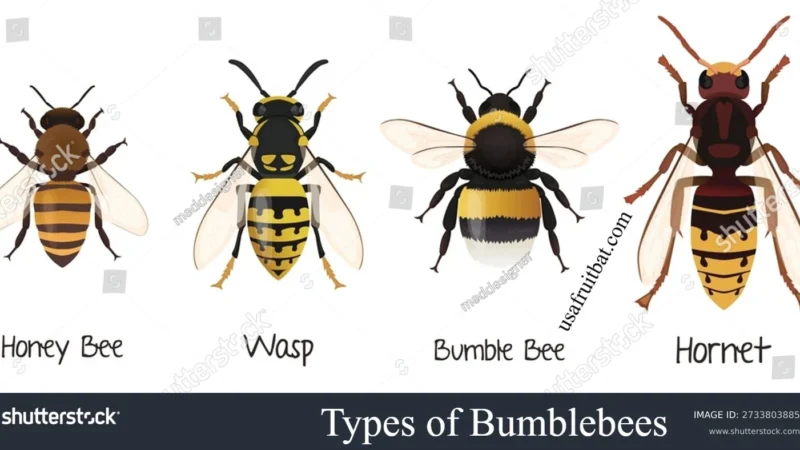
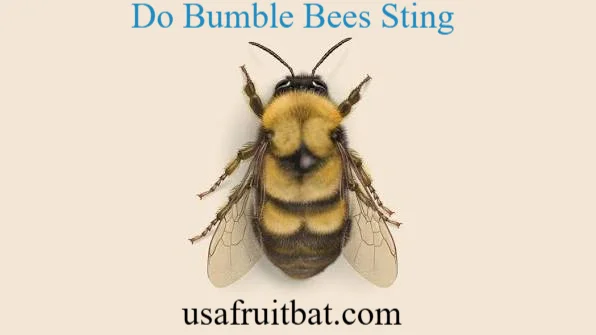
Bumblebees are often confused with wasps because both belong to the order Hymenoptera and some species have black and yellow coloring.
However, their appearance and lifestyles can be quite different.
Bumblebees are typically:
- Rounder
- Larger and fuzzier
- Covered in dense hair
- Commonly seen collecting pollen
- Important plant pollinators
Many wasps have slimmer bodies and smoother surfaces.
Behavior also varies widely among wasp species, so it is not accurate to assume every wasp or bee behaves in exactly the same way.
Do Bumble Bees Make Honey?
Bumblebees do not produce and store honey in the same way honeybees do.
Honeybees have large perennial colonies and store substantial quantities of honey as a food reserve. Bumblebee colonies are much smaller and usually exist for a single season.
Bumblebees collect nectar and pollen to feed themselves and their developing colony. Their nests therefore operate differently from honeybee hives.
The U.S. Fish and Wildlife Service notes that bumblebee colonies survive from spring to fall, with only new queens surviving the winter in species such as the rusty patched bumble bee.
Do Carpenter Bees Sting?
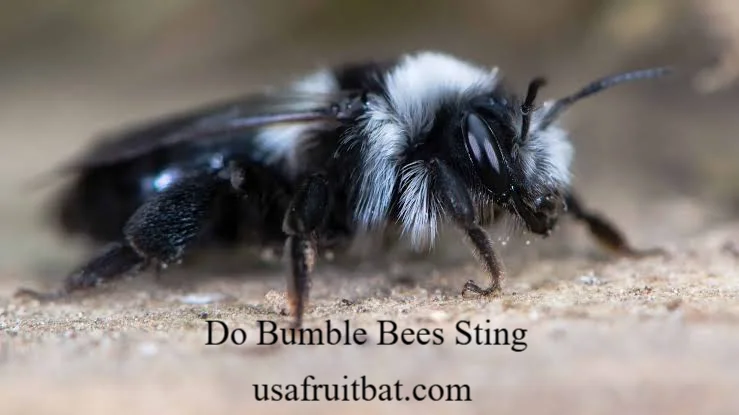
Female carpenter bees can sting, but male carpenter bees cannot.
Carpenter bees are solitary bees and are often confused with bumblebees because of their large size.
One useful identification difference is the abdomen. Bumblebees have dense hair, while carpenter bees often have a shiny, relatively hairless abdomen.
Male carpenter bees may fly aggressively around people or defend territory, but they cannot sting.
Female carpenter bees have stingers, although they generally do not want to sting people unless handled or threatened.
What Are Solitary Bees?
Solitary bees do not maintain large social colonies like honeybees or bumblebees.
Examples include:
- Leafcutter bees
- Red mason bees
- Wool carder bees
- Carpenter bees
- Mining bees
Many solitary bee species are remarkably calm around people. Male bees cannot sting, while females of species that possess stingers may sting if handled or threatened.
Solitary bee behavior is therefore very different from the image of thousands of bees defending a large hive.
These insects are also valuable pollinators and contribute to healthy ecosystems.
Why Are Bumblebees Important?
Bumblebees are much more than large fuzzy insects in gardens. They are important pollinators in natural ecosystems and agriculture.
In 2026, the U.S. Fish and Wildlife Service finalized approximately 1.5 million acres of critical habitat for the endangered rusty patched bumble bee across parts of Illinois, Iowa, Minnesota, Virginia, West Virginia, and Wisconsin.
Bumblebees face several threats, including:
- Habitat loss
- Pesticide exposure
- Disease and pathogens
- Climate change
- Extreme temperatures
- Reduced availability of flowering plants
The U.S. Fish and Wildlife Service reports that North American bumblebee numbers have fallen substantially since the 1970s and identifies climate change, pesticides, and habitat problems among the threats facing pollinators.
How Can You Help Bumblebees?
You can support bumblebees by creating suitable habitat around your home.
Useful steps include:
- Plant a variety of native flowering plants.
- Choose plants that bloom at different times of the year.
- Avoid unnecessary pesticide use.
- Leave some natural areas in your yard.
- Provide safe nesting habitat.
- Avoid disturbing active nests.
- Learn to identify local bee species.
The U.S. Fish and Wildlife Service recommends diverse flowering plants that provide nectar and pollen throughout the growing season as one way to support rusty patched bumblebees and other native pollinators.
Frequently Asked Questions
Do bumble bees die when they sting?
No. Female bumblebees can normally withdraw their stinger and may survive after stinging. Unlike honeybee workers, they are capable of stinging more than once.
Do bumble bees sting more than once?
Yes. Female bumblebees can sting multiple times because their stinger can be withdrawn rather than being left behind in the skin.
Do bumble bees sting hurt?
Yes. A bumblebee sting can cause sharp pain, burning, redness, swelling, and soreness. Severe allergic reactions are possible but are not the typical response.
Do bumble bees make honey?
Not in the same way honeybees do. Bumblebees collect nectar and pollen to support their colonies, but they do not maintain the large honey stores associated with honeybee colonies.
Do male bumble bees sting?
No. Male bumblebees do not have stingers and cannot sting. Only female bumblebees, including queens and workers, have stingers.
Do carpenter bees sting?
Female carpenter bees can sting, while males cannot. Carpenter bees are solitary bees and are often mistaken for bumblebees.
Do bumble bees sting humans?
Yes, female bumblebees can sting humans, but they generally avoid doing so. They are more likely to sting when they feel directly threatened or their nest is disturbed.
Can a bumblebee sting kill you?
A bumblebee sting is usually not life-threatening, but a severe allergic reaction called anaphylaxis can be fatal without emergency treatment. Anyone experiencing trouble breathing, throat or tongue swelling, fainting, widespread hives, or other signs of anaphylaxis should seek emergency medical help immediately.
Final Takeaway
So, do bumble bees sting? Yes, but only female bumblebees can sting, and they generally prefer to avoid people.
The safest approach is simple: do not swat, grab, step on, or disturb them or their nests. If a bumblebee is feeding on a flower, give it room and let it continue its important work as a pollinator.
Bumblebees can sting more than once, unlike honeybee workers, and male bumblebees cannot sting at all. While a sting can be painful, most reactions are localized. A serious allergic reaction is possible, so emergency symptoms should always be taken seriously.
Protecting these insects is important too. Bumblebees support wild plants and agricultural crops, while many species face pressure from habitat loss, pesticides, disease, and climate-related changes. Supporting native flowers and healthy habitat can help these valuable pollinators thrive.
Author Bio: Hamid Ali is a wildlife and nature writer covering animals, insects, pollinators, and fascinating wildlife behavior. He focuses on creating accurate, easy-to-understand guides that help readers learn more about the natural world.
Author Name: Hamid Ali
Email: johanharwen314@gmail.com
Also Read: