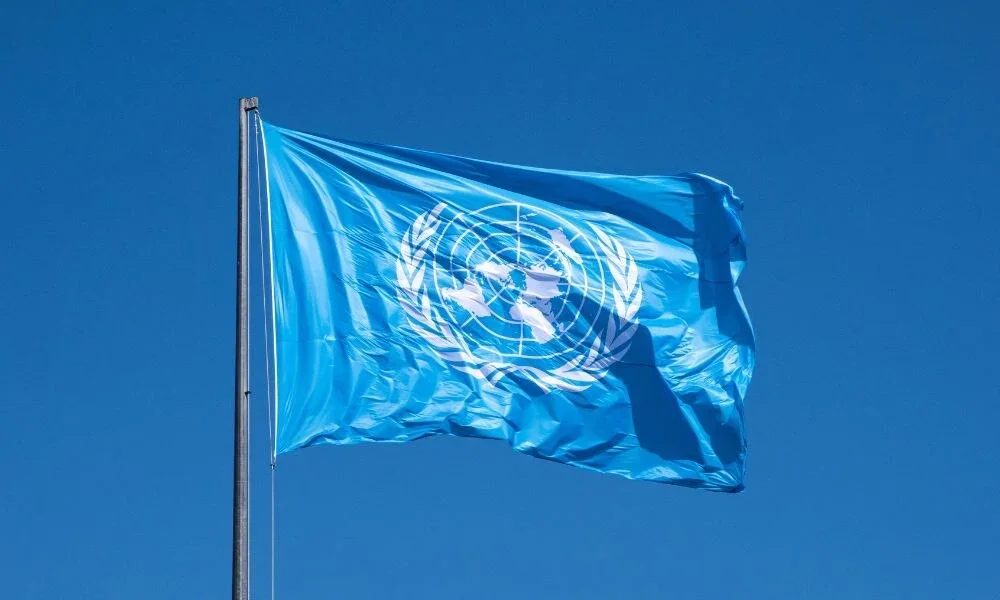
The United Nations Logo is one of the world’s most recognized international organizations, and its emblem represents an important message of peace, unity, and cooperation. The familiar design features a world map surrounded by two olive branches, creating a visual identity that connects countries and people across the globe. It is more than a decorative symbol because it reflects the organization’s commitment to international understanding and security.
The United Nations logo has an interesting history that dates back to the organization’s establishment in 1945. Its simple design communicates powerful ideas about global responsibility, equality, and peaceful relationships between nations. Understanding its origins, colors, symbols, and official uses helps explain why this emblem remains important in international affairs today.
What Is the United Nations Logo?
The United Nations logo is the official visual emblem associated with the United Nations, an international organization established to promote peace, security, human rights, and cooperation among countries. Its central feature is a world map viewed from above, surrounded by two olive branches. Together, these elements represent the organization’s worldwide mission and its commitment to creating a more peaceful international community.
The emblem is also featured on the United Nations flag, official publications, documents, buildings, and communication materials. Its recognizable appearance helps people identify official UN activities around the world. Although the design is relatively simple, every major element has a symbolic purpose connected to the organization’s founding principles and its responsibility to bring nations together.
sourecs: kengla.com
History and Origin of the United Nations Logo
The history of the emblem is closely connected to the establishment of the United Nations in 1945. During the San Francisco Conference, representatives from different countries worked to establish an international organization that could help prevent another devastating global conflict. The organization needed a recognizable symbol that communicated its international character, peaceful purpose, and commitment to cooperation.
The original emblem design was developed in 1945 for the United Nations Conference on International Organization. The General Assembly subsequently approved the official design on December 7, 1946. This decision established the recognizable arrangement of a world map surrounded by olive branches, which continues to represent the organization today.
United Nations Logo Meaning and Symbolism
The meaning behind the emblem comes from two important visual elements: the world map and the olive branches. These symbols communicate the idea that international peace requires cooperation among countries and people from different geographical regions. Rather than representing one nation, the design emphasizes a shared global responsibility and the importance of resolving international disagreements peacefully.
The olive branches have historically represented peace, while the world map communicates the organization’s worldwide perspective. Their combination creates a powerful message about unity and international understanding. The emblem reminds viewers that the United Nations works across borders to address global challenges, encourage diplomatic relationships, and support a safer future for people everywhere.
Design Elements, Colors, and Structure of the UN Logo
The emblem uses a carefully arranged design that makes it recognizable across different types of official materials. At its center is a world map using an azimuthal equidistant projection centered on the North Pole. Two olive branches form a circular wreath around the map, creating a balanced composition that represents peace surrounding the entire world.
The traditional United Nations flag displays the emblem in white against a sky-blue background. These colors provide strong visual contrast and make the design easy to recognize. The clean structure also allows the emblem to appear on documents, banners, digital publications, and official signs without losing its essential visual characteristics.
| Design element | Description | Symbolic meaning |
|---|---|---|
| World map | Map centered on the North Pole | Global representation |
| Olive branches | Two branches surrounding the map | Peace and harmony |
| Blue background | Traditional UN flag color | International identity |
| White emblem | Map and branches in white | Clear visual representation |
| Circular wreath | Branches arranged around the map | Unity and cooperation |
United Nations Logo and Its Connection to the UN Headquarters
The United Nations headquarters is located in New York City, United States. It serves as the organization’s central workplace and an important location for international diplomacy. Representatives from member countries meet there to discuss global issues, negotiate agreements, and develop approaches to challenges involving peace, security, development, and human rights.
The emblem is an important part of the headquarters’ visual identity. Visitors can see United Nations symbols throughout the organization’s official environment, including buildings, meeting spaces, and communication materials. The headquarters represents the practical work behind the emblem’s message, bringing representatives from different countries together to discuss issues that affect the international community.
United Nations Flag and Official Emblem
The United Nations flag features the official emblem in white on a sky-blue background. It provides a recognizable international symbol that can be displayed during diplomatic meetings, official ceremonies, conferences, and other organizational activities. Although people sometimes use the terms logo, emblem, and flag interchangeably, they describe related but slightly different things.
The emblem is the central graphic design, while the flag presents that emblem against a specific background. Both communicate the organization’s identity and peaceful mission. The flag also helps distinguish official United Nations events and locations from activities organized by individual countries or unrelated international organizations.
Role of the United Nations in Global Peace and Cooperation
The United Nations was established to help countries work together and reduce the risk of international conflict. Its responsibilities include supporting diplomatic discussions, promoting human rights, coordinating humanitarian assistance, and encouraging sustainable development. These activities reflect the principles represented by the emblem, particularly the importance of peaceful relationships and international cooperation.
The United Nations Security Council plays an important role in maintaining international peace and security. It discusses threats to global stability and can adopt resolutions addressing conflicts and other international concerns. Alongside the Security Council, the General Assembly provides a platform where member states discuss global issues and express their positions on important international matters.
United Nations Sustainable Development Goals and Global Impact
The United Nations Sustainable Development Goals are a collection of 17 global objectives adopted in 2015 as part of the 2030 Agenda for Sustainable Development. They address major challenges affecting people and the planet, including poverty, hunger, education, healthcare, inequality, clean energy, and climate change.
These goals encourage governments, organizations, businesses, and communities to work toward a more sustainable future. Their broader message connects with the international cooperation represented by the emblem. The objectives also demonstrate that global progress requires countries to share knowledge, resources, and responsibility.
- No Poverty
- Zero Hunger
- Good Health and Well-Being
- Quality Education
- Gender Equality
- Clean Water and Sanitation
- Affordable and Clean Energy
- Decent Work and Economic Growth
- Industry, Innovation and Infrastructure
- Reduced Inequalities
- Sustainable Cities and Communities
- Responsible Consumption and Production
- Climate Action
- Life Below Water
- Life on Land
- Peace, Justice and Strong Institutions
- Partnerships for the Goals
United Nations Members, Countries, and Global Representation
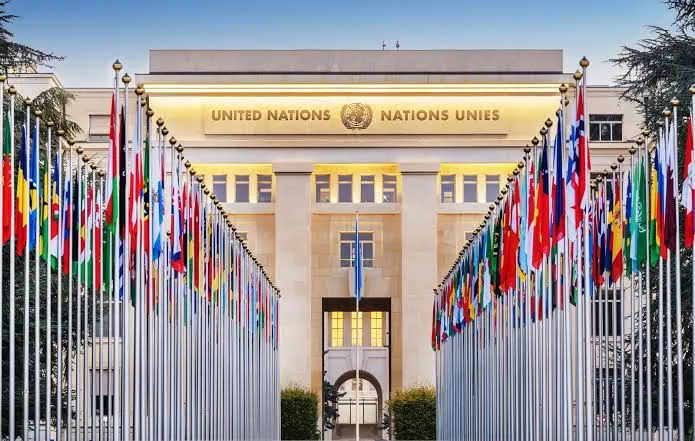
The United Nations includes 193 member states, making it one of the most extensive international membership organizations in the world. These countries participate in discussions about international peace, economic development, humanitarian issues, environmental protection, and other matters affecting global communities. Membership gives countries an opportunity to participate in international discussions and contribute to collective decision-making.
The world map in the emblem reflects this worldwide perspective. It does not highlight one particular country or political region. Instead, it represents the international community as a whole. Through its General Assembly and other institutions, the organization provides opportunities for member states to discuss shared challenges and cooperate on solutions.
United Nations Africa Map and Regional Representation
Africa is an important part of the global community represented by the United Nations. African countries participate in the organization’s activities through membership, diplomatic discussions, development programs, and international partnerships. Their involvement contributes to discussions about economic growth, education, healthcare, environmental protection, peacekeeping, and regional stability.
The emblem does not contain a separate Africa map or highlight individual continents. Instead, it uses a world map centered on the North Pole to represent the entire world. This approach reinforces the idea that every geographical region belongs to the same international community and deserves consideration in global discussions.
How the United Nations Logo Is Used Around the World
The official emblem appears in many settings connected to the organization’s international activities. Its consistent appearance helps people recognize United Nations offices, publications, events, and official communications. It also provides a common visual identity for an organization whose work involves different languages, cultures, governments, and geographical regions.
- Official United Nations reports and publications.
- International conferences and diplomatic meetings.
- United Nations headquarters and regional offices.
- Official websites and digital communication.
- Educational and humanitarian materials.
- International events organized by UN agencies.
The emblem is an official symbol, so its use is subject to organizational rules and guidelines. Individuals and businesses should not assume that they can use it freely for commercial purposes or in ways that suggest an unauthorized connection with the organization.
United Nations Logo and Public Figures: Nicki Minaj Connection
Searches for Nicki Minaj and the United Nations may appear together because public figures sometimes become associated with international discussions, social media conversations, and humanitarian topics. However, a celebrity’s appearance in online discussions does not automatically establish an official relationship with the United Nations.
When researching this connection, it is important to distinguish verified organizational activities from social media references and unrelated news. The official UN emblem represents the organization itself, not an individual celebrity. Readers should consult reliable reporting and official United Nations announcements before accepting claims about endorsements, appointments, or partnerships.
Interesting Facts About the United Nations Logo
The emblem has several interesting features that make it different from ordinary organizational logos. Its geographical projection, historical background, and symbolic arrangement were selected to communicate international values rather than promote a commercial product or individual country.
- The original emblem design dates back to 1945.
- The General Assembly approved the official emblem on December 7, 1946.
- The central map uses an azimuthal equidistant projection.
- The map is centered on the North Pole.
- Two olive branches surround the world map.
- Olive branches have long been associated with peace.
- The emblem also appears on the official United Nations flag.
- The traditional flag uses a sky-blue background with a white emblem.
These details explain why the design remains recognizable after decades of international activity. Its message is straightforward: countries can work together to encourage peace, understanding, and a better future for humanity.
Conclusion
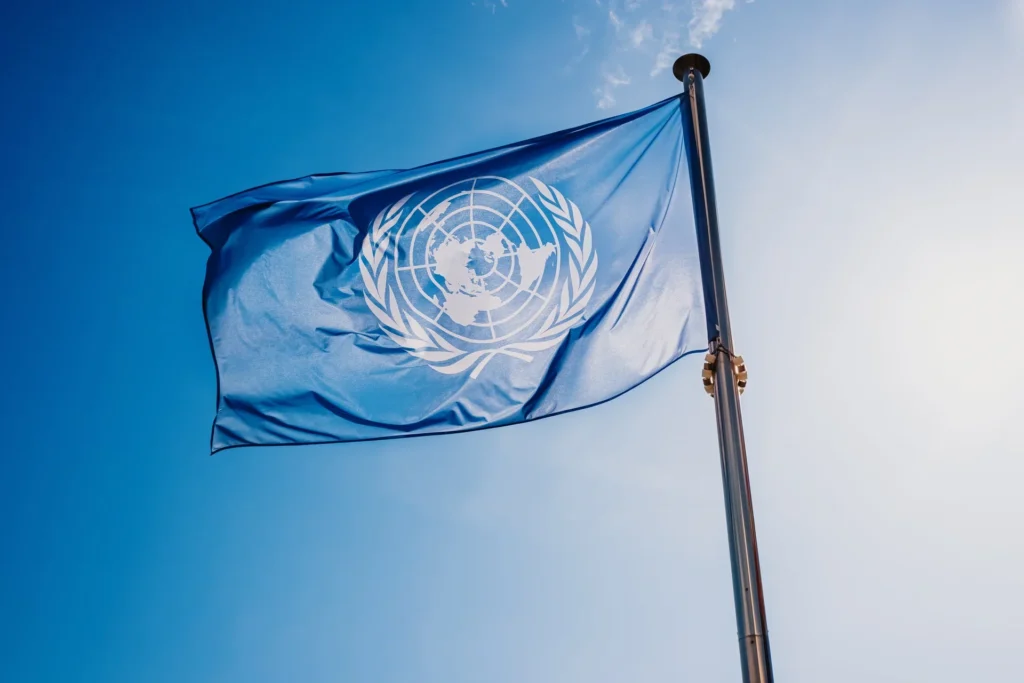
The United Nations emblem is much more than an internationally recognized graphic. Its world map represents the global community, while the surrounding olive branches communicate peace and cooperation. Since its development in 1945 and official approval in 1946, the design has become closely associated with international diplomacy and the organization’s mission.
Understanding the United Nations logo also provides a better appreciation of the values behind the organization. From its headquarters in New York to its development initiatives and international peacekeeping efforts, the emblem represents the importance of working together across national boundaries. Its message of unity and peaceful cooperation remains meaningful in today’s interconnected world.
Frequently Asked Questions
What does the United Nations logo represent?
It represents global unity, peace, and international cooperation through a world map surrounded by two olive branches.
Who designed the United Nations logo?
The original emblem was developed by the United Nations design team for the 1945 San Francisco Conference.
When was the United Nations logo officially adopted?
The General Assembly approved the official emblem on December 7, 1946.
Why does the UN logo feature a world map?
The world map represents the organization’s worldwide mission and its commitment to cooperation among nations.
What do the olive branches symbolize in the UN logo?
The olive branches are traditional symbols of peace, harmony, and the desire to prevent conflict.
Why is the United Nations flag blue and white?
The official flag uses a sky-blue background with a white emblem to create a recognizable international identity.
Where is the United Nations headquarters located?
The main United Nations headquarters is located in New York City, United States.
How many countries are members of the United Nations?
The United Nations has 193 member states representing countries from around the world.
Also Read