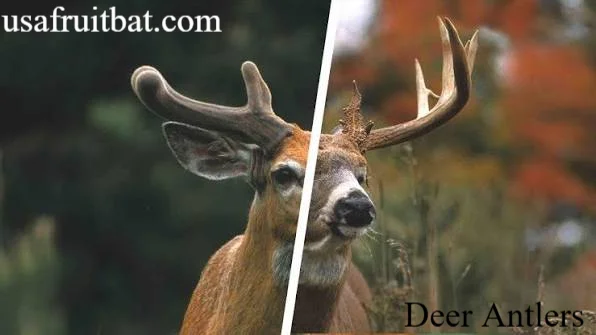
Antlers are solid bone that male deer grow and drop every year. Few other mammals can fully regrow an entire organ, and antlers do it in a few months. This guide covers how antlers form, what controls their size, why they come off, and what to know about collecting, buying, or using them.
What Are Antlers, and How Are They Different From Horns?
Antlers are deciduous, branched structures made of true bone. They grow from the skull each year and are shed after the breeding season. Horns are permanent and are never shed and regrown in the same way.
| Feature | Antlers | Horns |
|---|---|---|
| Material | Solid bone | Bony core covered by a keratin sheath |
| Replaced yearly? | Yes | No (they keep growing) |
| Branching | Usually branched | Usually unbranched |
| Who grows them | Mostly males in the deer family, Cervidae | Males and often females in cattle, goats, sheep, antelope |
| Example | White-tailed deer, elk, moose | Bison, bighorn sheep |
The pronghorn is a partial exception. It sheds the keratin sheath of its horns each year but keeps the bony core.
How Do Deer Antlers Grow?
Antler growth is driven by day length and hormones, and it follows a predictable yearly cycle.
- Pedicels form first. A male fawn develops two bony bases on the frontal bone called pedicels. Young bucks, often called button bucks, show small bumps at around 4 to 6 months old.
- Spring growth begins. As days lengthen, the photoperiod change shifts reproductive hormones. Testosterone is low at this stage, and new antler tissue starts growing from the pedicel tips.
- Summer is peak growth. The antler is a soft, blood-rich structure that lengthens rapidly. Some of the largest deer species can add roughly an inch a day at their fastest.
- Late summer brings mineralization. Rising testosterone hardens the antler as calcium and phosphorus are deposited.
- Velvet is shed. The skin dries and is rubbed off, usually in late summer or early fall for whitetails.
- The rut comes next. Bucks use their hard antlers during breeding season, typically peaking in October through December across much of the U.S.
- Shedding follows. Testosterone falls after the rut, and the antlers drop.
This cycle makes antlers one of the fastest-growing tissues in mammals. That pace is also why antler growth is so sensitive to a buck’s diet.
What Is Antler Velvet?
Velvet is the soft, hairy skin that covers a growing antler. It carries the blood vessels and nerves that feed the developing bone, which makes growing antlers warm and sensitive. When the antler finishes hardening, the blood supply is cut off, the velvet dries out, and the buck rubs it away on brush and saplings. What remains is dead, hard bone.
Why Do Bucks Grow Antlers?
Mainly to compete for mates. Antlers serve three practical purposes:
- Fighting. Bucks spar and fight rivals during the breeding season.
- Display. A large rack signals age, health, and dominance without a fight.
- Female choice. Size and symmetry may help communicate condition, though researchers still study how much females weigh these cues.
Antlers are an expensive trait. Building them demands large amounts of minerals and energy, so they tend to reflect a deer’s physical condition.
When and Why Do Deer Shed Their Antlers?
Most whitetails shed between January and March, though timing varies by region, age, and health. Older bucks often drop earlier, and stress or poor condition can shift the date.
The trigger is hormonal. As testosterone drops, cells called osteoclasts weaken the bone at the abscission zone, the junction between antler and pedicel. Eventually the antler simply falls off. Bucks often shed the two sides within hours or days of each other.
What Happens to Shed Antlers?
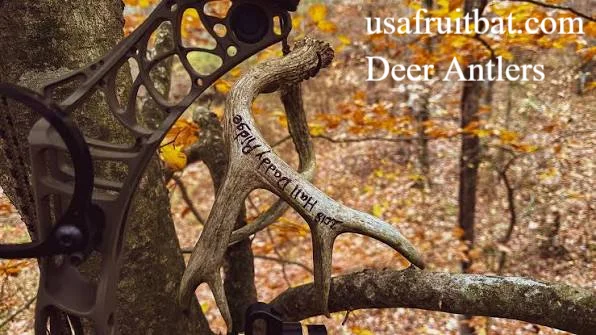
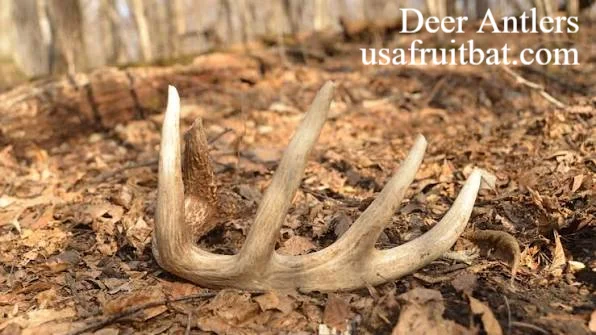
They don’t last long in the wild. Mice, squirrels, porcupines, and other animals chew them for calcium and phosphorus. Weathering also breaks them down within a few years.
Shed hunting has become a popular outdoor activity. Some western states, including Utah and Wyoming, regulate when and where you can collect sheds to protect wintering wildlife. Check current rules with your state wildlife agency before you go.
How Do Antlers Grow Back?
Antlers regenerate from specialized tissue at the top of the pedicel. Researchers have studied this stem-cell-rich tissue because full organ regrowth in mammals is so unusual. As the old antler drops, the wound heals, and new growth starts again in spring. Each year’s set is usually larger than the last until the buck reaches maturity, and then size may plateau or decline.
What Determines Antler Size?
Three factors matter most: age, nutrition, and genetics.
- Age. Whitetail bucks typically reach peak antler development somewhere around 4½ to 6½ years old, according to deer-management groups such as the National Deer Association (formerly the Quality Deer Management Association).
- Nutrition. Protein, minerals, and overall forage quality directly affect antler growth rate. A buck in good physical condition can express more of his genetic potential.
- Genetics. Genes set the ceiling for antler potential, including the number of tines and spread.
A fourth, less visible factor is the herd itself. High deer population density increases competition for food, which can hold back average antler size across the deer herd even when genetics are sound. A spike buck is not automatically genetically inferior. Yearlings with limited nutrition or late birth dates may simply grow simple antlers in their first year.
How Are Antler Points Counted?
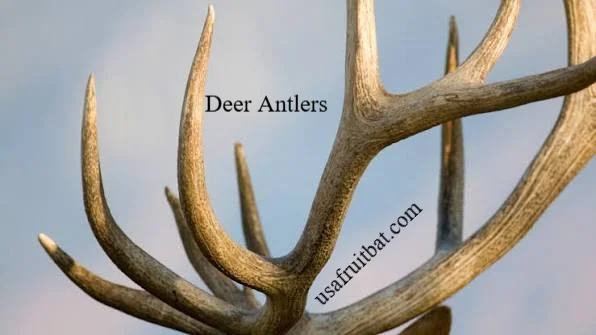
A point is generally a projection at least 1 inch long that is longer than it is wide. The main structure is the beam, and each branch off it is a tine.
Hunters name tines by position, and the system is easy to learn:
- G1 is the brow tine, the first tine near the base.
- G2 is the next tine up the main beam, often one of the longest.
- G3 and G4 continue upward.
Counting also varies by region. Eastern hunters usually count points on both antlers combined (an “8-point”), while Western hunters count one side only (a “4-point” or “4×4” for mule deer).
For scoring, the Boone and Crockett Club, founded in 1887, measures antler size in inches. Its minimum scores for record-book entry are 160 for typical whitetails and 185 for non-typical whitetails. Spread, beam length, tine length, and symmetry all contribute.
What Causes Abnormal Antlers?
Injury, hormones, and genetics can all produce unusual racks.
- Non-typical antlers have extra points, irregular shapes, or asymmetry. Drop tines (hanging downward) and kicker points (sideways projections) are common examples.
- Antler injuries during velvet can cause deformities, and some are repeated in following years.
- Cactus bucks keep their velvet and grow lumpy, irregular antlers. The usual causes are testicular damage, hypogonadism, cryptorchidism, or castration, all of which disrupt testosterone.
- Palmated antlers, which flatten into broad paddles, are normal in moose and fallow deer and occasionally appear in whitetails.
Which Animals Have Antlers?
Members of the deer family grow them, including white-tailed deer, mule deer, elk, moose, caribou (reindeer), red deer, and fallow deer. Moose carry the largest antlers, and caribou are the only deer in which females routinely grow them. Chinese water deer have none, and use long tusks instead.
Frequently Asked Questions
Are deer antlers for sale, and is it legal to buy them?
Yes. Shed antlers, antler chews, and decor pieces are widely sold online and in craft and outdoor stores. Sheds are typically legal to buy, but rules on collecting from public land and on selling parts of wild-harvested animals vary by state. Check with your state wildlife agency before selling, and buy from sellers who describe where the antlers came from.
What do G1, G2, and G3 mean on deer antlers?
They label tines in order from the base of the main beam. G1 is the brow tine, G2 is the next tine up, and G3 follows. Hunters and biologists use these labels to compare racks and record tine length.
Where can I find deer antlers costume ideas?
Costume antlers are usually made from felt, plush, foam, or wire, and are sized to resemble a whitetail or reindeer. For a reindeer look, remember that real reindeer of both sexes grow antlers, so the costume suits anyone. Choose lightweight materials if the costume will be worn for long periods.
What is the meaning of deer antlers?
In many cultures, antlers symbolize strength, renewal, and the cycle of nature, since they are lost and regrown each year. They also appear in myth and heraldry, such as the Celtic horned figure Cernunnos. Meaning varies by culture and context, so check the tradition you’re referencing.
What is deer antler velvet, and is it a proven supplement?
Velvet is the soft skin covering growing antlers. Sold as a powder, spray, or capsule, it is marketed for strength and recovery. Evidence for human health benefits is limited, and supplements are not FDA-approved to treat conditions. Ask a healthcare provider before using it, and note that some sports organizations restrict certain related compounds.
How do I draw deer antlers?
Start with the two main beams, which sweep outward and forward from the skull. Add tines rising upward from each beam, and shorter brow tines near the base. Keep the two sides slightly different, because real antlers are rarely perfectly symmetrical. Shading the beams darker near the base adds depth.
Are deer antlers safe for dogs?
Not always. Antlers are hard enough to crack teeth, and splinters or swallowed chunks can irritate or block the digestive tract. Some owners choose split antlers or softer chews, but a veterinarian should advise based on your dog’s size and chewing habits. Supervise any chewing.
Where can I buy a deer antlers headband?
Headbands are sold by online marketplaces, party stores, and costume retailers, often as seasonal items for Christmas or festivals. Look for a padded band and lightweight antlers for comfort, and check the size range if buying for a child.
Author Bio: Hamid Ali is a wildlife and nature writer covering deer behavior, antler growth, animal biology, and conservation. He creates clear, research-based content that helps readers better understand wildlife and the natural world.
Author Name: Hamid Ali
Email: johanharwen314@gmail.com
Also Read: