
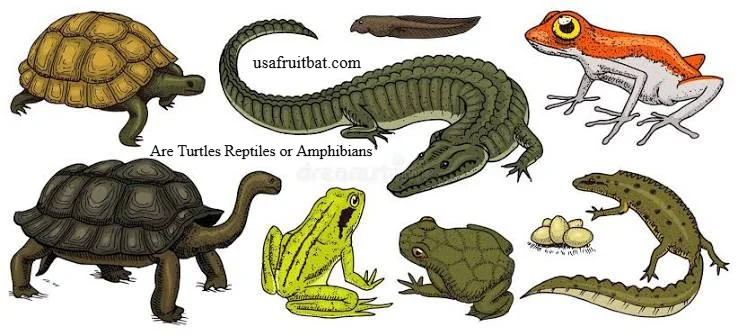
Turtles are reptiles. They belong to the reptile order Testudines (also called Chelonia), and every species, from desert tortoises to leatherback sea turtles, shares the traits that define reptiles. No turtle is an amphibian.
The confusion is understandable. Many turtles swim, bask at the water’s edge and spend most of their lives near ponds or oceans, which is how most people picture a frog. But living in or near water doesn’t make an animal an amphibian. Biologists classify animals by anatomy, reproduction and development, and on all three counts turtles are reptiles.
Competitor Analysis Notes (for your reference)
Competing pages generally repeat the same sequence: “Are turtles reptiles?”, a definition of each group, then an FAQ. Most skip three things people actually wonder about: why the “lives in water” assumption misleads, how turtles breathe without gills, and whether tortoises, terrapins and sea turtles are classified differently. This article covers those gaps and adds a comparison table, a regional terminology guide and pet-owner context.
What Makes a Turtle a Reptile?
Reptiles are vertebrates that are ectothermic (often called cold-blooded), breathe air with lungs throughout life, and have dry skin covered in scales or scutes. Turtles meet every one of these criteria:
- Dry, scaly skin. Turtle skin has no moist, permeable surface like a frog’s. Their limbs and neck carry keratin scales, and the shell is covered in plates called scutes (softshell turtles are the exception, with a leathery covering).
- Lungs from birth. A hatchling turtle breathes air immediately. It never has gills.
- Ectothermic metabolism. Turtles rely on external heat, which is why you see them basking on logs.
- Shelled eggs laid on land. Even marine species leave the ocean to nest.
- Direct development. Young hatch as miniature versions of the adult, with no larval stage.
What Is a Reptile, and What Is an Amphibian?
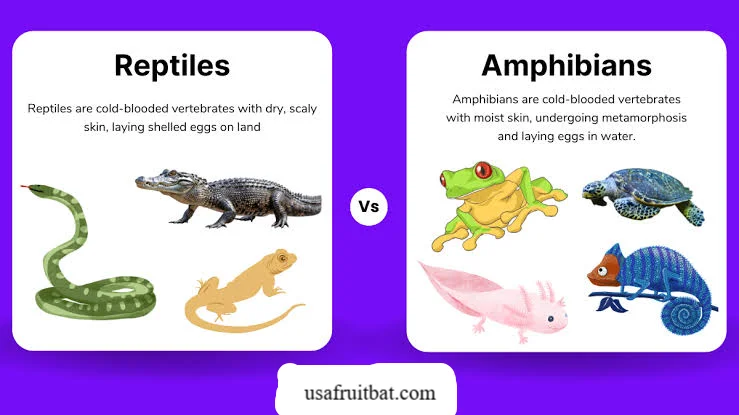
A reptile is an air-breathing vertebrate with dry, scaly skin that reproduces through amniotic eggs, either laid on land or retained inside the mother. The group includes turtles, lizards, snakes, crocodilians and tuataras.
An amphibian is a vertebrate that typically begins life in water as a gilled larva and later develops lungs, such as a tadpole becoming a frog. Amphibians have thin, moist skin that absorbs water and oxygen, and they lay soft, gelatinous eggs that need moisture to survive. Frogs, toads, salamanders, newts and caecilians are amphibians. The word itself comes from Greek roots meaning “both kinds of life,” which refers to this water-then-land life cycle.
How Do Turtles Differ From Amphibians?
The table below compares the two groups.
| Feature | Turtles (Reptiles) | Amphibians (Frogs, Salamanders) |
|---|---|---|
| Skin | Dry, with scales or scutes | Smooth, thin, moist |
| Breathing | Lungs for the entire life | Gills as larvae, lungs and skin as adults |
| Eggs | Leathery or hard shell, laid on land | Soft, gelatinous, usually laid in water |
| Life cycle | Hatchlings resemble adults | Aquatic larva, then terrestrial adult |
| Shell | Bony shell fused to the skeleton | None |
| Water dependence | Varies by species; none for tortoises | Most need moisture to avoid drying out |
A useful rule of thumb is that if an animal hatches with lungs and a hard body covering, it’s a reptile. If it hatches as a swimming larva with gills, it’s an amphibian.
Why Do Turtles Look Like They Could Be Amphibians?
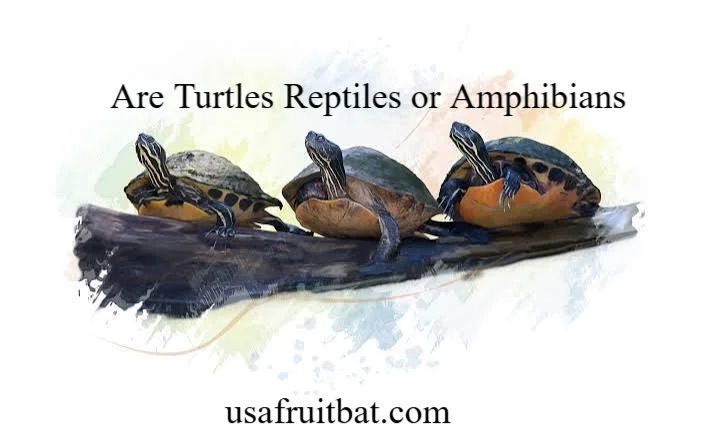
The mistake usually comes from habitat. Many freshwater turtles, such as sliders, painted turtles and map turtles, live in ponds and rivers and look at home in the water. Amphibians are tied to water because their skin and eggs dry out, whereas turtles are simply comfortable in it. Some turtles never need to be in water at all.
This is the key insight that clears up most of the confusion: habitat does not determine classification. Crocodiles and sea snakes live in water, and they are reptiles too.
Turtle Anatomy and Reptile Features
The Shell
A turtle’s shell is not a removable house. It’s part of the skeleton. The upper dome (carapace) and the underside (plastron) are made of dozens of bones, including fused ribs and parts of the spine, covered by keratin scutes. That’s why a turtle can’t leave its shell, and it’s a feature found in no amphibian.
How Do Turtles Breathe?
Turtles breathe with lungs, which sit just beneath the carapace. Because their ribs are fused to the shell, they can’t expand the chest like mammals do. Instead, they use specialized muscles to move their internal organs and pull air in and out.
Aquatic turtles still have to surface for air, though many can hold their breath for long periods, especially when resting or during cold-weather dormancy. Some species supplement their oxygen supply through thin-skinned tissue in the cloaca (the multi-purpose opening at the rear). The Australian Fitzroy River turtle is a well-known example. This is a supplement to lung breathing, not a replacement, and it is different from the skin breathing of amphibians.
Do Turtles Lay Eggs?
Yes. All turtles lay eggs, and the eggs have shells, which is a defining reptile trait. Eggs can be leathery and flexible (common in sea turtles) or hard and brittle (typical of tortoises). Females dig nests in soil or sand, deposit their clutch and cover it up. For many species, nest temperature influences whether hatchlings are male or female, a process called temperature-dependent sex determination. Hatchlings emerge fully formed with no tadpole-like stage.
Where Do Turtles Live?
Turtles occupy a wide range of habitats on every continent except Antarctica:
- Freshwater turtles live in ponds, lakes, rivers and marshes. Examples include red-eared sliders and snapping turtles.
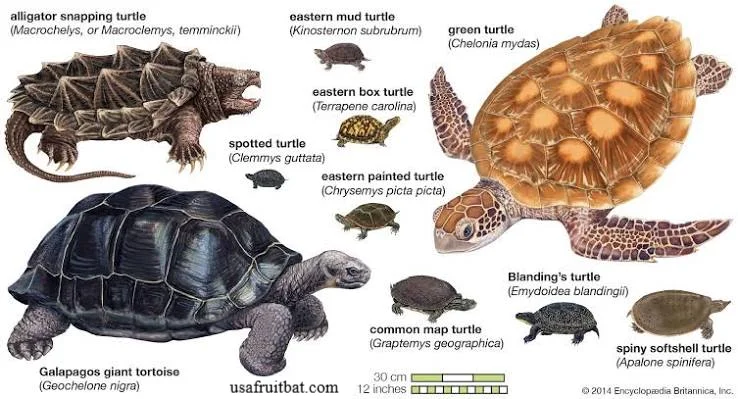
- Sea turtles live in the ocean, in saltwater. There are seven species: green, loggerhead, hawksbill, Kemp’s ridley, olive ridley, flatback and leatherback.
- Land turtles and tortoises live in deserts, grasslands and forests.
- Semi-aquatic turtles move between land and water, like box turtles in some regions (many box turtles are mostly terrestrial).
Scientists recognize roughly 360 turtle species, though the exact number shifts as taxonomists revise classifications. According to the Turtle Conservation Coalition’s 2018 report Turtles in Trouble, more than half of assessed species are threatened with extinction, which makes turtles one of the most at-risk vertebrate groups on Earth.
Are Tortoises, Terrapins and Sea Turtles Also Reptiles?
Yes. All three belong to the same order, and the differences are mostly about lifestyle and local word choice.
- Tortoises are land-dwelling turtles with high, domed shells and sturdy, column-like legs.
- Terrapins are turtles that live in freshwater or brackish water. In the US, the term often refers to the diamondback terrapin of coastal marshes.
- Sea turtles have flippers and spend almost their whole lives in the ocean, although females come ashore to nest.
US versus UK usage: In the United States, “turtle” can mean any member of the order. In the UK and Australia, “turtle” typically means a sea turtle, “terrapin” means a freshwater species and “tortoise” means a land species. The zoological classification stays the same either way.
Are Turtles Mammals?
No. Mammals are warm-blooded, have hair or fur, give birth to live young (with a few exceptions) and nurse with milk. Turtles are cold-blooded, lay shelled eggs and have no fur or milk glands.
Practical Notes for Pet Turtle Owners
Knowing a turtle is a reptile affects how you care for one. Reptile pets need:
- Heat and UVB light. A basking area and proper UVB lighting are essential for shell and bone health.
- A properly sized enclosure. Aquatic species need a large tank with a powerful filter, and land species need floor space and substrate suited to the species.
- A species-appropriate diet. Diets vary widely, from mostly carnivorous young sliders to herbivorous tortoises.
- Long-term commitment. Many pet turtles live for decades, and some tortoises can outlive their owners.
- Hygiene. The US Centers for Disease Control and Prevention (CDC) warns that reptiles, including turtles, can carry Salmonella bacteria even when healthy. Wash hands after handling them or their habitat. Since 1975, US federal rules (FDA) have banned the sale of turtles with shells under four inches, largely for this reason.
Because of the long lifespan and the salmonella risk, turtles are generally not recommended as a first pet for young children, and an adult should handle all care.
Final Answer: Turtles Are Reptiles
Turtles are reptiles in every biological sense. They breathe with lungs, have scaly skin, lay shelled eggs and grow up without a larval stage. Their bony shell is unique among vertebrates, and none of this resembles an amphibian. Living in water doesn’t change that.
Frequently Asked Questions
Are turtles reptiles or amphibians for kids?
Turtles are reptiles. A good way to remember is that reptiles have dry, scaly skin and lay eggs with shells, while amphibians like frogs have smooth, wet skin and start life as tadpoles in water. Turtles have hard shells, breathe air with lungs and lay eggs on land, so they’re reptiles.
Are tortoises reptiles or amphibians?
Tortoises are reptiles. They’re land-dwelling members of the turtle order Testudines, with dry scaly skin, lungs and hard-shelled eggs.
Are turtles reptiles or mammals?
Turtles are reptiles, not mammals. They’re cold-blooded, lay eggs and have no fur or milk, which are all features of mammals.
Are sea turtles reptiles?
Yes. Sea turtles breathe air through lungs, so they must surface regularly, and females return to beaches to lay shelled eggs. All seven species are reptiles.
Are turtles and tortoises reptiles or amphibians?
Both are reptiles. Tortoises are a type of turtle that lives on land, and the two share the same reptile classification.
Why are turtles reptiles?
Turtles are reptiles because they have scaly skin, breathe with lungs for their entire lives, are ectothermic and lay amniotic, shelled eggs. They also don’t go through an aquatic larval stage like amphibians.
What is an amphibian?
An amphibian is a cold-blooded vertebrate, such as a frog, toad or salamander, that usually starts life in water with gills and later develops lungs. Amphibians have thin, moist skin and lay soft, jelly-like eggs.
Over the Hedge turtle amphibian: is Verne an amphibian?
No. Verne, the cautious turtle in DreamWorks’ Over the Hedge (2006), is a box turtle, and box turtles are reptiles. He’s not an amphibian, even though he’s often shown near water or among other woodland animals.
Author Bio: Hamid Ali is a wildlife and nature writer covering animal behavior, species classification, habitats, and conservation. He creates clear, research-based guides that make wildlife topics easy and engaging for everyday readers.
Author Name: Hamid Ali
Email: johanharwen314@gmail.com
Also Read: