Introduction
Have you ever wondered if Hawaii has any native land mammals at all? It actually has one, and it flies. The Hawaiian hoary bat is the only land mammal that calls the Hawaiian Islands home without human help. Locals call it the opeapea, and it has quietly patrolled the night sky over volcanoes, forests, and beaches for over a million years.
This article answers the questions people search for most about this unique creature. You will learn what the Hawaiian hoary bat eats, where it lives, why it matters, and why its numbers keep shrinking. I have pulled in real research data, expert findings, and simple explanations so you leave with a clear picture. Let us get into it.
What Is the Hawaiian Hoary Bat?
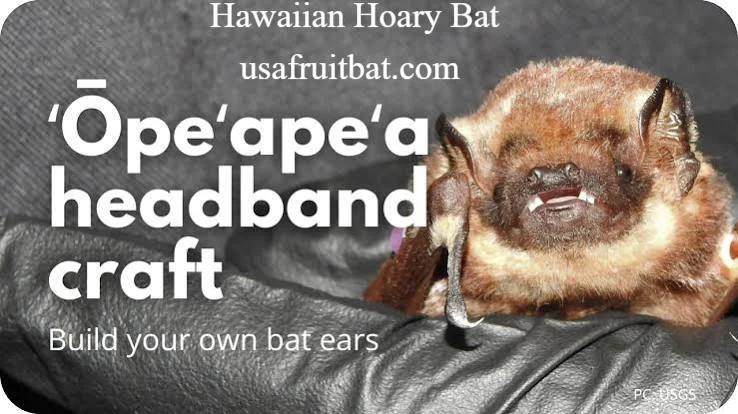
The Hawaiian hoary bat, known scientifically as Lasiurus semotus, is a small, furry mammal that belongs to the vesper bat family. It descended from mainland hoary bats that flew across the Pacific Ocean and settled in Hawaii roughly one million years ago, according to genetic research from the U.S. Geological Survey.
Here are its quick facts in a simple table so you can scan them fast.
| Feature | Detail |
|---|---|
| Scientific name | Lasiurus semotus |
| Hawaiian name | Opeapea |
| Status | Endangered |
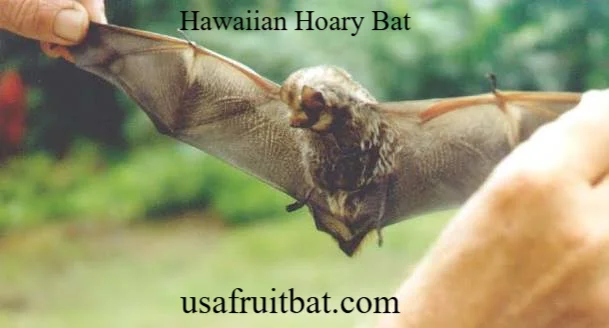
| Wingspan | About 10.5 to 13.5 inches |
| Weight | 14 to 18 grams |
| Diet | Insects |
| Lifespan | Up to 10 to 12 years in the wild |
| Islands found | Hawaii, Kauai, Maui, Oahu |
This table shows why the Hawaiian hoary bat stands out. It is small, light, and built for quiet night flight.
Why Is It Called the Hoary Bat?
The name comes from its fur. Frosted tips on its brown coat give it a grayish, silvery look, similar to frost on grass early in the morning. That frosty coat is a defining trait of every hoary bat species around the world, and the Hawaiian version keeps this same feature with a slightly smaller body size.
Where Does the Hawaiian Hoary Bat Live?
You will mostly find the Hawaiian hoary bat on the Big Island of Hawaii and on Kauai. Smaller numbers show up on Maui and Oahu. Researchers have not confirmed any populations on Molokai or Lanai.
The bat prefers a few specific spots for roosting and hunting.
- Native forests with tall trees for daytime roosting
- Agricultural land edges where insects gather at dusk
- Coastal areas and lowland regions near sea level
- High elevation forests above 4,000 feet during certain seasons
This flexible habitat use is actually one reason the species has survived habitat loss better than expected. The Hawaiian hoary bat adapts to farmland and gardens when native forest disappears.
What Does the Hawaiian Hoary Bat Eat?
The Hawaiian hoary bat hunts only at night and eats almost nothing but insects. It uses echolocation to track moths, beetles, crickets, and termites in complete darkness. A single bat can eat a large portion of its body weight in insects every single night.
This diet makes the Hawaiian hoary bat a natural pest controller for farms and gardens across the islands. Farmers benefit from fewer crop damaging insects without spraying a single chemical.
How Does the Hawaiian Hoary Bat Behave?
Unlike many bat species, the Hawaiian hoary bat does not live in large colonies. It usually roosts alone, hanging from tree branches hidden among leaves. This solitary habit makes it harder for researchers to study and count.
Females give birth to one or two pups each year, usually between May and August. Pups can fly within weeks, which is fast compared to many other mammals.
Why Is the Hawaiian Hoary Bat Endangered?
The Hawaiian hoary bat has held endangered status since 1970. Scientists still lack complete population numbers because the bat is nocturnal, solitary, and spread across rugged terrain. An estimate from the 1970s placed total numbers at only a few thousand individuals, and researchers believe the population trend has continued downward since then.
Several threats push this species toward further decline.
- Loss of native forest habitat from development and agriculture
- Collisions with wind turbine blades during migration and foraging
- Entanglement in barbed wire fencing
- Pesticide exposure that reduces insect food supply and causes bioaccumulation
- Vehicle collisions near roads and open fields
Wind energy expansion in Hawaii has become a growing concern. The state has set a goal for renewable energy to supply 70 percent of its power by 2030, and more wind farms are planned. Wildlife researchers warn that without better mitigation, turbine collisions could seriously hurt Hawaiian hoary bat numbers.
What Do Experts Say About the Hawaiian Hoary Bat?
Researchers from the U.S. Geological Survey and University of Hawaii have studied the genetics of the Hawaiian hoary bat since the late 1980s. Their 2023 study analyzed DNA from over 300 individuals collected between 1988 and 2020 across four islands. The team found distinct genetic differences between island populations, which means conservation plans need to treat each island group separately rather than as one single population.
This research matters because it shows the Hawaiian hoary bat is not one uniform group. Protecting the species requires island specific strategies, not a single blanket policy.
How Can You Help Protect the Hawaiian Hoary Bat?
You do not need to be a scientist to help. Small actions add up quickly across a community.
- Avoid trimming or removing trees during pupping season from May through August
- Report any bat sightings to local wildlife agencies
- Support organizations funding Hawaiian hoary bat research
- Reduce pesticide use in your yard or farm
- Replace barbed wire with smooth wire fencing where possible
I always tell people that even reporting a single bat sighting to a state wildlife office helps researchers build a better population map. Every data point counts for a species this hard to track.
Hawaiian Hoary Bat Fun Facts
- It is the only native land mammal in the entire Hawaiian island chain.
- It can fly over open ocean for hundreds of miles.
- Its Hawaiian name, opeapea, describes its wing shape.
- It has two color forms, one darker and one lighter gray.
- It is Hawaii’s official state land mammal.
Conclusion
The Hawaiian hoary bat is a rare survivor. It crossed an ocean, adapted to island life, and became the only native land mammal Hawaii has ever known. Yet habitat loss, wind turbines, and pesticides now threaten its future.
Understanding this creature is the first step toward protecting it. Share this article with someone who loves Hawaii or cares about wildlife, and consider supporting local conservation groups working to save the Hawaiian hoary bat. What surprised you most about this tiny night flyer? Let it stay on your mind next time you look up at a Hawaiian sky after sunset.
Frequently Asked Questions
Is the Hawaiian hoary bat dangerous to humans? No. The Hawaiian hoary bat eats only insects and avoids contact with people. It poses no real threat to humans.
How many Hawaiian hoary bats are left? Exact numbers remain unknown, but estimates suggest only a few thousand individuals exist, and researchers consider the population endangered.
What islands have Hawaiian hoary bats? You can find them mainly on the Big Island of Hawaii and Kauai, with smaller numbers on Maui and Oahu.
What does the Hawaiian hoary bat eat? It eats insects such as moths, beetles, termites, and crickets, hunting them at night using echolocation.
Why is the Hawaiian hoary bat important? It controls insect populations naturally and represents Hawaii’s only native land mammal, making it culturally and ecologically important.
Is the Hawaiian hoary bat the same as the mainland hoary bat? No. The Hawaiian hoary bat is a separate species that evolved after ancestors from North America reached Hawaii over a million years ago.
When do Hawaiian hoary bats have babies? Females typically give birth between May and August, usually to one or two pups.
Can I see a Hawaiian hoary bat during the day? Rarely. This bat is nocturnal and spends daylight hours roosting alone in tree foliage.
usafruitbat.com
Author Name: Hamid Ali
Email: johanharwen314@gmail.com
About the Author: Hamid Ali is a wildlife content writer who focuses on conservation topics and endangered species around the world. He enjoys turning scientific research into simple, readable stories that help everyday readers understand and protect nature.