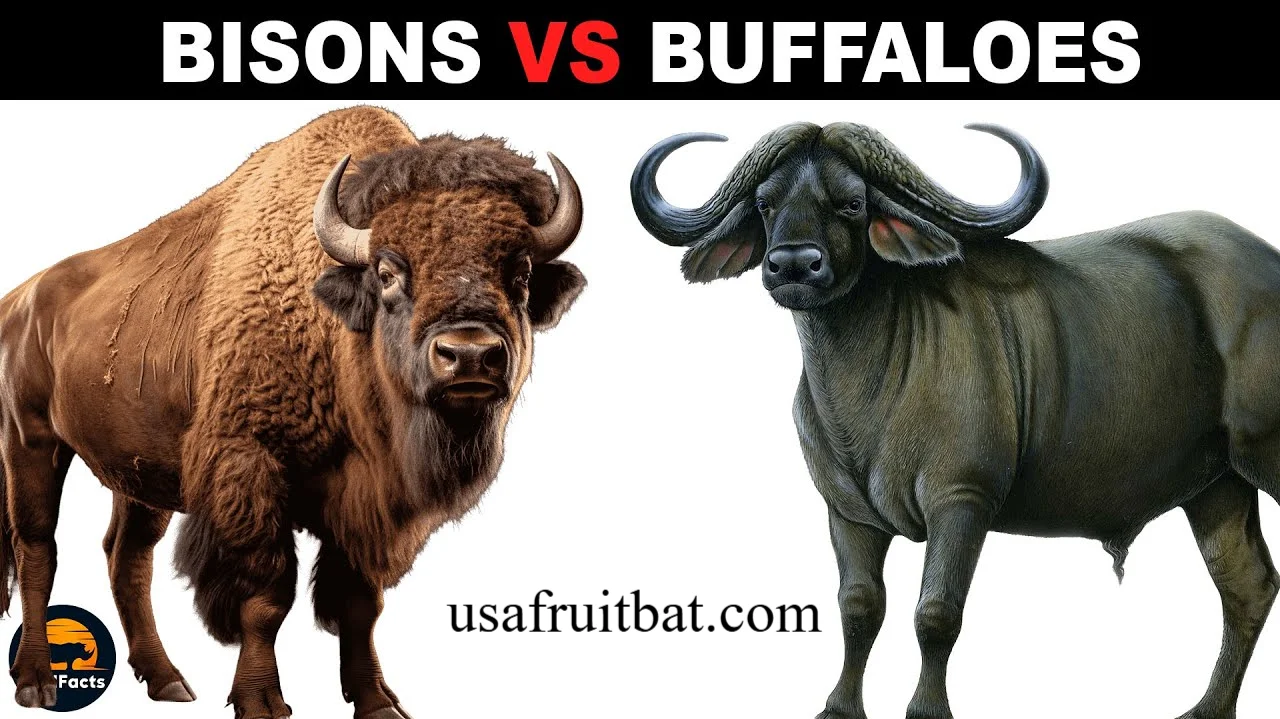
Walk through Yellowstone National Park, and a ranger will almost certainly call the shaggy, horned giant grazing nearby a “buffalo.” Look at the official species name, though, and it reads Bison bison — an American bison. So which one is it?
The short answer: in North America, “buffalo” and “bison” usually refer to the same animal — the American bison. But true buffalo are a separate group of species entirely, native to Africa and Asia, and they look quite different once you know what to look for. Understanding the difference between bison and buffalo comes down to taxonomy, geography, and a few centuries of linguistic habit.
This guide breaks down exactly how bison and buffalo differ, why the names get mixed up, and how to identify each animal at a glance.
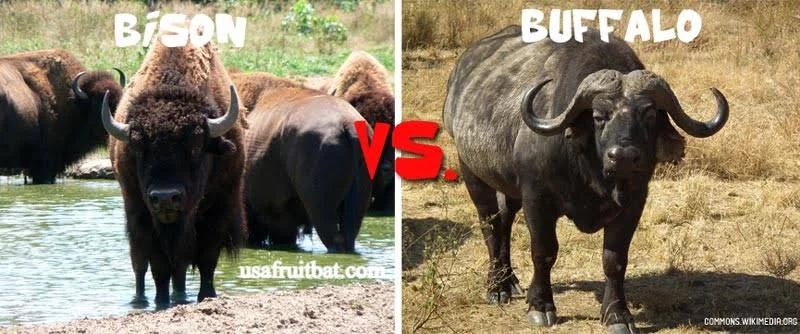
Bison vs. Buffalo: What’s the Difference?
In short: Bison and true buffalo belong to different genera within the same family. American bison (Bison bison) and European bison (Bison bonasus) are native to North America and Europe, while “true” buffalo — water buffalo (Bubalus bubalis) and African buffalo (Syncerus caffer) — are native to Asia and Africa. Americans call bison “buffalo” out of habit, not biology.
Both animals belong to the Bovidae family, the same broad group that includes cattle, goats, and antelope. But within that family, they split into different branches:
| Feature | Bison | True Buffalo |
|---|---|---|
| Genus | Bison | Bubalus (water buffalo) / Syncerus (African buffalo) |
| Native region | North America, Europe | Asia, Africa |
| Shoulder hump | Yes, prominent | No |
| Horns | Short, curved, sharp | Long, wide, sweeping |
| Beard | Yes (chin beard) | No |
| Coat | Thick, shaggy, seasonal | Short, sparse |
| Head/front size | Larger, heavier front-end | More evenly proportioned |
So while the words are used interchangeably in everyday American English, “bison” is the scientifically accurate term for the animal roaming the Great Plains, and “buffalo” technically belongs to a different set of species altogether.
Why Are American Bison Called Buffalo?
In short: The name likely comes from French fur trappers who called the animal les boeufs, meaning “oxen” or “beeves,” which English speakers eventually shortened and Anglicized to “buffalo.”
By the time American settlers were pushing west across the Great Plains, the word had already stuck. Early traders and explorers had never seen a true buffalo, but the term was already circulating for large, ox-like grazing animals — and American bison fit the bill. Over generations, “buffalo” became so deeply embedded in American culture — think Buffalo Bill, Buffalo, New York, and the buffalo nickel — that it never really went away, even after naturalists formally classified the animal as Bison bison.
Today, both names are considered acceptable in casual use within the United States. Wildlife agencies and scientists, however, consistently use “bison” in formal and conservation contexts.
Physical Differences Between Bison and Buffalo
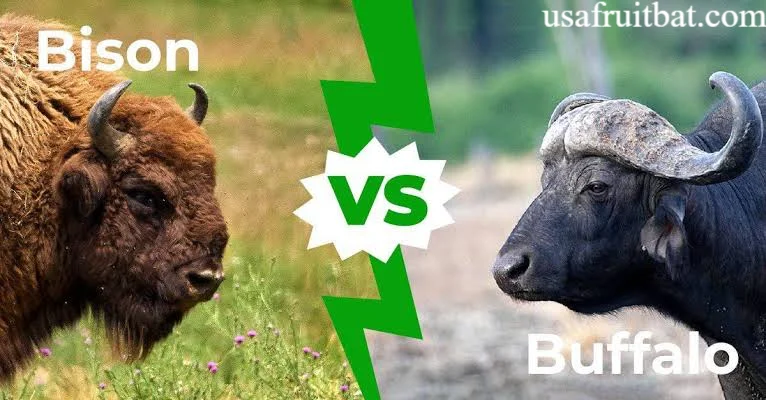
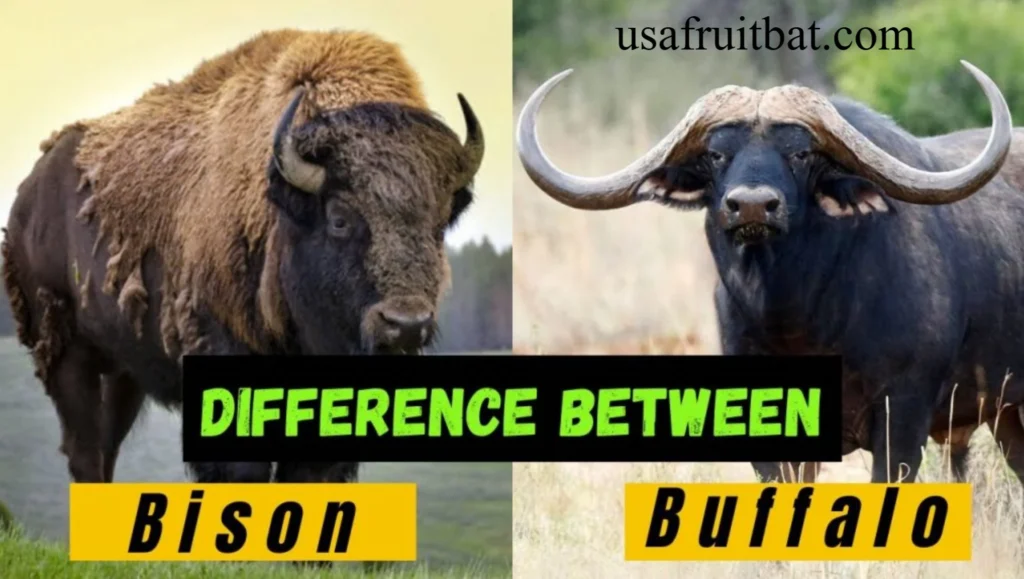
In short: Bison have a large shoulder hump, a shaggy beard, and a thick winter coat; true buffalo have smoother backs, no beard, and much larger, sweeping horns.
Bison physical characteristics
- A pronounced shoulder hump made of muscle, used for pushing snow aside while grazing
- Short, curved black horns that stay relatively small
- A thick chin beard and a shaggy mane covering the head, neck, and front legs
- A dense woolly winter coat that sheds heavily in spring
- A massive front end that tapers to a smaller, lighter hindquarters
Buffalo physical characteristics
- No shoulder hump — the back is relatively flat and even
- Long, wide horns; African buffalo horns can form a solid “boss” across the forehead, while water buffalo horns curve dramatically backward
- Short, coarse hair with no beard
- A more evenly proportioned body from front to back
- Skin that’s often visible through a sparser coat, especially in warmer climates
If you remember one shortcut: bison have the hump and the beard, buffalo have the horns and the smooth back.
How to Tell a Bison and Buffalo Apart
If you’re looking at a photo or standing at a safe distance from either animal, run through this quick checklist:
- Check for a shoulder hump. A tall hump behind the head means bison.
- Look at the horns. Short and curved suggests bison; long and sweeping suggests buffalo.
- Look for a beard. Bison have one; buffalo don’t.
- Consider the location. Seeing it in North America or Europe? It’s a bison. Africa or Asia? It’s a true buffalo.
- Note the coat. Thick and shaggy points to bison, especially in colder seasons; short and sleek points to buffalo.
Where Do Bison and Buffalo Live?
In short: Bison live in North America and parts of Europe, while true buffalo are native to Africa and South/Southeast Asia — though domesticated water buffalo are now farmed across many regions worldwide.
Bison habitat
American bison historically roamed the Great Plains and much of the American West, from the grasslands of the Midwest to river valleys and open prairie. Today, wild and conservation-managed herds are found in:
- Yellowstone National Park
- Wind Cave National Park (South Dakota)
- Theodore Roosevelt National Park (North Dakota)
- American Prairie Reserve (Montana)
- Numerous tribal lands, including those managed by the InterTribal Buffalo Council
European bison, by contrast, live in forested and semi-open landscapes in Poland, Belarus, Romania, and other parts of Central and Eastern Europe, with the largest population centered around the Białowieża Forest on the Poland–Belarus border.
Buffalo habitat
Water buffalo are native to South Asia and Southeast Asia but have been domesticated and introduced to farms across South America, parts of Europe, and Australia, primarily for dairy and draft labor. African buffalo (commonly called Cape buffalo) live across sub-Saharan Africa in savannas, floodplains, and forested regions, typically in large herds for protection from predators.
What Are the Different Species of Bison?
In short: There are two living bison species — American bison and European bison — and two recognized subspecies of American bison: Plains bison and Wood bison.
American Bison
Bison bison is the largest land animal in North America, with bulls weighing up to 2,000 pounds. It has two subspecies:
- Plains bison (Bison bison bison) — smaller, more numerous, historically roamed the open grasslands of the Great Plains
- Wood bison (Bison bison athabascae) — larger and darker, native to boreal forests in northern Canada and Alaska
European Bison
Bison bonasus, also called the wisent, is Europe’s largest land mammal. It’s taller and less bulky than the American bison, with longer legs better suited to forest terrain. The European bison was hunted to extinction in the wild by the early 20th century and survived only in captivity before reintroduction efforts began in the 1950s.
What Are the Different Species of Buffalo?
In short: There are two main true buffalo species — water buffalo in Asia and African (Cape) buffalo in sub-Saharan Africa.
Water Buffalo
Bubalus bubalis is one of the most widely domesticated large animals in the world, used for milk, meat, and farm labor across Asia. Wild water buffalo populations are now rare and considered endangered, while domesticated populations number in the hundreds of millions globally.
Cape Buffalo (African Buffalo)
Syncerus caffer is known for its unpredictable temperament and is considered one of Africa’s “Big Five” game animals. Cape buffalo travel in large herds, sometimes numbering in the hundreds, and are known for their fused horn “boss” that helps protect the skull during fights between bulls.
Bison and Buffalo Habitat and Behavior
Both animals are herd-based grazers that play an outsized ecological role in their environments. Bison are considered a keystone species on the North American prairie: their grazing patterns encourage plant diversity, their wallowing behavior creates small depressions that collect rainwater and support unique plant life, and their waste cycles nutrients back into the grassland ecosystem.
African buffalo perform a similar ecological function on the savanna, helping control vegetation and serving as a key prey species that supports predator populations like lions. Water buffalo, largely domesticated today, still play an important cultural and agricultural role, particularly in rice-farming regions of Asia.
Are Bison and Buffalo Related?
In short: Yes, but distantly. Bison and true buffalo are both part of the Bovidae family, but they belong to entirely different genera and haven’t shared a common ancestor for millions of years.
Think of it like the relationship between horses and zebras — both are equines, both look broadly similar to an untrained eye, but they’re genetically distinct animals that evolved on different continents under different pressures. The same logic applies here: bison and buffalo share a family tree far enough back that comparing them makes sense, but they are not the same species, nor are they close cousins.
Frequently Asked Questions
Is a bison the same as a buffalo?
No, not scientifically. The animal commonly called “buffalo” in the United States is actually the American bison (Bison bison). True buffalo — water buffalo and African buffalo — are separate species native to Asia and Africa.
Why do Americans call bison buffalo?
The term likely traces back to French fur trappers who used the word boeuf (ox) to describe the animal. English speakers adapted this into “buffalo,” and the name stuck through centuries of American folklore, place names, and popular culture.
Are bison bigger than buffalo?
American bison bulls typically outweigh African buffalo, with bison reaching up to 2,000 pounds compared to roughly 1,500–1,900 pounds for large Cape buffalo bulls. Water buffalo can vary widely in size depending on breed, with some domesticated bulls exceeding 2,600 pounds.
Where do bison and buffalo live?
Bison live in North America (Plains and Wood bison) and parts of Central/Eastern Europe (European bison). True buffalo live in sub-Saharan Africa (African buffalo) and across Asia (water buffalo), with domesticated water buffalo now farmed worldwide.
How many species of bison are there?
There are two living species of bison: the American bison (Bison bison) and the European bison (Bison bonasus). The American bison has two subspecies — Plains bison and Wood bison.
How many species of buffalo are there?
There are two primary true buffalo species: the water buffalo (Bubalus bubalis) of Asia and the African buffalo (Syncerus caffer), often called Cape buffalo.
FAQ Section
Difference between bison and buffalo pictures Photos make the difference obvious once you know what to look for. Bison photos typically show a tall shoulder hump, a shaggy beard, and a heavy, wool-like coat around the head and front legs. Buffalo photos — whether African or water buffalo — show a smoother back with no hump, no beard, and noticeably longer or wider horns. Wildlife agency and national park websites are reliable sources for accurately labeled comparison images.
Difference between bison and buffalo vs American bison “American bison” is simply the full, correct name for the animal most Americans casually call “buffalo.” There’s no meaningful difference between “bison” and “American bison” in everyday conversation — the longer term just specifies the species (Bison bison) rather than the broader genus. True buffalo, on the other hand, are a completely separate set of species found in Africa and Asia.
Difference between bison and buffalo meat Bison meat is leaner than most beef, with a slightly sweeter, richer flavor, and is widely sold in U.S. grocery stores and specialty butchers. Water buffalo meat is leaner still and common in parts of Asia and South America, often used similarly to beef in slow-cooked dishes. African buffalo meat is less commercially available outside Africa but is prized as game meat, known for being lean and dense.
Why are bison called buffalo This comes down to language history rather than biology. Early French trappers referred to the animal using a word close to “oxen,” which English speakers adapted into “buffalo.” The name predates formal scientific classification and simply never fell out of common use, even after the animal was officially named Bison bison.
American Buffalo “American buffalo” is a widely used nickname for the American bison, popularized through American history and culture — from the buffalo nickel to Buffalo Bill Cody. It is not a distinct species; it refers to the same animal as the American bison.
Are buffalo extinct No, but some populations came close. Wild water buffalo are now rare and classified as endangered, largely replaced by domesticated herds. African buffalo remain widespread and are not endangered, though some regional populations face pressure from habitat loss and disease. European bison were extinct in the wild in the early 20th century but have since been successfully reintroduced and reclassified as “near threatened” by the IUCN.
Do Bison and Buffalo taste the same Not quite. Bison meat tends to have a slightly sweet, mineral-rich flavor and a finer texture than beef. Water buffalo meat is milder and leaner, often compared to lean beef. African buffalo, as a game meat, tends to be denser and gamier in flavor. All three are generally leaner than conventional beef.
Buffalo or bison in Yellowstone The animals in Yellowstone National Park are bison, not true buffalo. Yellowstone is home to one of the few genetically pure, continuously wild bison populations in the United States, with herd numbers generally managed in the range of a few thousand animals. Park signage and rangers often use “buffalo” casually, but the correct species name is American bison (Bison bison).
Author Bio: Hamid Ali is a wildlife writer covering animal behavior, species comparisons, habitats, and conservation. He focuses on making complex wildlife topics easy to understand through accurate, engaging, and research-based content.
Author Name: Hamid Ali
Email: johanharwen314@gmail.com
Also Read: