Bats are some of the most fascinating animals on Earth. They can fly, navigate in darkness using sound, consume huge numbers of insects, pollinate plants, and survive in environments ranging from forests and deserts to caves and urban areas.
There are more than 1,400 known bat species worldwide, and bats live on almost every continent except Antarctica. In the United States, bats are an important part of wildlife ecosystems, particularly because many species eat insects.
From tiny insect-eating bats to large fruit bats, these nocturnal mammals have some remarkable abilities. Here are 25 cool bat facts that explain why bats deserve more attention and protection.
1. Bats Are the Only Mammals Capable of True Flight
One of the most interesting bat facts is that bats are the only mammals capable of sustained powered flight.
Flying squirrels and some other mammals can glide, but they cannot continuously flap their wings and fly like bats.
A bat’s wing is actually a modified forelimb. Its elongated finger bones support a thin membrane of skin that stretches across the wing.
This unusual anatomy gives bats impressive control in the air.
2. There Are More Than 1,400 Bat Species
Scientists have identified more than 1,400 species of bats worldwide. They come in an incredible range of shapes, sizes, colors, and behaviors.
Some are tiny enough to fit comfortably in a person’s hand, while others have wingspans approaching several feet.
Major groups include:
- Insect-eating bats
- Fruit bats
- Nectar-feeding bats
- Fish-eating bats
- Carnivorous bats
- Vampire bats
This diversity makes bats one of the most interesting groups of mammals.
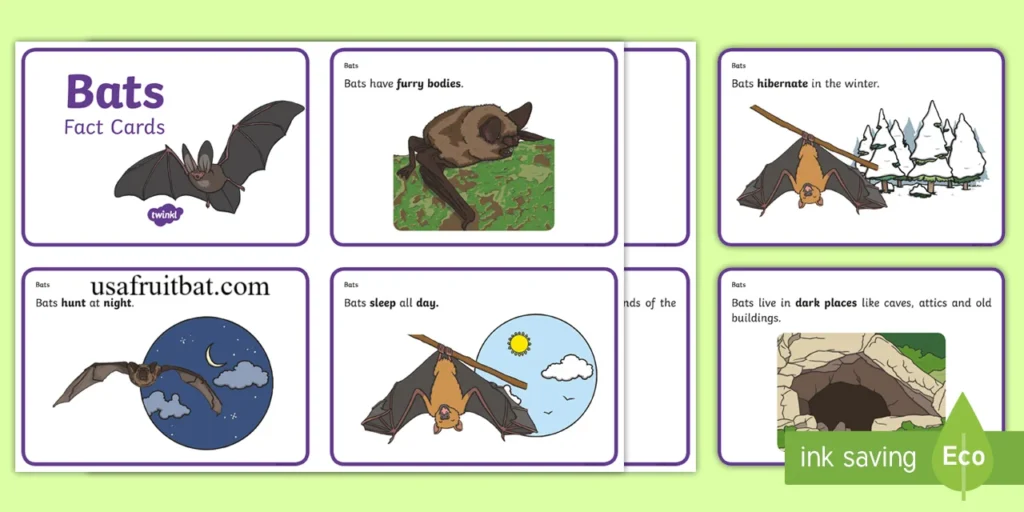
3. Bats Use Echolocation to Navigate
Many bats use echolocation, a biological sonar system that helps them navigate and locate prey.
A bat produces high-frequency sounds and listens for the echoes that return after those sounds hit objects.
From those echoes, the bat can gather information about its surroundings, including the location and movement of potential prey.
Echolocation is especially useful because many bats are active at night when visibility is limited.
4. Not Every Bat Uses Echolocation in the Same Way
Echolocation is strongly associated with bats, but bat species do not all use sound in exactly the same manner.
Many insect-eating bats rely heavily on echolocation to locate flying insects. Some species also use vision and hearing to supplement their sensory abilities.
This means the popular idea that bats are simply “blind animals using sonar” is misleading.
Bats are not blind.
In fact, many bats have functional eyesight, and some species rely considerably on vision.
5. Bats Can Be Extremely Small
One of the world’s smallest mammals is the Kitti’s hog-nosed bat, sometimes called the bumblebee bat.
It is remarkably tiny compared with most other mammals.
At the opposite end of the size spectrum are large flying foxes, whose wings can span several feet.
The enormous difference between these animals shows just how diverse bat anatomy can be.
6. Some Bats Eat Thousands of Insects
Insect-eating bats are natural nighttime pest controllers.
Some bats can consume very large quantities of insects, including agricultural pests. USGS notes that little brown bats can eat approximately 1,000 mosquitoes per hour under certain conditions.
Their feeding behavior can benefit agriculture because bats consume insects that damage crops.
This natural insect control is one reason bats are important to ecosystems and farmers.
7. Bats Help Protect Crops
Bats don’t just eat mosquitoes.
They also consume moths, beetles, and other insects that can affect agricultural crops and forests.
USGS research describes bats as important natural predators of crop and forest pests and reports that their pest-control services can provide substantial economic value to agriculture.
So when bats hunt at night, they are doing more than finding food. They are participating in natural ecosystem processes.
8. Some Bats Are Important Pollinators
Not every bat is an insect hunter.
Fruit bats and nectar-feeding bats can play important roles in pollination and seed dispersal.
They visit flowers and fruit while moving between plants, helping transfer pollen or spread seeds.
Plants associated with bats include:
- Agave
- Cacti
- Some tropical fruits
- Various flowering plants
This makes bats especially important in tropical and desert ecosystems.
9. Bats Can Help Plants Produce More Fruit
Pollination is another reason bats matter to humans.
When nectar-feeding bats visit flowers, pollen can be transferred between plants.
Some bat-pollinated plants are economically and ecologically important. Agave is one well-known example.
Fruit bats can also spread seeds over considerable distances, helping plants colonize new areas.
10. Not All Bats Hibernate
A common misconception is that every bat spends winter sleeping in a cave.
That’s not true.
Some bat species hibernate, while others migrate to warmer areas when temperatures drop or food becomes scarce.
In North America, more than half of the 47 bat species living in the United States and Canada are known to hibernate.
Migration and hibernation are different survival strategies.
11. Some Bats Travel Long Distances
Migratory bats can travel significant distances between summer and winter habitats.
Migration allows bats to follow favorable temperatures and food availability.
The Mexican free-tailed bat is a well-known example in the United States, with enormous colonies associated with caves and other roosting sites.
These seasonal movements are important to understanding bat behavior and conservation.
12. Bracken Cave Has an Enormous Bat Colony
Texas is home to one of the world’s most famous bat-viewing locations: Bracken Cave.
The site is associated with a huge colony of Mexican free-tailed bats.
During the appropriate season, enormous numbers of bats emerge from the cave around sunset.
The spectacular event attracts visitors and researchers and demonstrates the scale at which bats can form social colonies.
13. Baby Bats Are Called Pups
A baby bat is called a pup.
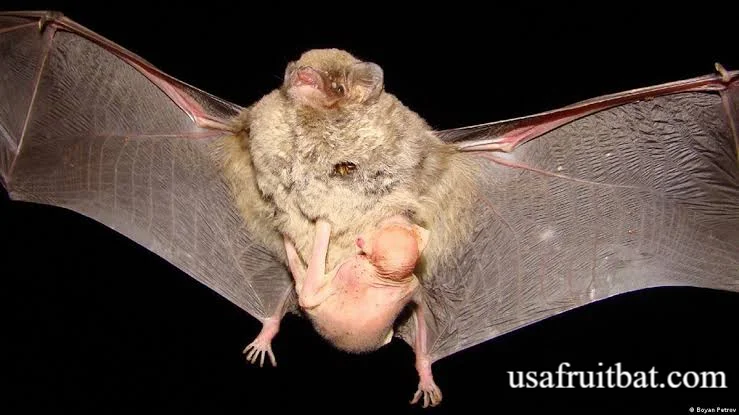
Like other mammals, baby bats receive milk from their mothers.
Most bat species generally produce very few offspring compared with many other animals. In many species, females give birth to a single pup.
That low reproductive rate makes population recovery difficult when large numbers of bats die from disease or other threats.
14. Mother Bats Can Form Nursery Colonies
Female bats sometimes gather together in maternity or nursery colonies to give birth and raise their young.
These colonies can occur in:
- Caves
- Trees
- Rock crevices
- Buildings
- Bridges
- Bat houses
The exact roosting behavior depends on the species.
Protecting maternity sites is therefore an important part of bat conservation.
15. Bats Have Surprisingly Long Lifespans
Many small mammals have relatively short lifespans, but bats can be different.
Some bat species can live for decades.
Researchers have documented bats reaching more than 30 years of age, and one bat was recorded living for 41 years.
This makes bats unusually long-lived compared with many mammals of similar body size.
16. Bats Spend Time Grooming
Bats are not naturally dirty animals.
Like many mammals, they groom themselves.
Grooming helps keep their fur and skin in good condition and can help remove parasites and debris.
Some bats also groom one another, demonstrating the social behavior found in many bat colonies.
17. Vampire Bats Are Real
Yes, vampire bats are real.
However, the real animals are very different from the exaggerated creatures found in horror movies.
Vampire bats are native to parts of Central and South America. They feed primarily on blood rather than drinking it like a liquid from a cup.
They make small cuts in their food source and consume blood using specialized feeding adaptations.
Only a small number of bat species have this unusual diet.
18. Bats Do Not Normally Attack People
Bats generally avoid humans and are not naturally interested in attacking people.
Like other wild mammals, however, bats should be observed from a safe distance.
Never handle a wild bat with bare hands. If a bat is found inside a home, local wildlife professionals or animal-control authorities can provide appropriate guidance.
Bats are wild animals and should be treated accordingly.
19. White-Nose Syndrome Is a Major Bat Threat
One of the most serious bat conservation challenges in North America is white-nose syndrome, a fungal disease affecting hibernating bats.
The disease is caused by the fungus Pseudogymnoascus destructans.
The fungus can infect the skin of a bat’s muzzle, ears, and wings and disrupt normal hibernation.
Millions of bats have died from the disease since it was first detected in North America.
20. White-Nose Syndrome Continues to Be Studied
Bat disease research is still active.
According to the USGS 2025–2029 science strategy, white-nose syndrome had affected 12 North American bat species, while the fungus had been detected in additional species.
USGS scientists are working on monitoring, disease management, population assessment, and potential treatments.
In its 2025 review, USGS also highlighted research into vaccine strategies and improved monitoring methods.
21. Bats Have Important Natural Predators
Bats may be skilled fliers, but they are not completely safe from predators.
Depending on the species and habitat, bats can be preyed upon by:
- Owls
- Hawks
- Snakes
- Mammalian predators
- Other opportunistic predators
Disease, habitat loss, disturbance, and other human-related pressures can also threaten bat populations.
22. Bats Have Amazing Wing Anatomy
A bat’s wing is essentially a flexible membrane stretched over elongated finger bones.
Unlike a bird wing, which has feathers as its primary flight surface, a bat wing is made largely from skin.
This flexible structure allows bats to make rapid changes in direction.
It also helps explain why bats can maneuver through forests, caves, and other complicated environments.
23. Bats Are Important to the U.S. Ecosystem
Bats provide several ecological services.
Their most important contributions include:
Insect control: Many species consume insects, including agricultural pests.
Pollination: Nectar-feeding bats help pollinate certain plants.
Seed dispersal: Fruit bats can move seeds between locations.
Biodiversity: Bats form an important part of food webs and natural ecosystems.
USGS continues to describe bats as important natural predators of insects and emphasizes their ecological and agricultural value.
24. Bat Houses Can Provide Additional Roosting Opportunities
A properly designed bat house can provide bats with an alternative roosting structure in suitable areas.
However, installing a bat house does not guarantee that bats will move into it.
Success depends on factors such as:
- Local bat species
- Location
- Temperature
- Nearby water
- Food availability
- Roost design
- Seasonal conditions
Bat houses should be viewed as one conservation tool rather than a guaranteed solution.
25. Protecting Bats Helps Protect Ecosystems
Perhaps the most important of these cool bat facts is that protecting bats can benefit entire ecosystems.
Habitat loss, disease, disturbance, and other pressures can reduce bat populations.
Scientists and wildlife agencies continue monitoring bat populations and developing conservation strategies.
USGS’s current bat-health work includes population monitoring, disease research, and efforts to improve the resilience of bats affected by white-nose syndrome.
Simple actions can also help:
- Avoid disturbing bats in caves.
- Never handle wild bats without proper protection.
- Protect natural roosting areas.
- Consider appropriate bat houses where suitable.
- Support responsible wildlife conservation.
- Follow cave decontamination guidance in areas affected by white-nose syndrome.
10 Characteristics of Bats
If you need a quick summary of bat characteristics, here are ten important ones:
- Bats are mammals.
- They are the only mammals capable of sustained powered flight.
- Many species use echolocation.
- They are mostly nocturnal.
- They have highly flexible wings.
- Some species hibernate.
- Some species migrate.
- Their diets vary greatly.
- Many species live in colonies.
- Bats provide important ecosystem services.
Cool Bat Facts for Kids
Kids often find bats fascinating because they combine several unusual characteristics.
Here are some easy facts:
- Bats are mammals, not birds.
- Baby bats are called pups.
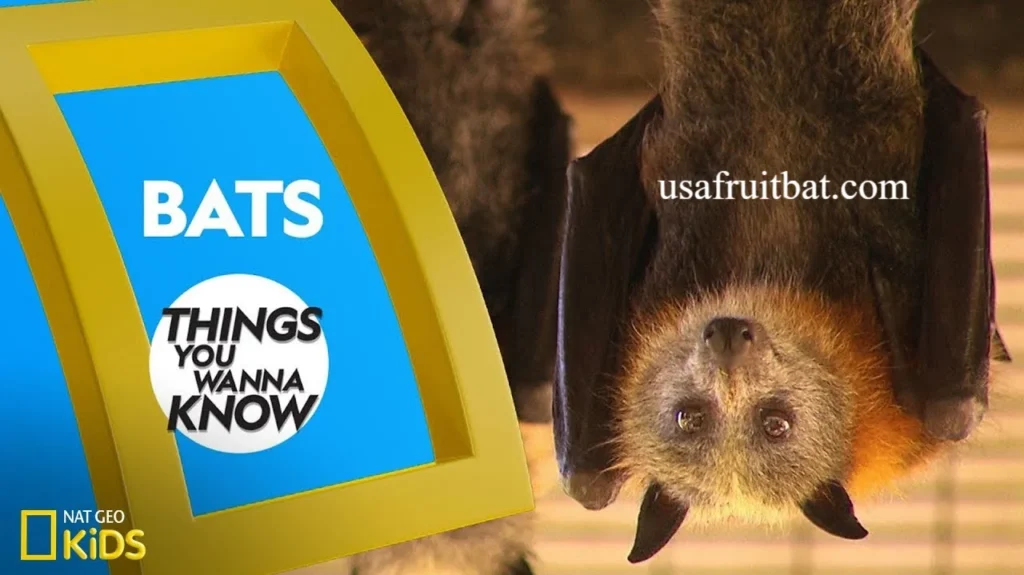
- Many bats sleep or rest upside down.
- Some bats use echolocation.
- Some bats eat insects.
- Some bats eat fruit or nectar.
- Vampire bats are real.
- Bats can fly using their hands and fingers.
- Some bats live in large colonies.
- Some bats can live for decades.
Cool Bat Facts for Adults
For adults, some of the most interesting facts involve bat ecology and conservation.
Bats are important natural pest controllers, and their feeding behavior can benefit agriculture. They also contribute to pollination and seed dispersal in many ecosystems.
At the same time, North American bats face serious conservation challenges. White-nose syndrome has caused major mortality, and scientists continue to monitor populations and investigate management strategies.
Frequently Asked Questions About Cool Bat Facts
What are 10 fun facts about bats?
Ten fun bat facts are that bats are mammals, they are the only mammals capable of powered flight, many use echolocation, some migrate, some hibernate, babies are called pups, vampire bats are real, bats can pollinate plants, many species eat insects, and some bats can live for decades.
What are some cool bat facts for kids?
Kids may enjoy learning that bats are flying mammals, baby bats are called pups, many bats use echolocation, some bats eat insects, and vampire bats are real. Some bat colonies can also contain enormous numbers of individuals.
What are some cool bat facts for adults?
Adults may find bat ecology especially interesting. Bats provide natural insect control, contribute to pollination and seed dispersal, and have unusual adaptations for flight and echolocation. Their conservation is also important because diseases such as white-nose syndrome have caused major population losses in North America.
What are 10 fun facts about bats for kids?
Ten simple facts are: bats are mammals, bats can fly, many use echolocation, bats are mostly active at night, baby bats are called pups, some bats eat insects, some eat fruit, vampire bats exist, some bats hibernate, and bats help ecosystems.
What are 10 characteristics of bats?
Ten characteristics include powered flight, mammalian biology, wings formed from skin membranes, echolocation in many species, nocturnal activity, specialized teeth and diets, hibernation in some species, migration in some species, social colonies in many species, and strong ecological roles.
What are some cool bat facts for preschoolers?
For preschoolers, simple facts work best: bats are animals, bats are mammals, bats can fly, many bats come out at night, baby bats are called pups, and some bats eat tiny insects. Children should learn to watch wild bats without touching them.
Conclusion
Bats are far more than mysterious animals that fly at night.
They are skilled fliers, sophisticated navigators, insect hunters, pollinators, seed dispersers, and important members of many ecosystems. Their diversity is remarkable, with more than 1,400 species worldwide, while North American species continue to face serious threats from diseases such as white-nose syndrome.
The more scientists learn about bats, the clearer their ecological importance becomes. Protecting their habitats and reducing unnecessary disturbance can help these remarkable mammals survive for generations to come.
Author Bio: Hamid Ali is a wildlife and nature writer who explores fascinating facts about animals, ecosystems, and conservation. He focuses on clear, research-based content that helps readers better understand the natural world.
Author Name: Hamid Ali
Email: johanharwen314@gmail.com
Also Read: