
Introduction
If you have a young child or you are expecting one soon, you have probably heard people talking about a new savings account for kids. So what is the Trump account for kids exactly, and should you care about it? In simple terms, it is a new type of investment account created by the federal government to help children start building wealth long before they even understand what a stock market is. Some babies even qualify for a free $1,000 deposit just for being born in the right years. In this article, I will walk you through everything you need to know, from who qualifies to how the money grows, so you can decide whether it makes sense for your family.
What Is The Trump Account For Kids?
Let’s start with the basics. What is the Trump account for kids at its core? It is a federal savings and investment account for children under 18 who have a Social Security number. Think of it as a retirement style account, but it starts on day one of a child’s life instead of their first job.
The accounts were created through a federal tax and spending law signed in 2025. They function as a type of traditional individual retirement account, except the beneficiary is a child rather than an adult.
The money inside is not meant for everyday spending. It is meant to sit, grow, and compound for years, ideally decades, before the child ever touches it.
Who Can Open One
Now that you know what is the Trump account for kids in a general sense, let’s talk about who actually qualifies.
Any child under age 18 who is a U.S. citizen with a valid Social Security number can have an account opened for them. A parent, legal guardian, grandparent, or in some cases a sibling can be the one to open it on the child’s behalf.
So this is not a program limited to newborns only. Older kids can qualify too. However, only certain children receive free government money, which brings us to the next point.
How Much Money Do Kids Get For Free
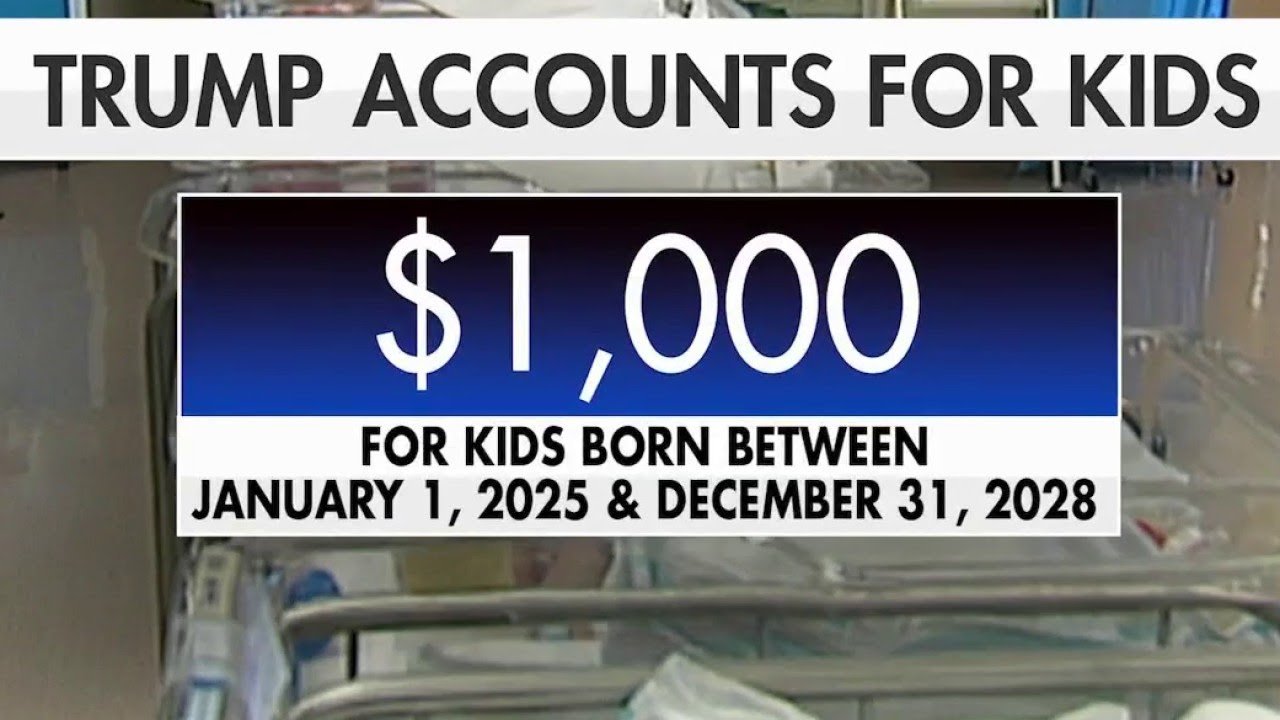
This is usually the part parents care about most. Children born between January 1, 2025, and December 31, 2028, who are U.S. citizens with a valid Social Security number, qualify for a one time $1,000 federal seed contribution.
That deposit is not something you have to save up or apply for separately. Parents simply file the correct election form with the IRS to claim it, usually alongside their tax return.
There is also a lesser known bonus for some families. Certain children living in qualifying areas may receive an additional charitable deposit from a private foundation, though the rules and amounts for this bonus can differ from the main federal deposit, so it is worth checking current details before assuming your child qualifies.
Who Can Add Money To The Account
Understanding what is the Trump account for kids also means understanding who is allowed to fund it, since the government contribution is often just the starting point.
Parents, relatives, friends, employers, state governments, philanthropic organizations, and individuals can all deposit money, subject to annual limits. In practical terms, that means grandparents, aunts, uncles, or even a generous family friend can add to a child’s future nest egg.
There are limits though. Parents, family, and friends can contribute up to a combined annual limit, and that cap is designed to adjust with inflation over time. On top of that, employers can contribute an additional amount each year with some restrictions.
How The Money Is Invested
A common question people ask alongside what is the Trump account for kids is how the money actually grows. The answer is simple. The funds are not left sitting in cash. They are invested in the market so they have a chance to grow over time, much like a retirement account would for an adult.
Every dollar in the account must be invested in low cost, broad U.S. index funds, rather than individual stocks or riskier investment choices. This keeps things simple and reduces the temptation to gamble a child’s future savings on a single company.
When Can The Child Access The Funds
This is where patience becomes important. These accounts are built for the long term, not for a quick withdrawal when college tuition comes due next year.
Withdrawals are heavily restricted during the years before adulthood, and early closures are generally not allowed. In most cases, the beneficiary cannot withdraw money before turning 18.
Once that milestone is reached, things shift. The account generally converts into rules similar to a standard traditional IRA once the child becomes an adult. That usually means withdrawals made before the standard retirement withdrawal age face a penalty, with some exceptions such as higher education costs, a first home purchase, or birth and adoption expenses.
Are Contributions Taxed?
Tax questions come up a lot with these accounts, and rightly so. Contributions from family or friends generally use after tax dollars, and any investment returns on those contributions are taxed when the money is eventually withdrawn. Contributions coming from employers, governments, or nonprofits are typically not counted as taxable income to the family at the time they are made, but they will be taxed later when withdrawn.
One relief for larger families is on the gift tax side. Contributions to these accounts generally do not trigger a gift tax filing requirement, since they count toward the standard annual gift exclusion.
Why This Program Matters
I think the appeal here is fairly easy to understand. Not every family has the means to open a brokerage account for their child or set aside thousands of dollars early on. This program tries to level that playing field a bit by giving every eligible child a starting point, regardless of household income.
A thousand dollars invested at birth, left untouched for close to two decades, has real potential to grow significantly. Even if a family never adds another dollar, that seed money alone can turn into something meaningful by the time the child becomes an adult.
A Few Things To Keep In Mind
- The $1,000 deposit only applies to children born between 2025 and 2028.
- Older children can still have an account opened, just without the free government deposit.
- Funds are locked up until the child turns 18 in almost all cases.
- Rules around limits and taxes can change, so checking official government guidance regularly is smart.
Conclusion
So, what is the Trump account for kids in one sentence? It is a federal investment account designed to give children a financial head start, complete with a possible $1,000 government contribution, tax deferred growth, and long term investing built around simple index funds. It is not a quick cash tool, and it is not meant to replace an emergency fund or a college savings plan. It is meant to sit quietly in the background for years, working in a child’s favor.
If you are a parent trying to plan for your child’s future, this program is worth a closer look. Have you already opened one for your child, or are you still deciding? I would love to hear your thoughts, and feel free to share this article with another parent who might be asking the same question.
Frequently Asked Questions
What is the Trump account for kids in simple terms?
It is a federal savings and investment account created for children under 18, designed to help them build long term wealth through tax deferred growth.
Who qualifies for the $1,000 deposit?
Children born between January 1, 2025, and December 31, 2028, who are U.S. citizens with a valid Social Security number.
Can I open an account for an older child?
Yes, any child under 18 with a Social Security number can have an account opened, though only certain birth years qualify for the free deposit.
How much can family members contribute each year?
There is a combined annual limit for family and friends, plus an additional employer contribution limit each year.
Can the child withdraw money before turning 18?
Generally no. Withdrawals are restricted until adulthood, with very limited exceptions.
What happens when the child turns 18?
The account generally shifts into rules similar to a standard retirement account, and normal withdrawal rules apply from that point.
Is the government contribution taxed?
The seed contribution itself is not counted as taxable income, but earnings are taxed when eventually withdrawn.
How is the money invested?
Funds are placed in low cost, broad U.S. index funds rather than individual stocks.
Do I need to file anything to get the $1,000 deposit?
Yes, eligible families generally need to file the appropriate election form to claim the contribution.
Where can I check the latest official rules?
Always confirm current details through official U.S. government guidance, since program rules can be updated.
usafruitbat.com
Email: johanharwen314@gmail.com
Author Name: Hamid Ali
About The Author: Hamid Ali is a personal finance writer who enjoys breaking down complicated money topics into simple, practical advice for everyday families. He focuses on helping parents make informed decisions about savings, investing, and long term financial planning for their children.