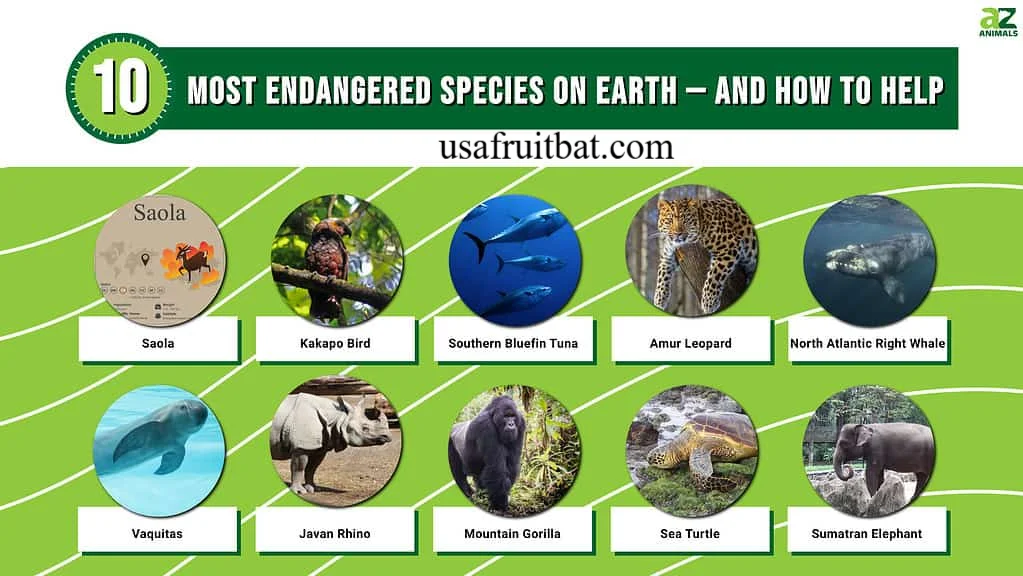
Some of the planet’s most remarkable species are running out of time. Habitat loss, illegal wildlife trade, poaching, and climate pressures have pushed dozens of animals toward the edge of extinction — and for a handful of them, the numbers remaining in the wild are almost too small to comprehend. Below is a look at ten of the most critically endangered animals in the world today, based on the latest IUCN Red List assessments and recent population surveys, along with what’s actually being done to help them survive.
Top 10 Endangered Animals and How Many Are Left
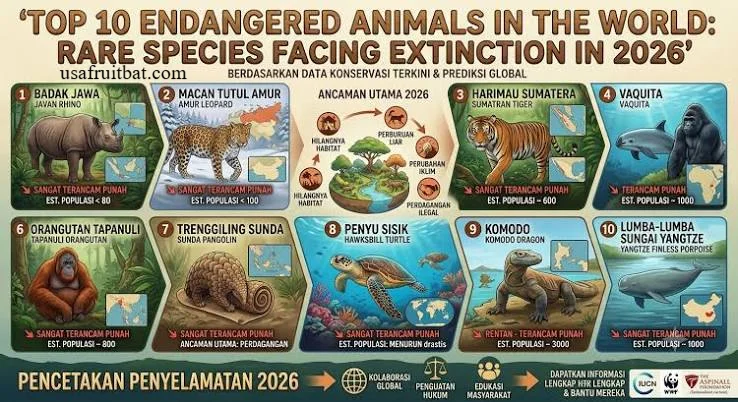
Here’s the short answer before the details: these ten species range from fewer than 10 individuals left in the wild to a few thousand, and all are classified as Critically Endangered or Endangered by the IUCN.
| Animal | Estimated Wild Population | IUCN Status |
|---|---|---|
| Vaquita | Fewer than 10 | Critically Endangered |
| Javan Rhino | About 50 | Critically Endangered |
| Amur Leopard | Around 130 | Critically Endangered |
| Sumatran Tiger | Fewer than 400 | Critically Endangered |
| Yangtze Finless Porpoise | Roughly 1,249 (last nationwide survey) | Critically Endangered |
| Mountain Gorilla | Just over 1,000 | Endangered |
| Hawksbill Turtle | Population down more than 80% over three generations | Critically Endangered |
| African Forest Elephant | Down 86% over 31 years | Critically Endangered |
| Black Rhinoceros | 6,788 (increasing) | Critically Endangered |
| Sumatran Orangutan | Roughly 11,000–14,000 | Critically Endangered |
1. Vaquita — The World’s Rarest Marine Mammal
The vaquita is a small porpoise found only in Mexico’s Upper Gulf of California, and it holds the grim distinction of being the most endangered marine mammal on Earth. Population surveys have shown numbers hovering in the single digits in recent years, with a 2024 government-backed survey estimating just six to eight individuals remaining. The species has collapsed from an estimated 600 in the late 1990s, driven almost entirely by illegal gillnet fishing for the totoaba fish, whose swim bladder is trafficked for use in traditional medicine. Vaquitas frequently drown after becoming entangled in these nets meant for other catch.
2. Javan Rhino — Down to a Single Population
The Javan rhino now survives in only one place on Earth: Ujung Kulon National Park in Indonesia. According to the International Rhino Foundation’s 2025 State of the Rhino report, the population dropped by a third — from 76 to approximately 50 individuals — after poachers killed 26 rhinos, mostly males, between 2019 and 2023. With no rhinos in captivity anywhere in the world, this species has zero safety net outside its single wild habitat, making continued protection of that park absolutely critical.
3. Amur Leopard — Recovering, But Still on the Brink
The Amur leopard is the rarest big cat subspecies in the world, found only in a narrow forest region along the Russia-China border. Decades ago, numbers dropped as low as 25–34 individuals, but coordinated conservation work — including the creation of Russia’s Land of the Leopard National Park in 2012 — has helped the population recover to an estimated 130 mature individuals as of the IUCN’s 2023 assessment. It’s one of the clearest examples of habitat protection translating into measurable population growth, even though the species remains critically endangered.
4. Sumatran Tiger — Indonesia’s Last Tiger Subspecies
With the Balinese and Javan tigers already extinct, the Sumatran tiger is the last tiger subspecies surviving in Indonesia. Recent estimates place the wild population at fewer than 400, confined to fragmented forest patches on the island of Sumatra. Palm oil expansion, illegal logging, and poaching for the illegal wildlife trade in tiger parts continue to shrink and fragment its habitat, leaving isolated tiger populations vulnerable to inbreeding and local extinction.
5. Yangtze Finless Porpoise — China’s Freshwater Rarity
Found exclusively in China’s Yangtze River, this porpoise is one of the few freshwater cetaceans left on the planet after the functional extinction of the baiji dolphin in the same river system. The most recent nationwide survey put the population at approximately 1,249 individuals. Threats include heavy river traffic, industrial pollution, sand dredging, and habitat fragmentation from dam construction — pressures that make this species a bellwether for the broader health of the Yangtze ecosystem.
6. Mountain Gorilla — A Rare Conservation Success Story
Unlike most animals on this list, the mountain gorilla population has actually been increasing. Found in the Virunga Mountains and Bwindi Impenetrable Forest across Rwanda, Uganda, and the Democratic Republic of Congo, the species now numbers just over 1,000 individuals — enough progress that the IUCN reclassified it from Critically Endangered to Endangered in 2018. Sustained anti-poaching patrols, regulated eco-tourism revenue, and cross-border cooperation between the three countries are widely credited for this rebound.
7. Hawksbill Turtle — Hunted for Its Shell
The hawksbill sea turtle has lost more than 80% of its global population over the last three generations, according to IUCN assessments, largely due to historic and ongoing exploitation for its distinctive tortoiseshell pattern, along with egg harvesting, coastal habitat destruction, and entanglement in fishing gear. It nests across more than 70 countries, with its largest remaining populations found in Australia and the Seychelles, but most regional populations continue to decline even where international trade bans are in place.
8. African Forest Elephant — Losing Ground Fast
In 2021, the IUCN formally recognized the African forest elephant as a distinct species from the savanna elephant — and immediately classified it as Critically Endangered. The reason: its population had plummeted by more than 86% over just 31 years, driven by poaching for ivory and the conversion of Central African forests into farmland and infrastructure. Forest elephants reproduce far more slowly than their savanna relatives, which means recovery, even under strong protection, will take generations.
9. Black Rhinoceros — Numbers Climbing, Threat Still High
The black rhino remains Critically Endangered, but it’s another rare bright spot. According to the 2025 State of the Rhino report, the global population has grown to 6,788, up from 6,195 in 2022, largely due to intensive anti-poaching enforcement and cross-border monitoring in southern and eastern Africa. Even so, conservationists caution that many local populations are still too small to be considered genetically viable long-term, meaning sustained protection remains essential.
10. Sumatran Orangutan — A Shrinking Forest Home
Sumatran orangutans live only in the northern forests of Sumatra, Indonesia, primarily within the Leuser Ecosystem. Population estimates have varied over the years due to improved survey methods, but the most recent comprehensive assessment (2021–2023) found roughly 11,700 individuals, reflecting a genuine decline of nearly 20% compared to a 2011 baseline. Palm oil plantation expansion, road construction, and logging continue to fragment their habitat, isolating populations and cutting off genetic exchange between them.
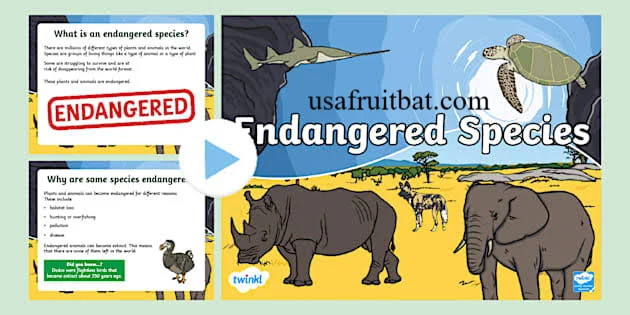
Why Are These Animals Becoming Endangered?
In short: habitat destruction and illegal wildlife trade are the two biggest drivers, though the specific pressures vary by species and region.
- Habitat loss and fragmentation — logging, agricultural expansion (especially palm oil), and infrastructure development are shrinking and splitting up natural habitats
- Illegal hunting and poaching — driven by demand for ivory, tiger parts, rhino horn, and tortoiseshell
- Illegal wildlife trafficking — a global, highly profitable black market that continues to threaten species even where trade bans exist
- Bycatch and accidental entanglement — a leading cause of decline for marine species like the vaquita and hawksbill turtle
- Climate change and pollution — increasingly compounding existing pressures on already fragile populations
- Slow reproduction rates — species like elephants, rhinos, and great apes reproduce slowly, making population recovery a multi-generational process even under ideal protection
How Can We Help Protect Endangered Species?
Individual and collective action both matter here, and the recovery stories on this list (mountain gorillas, black rhinos, Amur leopards) prove that conservation genuinely works when it’s properly funded and enforced.
- Support reputable wildlife conservation organizations working directly in habitat protection and anti-poaching enforcement
- Avoid purchasing products made from endangered species, including ivory, tortoiseshell, and exotic animal parts
- Choose sustainably sourced palm oil and wood products to reduce demand-driven deforestation
- Support and respect protected areas and national parks, including responsible eco-tourism that funds local conservation
- Report suspected wildlife trafficking to relevant authorities or organizations tracking illegal trade
- Stay informed through the IUCN Red List, which tracks extinction risk and updates species status as new data becomes available
Endangered Animals Chart: Population Trends at a Glance
The population figures above show a genuinely mixed picture. Some species — the mountain gorilla, black rhino, and Amur leopard — are trending upward thanks to sustained conservation investment. Others, including the vaquita, Javan rhino, and Sumatran orangutan, continue to decline despite ongoing protection efforts, underscoring that habitat security and enforcement against poaching remain the two factors that most reliably determine whether a species recovers or disappears.
Frequently Asked Questions
What Is the Most Endangered Animal in the World?
Based on current population estimates, the vaquita is widely considered the most endangered animal in the world, with fewer than 10 individuals believed to remain in Mexico’s Gulf of California.
Why Are Animals Becoming Endangered?
Animals become endangered primarily due to habitat loss, illegal poaching and wildlife trafficking, bycatch in fishing gear, and slow reproductive rates that make population recovery difficult even when protections are put in place.
How Can We Protect Endangered Species?
Protecting endangered species requires a combination of habitat preservation, strict enforcement against poaching and illegal trade, community-based conservation programs, and public support for organizations doing on-the-ground protection work.
What Is the Difference Between Endangered and Critically Endangered?
“Endangered” means a species faces a very high risk of extinction in the wild, while “Critically Endangered” — the more severe IUCN Red List category — means a species faces an extremely high risk of extinction in the immediate future, based on factors like population size, decline rate, and range.
FAQ Section
Top 10 endangered animals and how many are left
See the population table above — figures range from fewer than 10 vaquitas to roughly 11,000–14,000 Sumatran orangutans, based on the latest IUCN and conservation organization surveys.
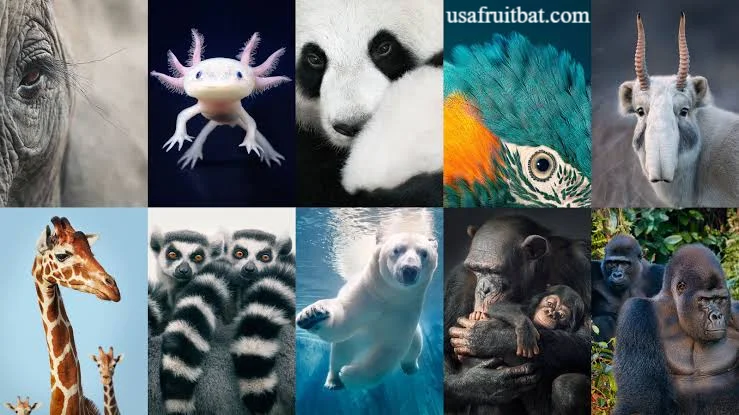
Where can I find top 10 endangered animals pictures?
Reputable sources for accurate, well-documented photos include WWF, the IUCN Red List website, and established wildlife conservation organizations working directly with these species in the field.
What are the top 10 endangered animals in the world?
This article covers the vaquita, Javan rhino, Amur leopard, Sumatran tiger, Yangtze finless porpoise, mountain gorilla, hawksbill turtle, African forest elephant, black rhinoceros, and Sumatran orangutan.
Is there an endangered animals chart showing population trends?
Yes — the chart above summarizes current population estimates and IUCN status for each of the ten species discussed in this guide.
What are the top 20 most endangered animals?
Beyond the ten listed here, other critically endangered species commonly cited include the Sunda pangolin, Sumatran rhino, saola, Cross River gorilla, kakapo, hirola, pangolins more broadly, the Philippine eagle, the axolotl, and the North Atlantic right whale, among others.
What are the top 10 endangered animals in 2026?
The species and population estimates in this article reflect the most recent data available as of 2026, including the 2025 State of the Rhino report and updated IUCN Red List assessments.
Can you name five endangered animals?
Five widely recognized examples are the vaquita, Javan rhino, Amur leopard, Sumatran tiger, and mountain gorilla — each facing distinct threats from habitat loss, poaching, or illegal trade.
What are the most endangered animals in the world overall?
The most endangered animals globally are generally those with populations in the single or low double digits, such as the vaquita, alongside species restricted to a single remaining habitat, such as the Javan rhino.
Author Bio: Hamid Ali is a wildlife writer covering endangered species, animal behavior, conservation, and global biodiversity. He turns scientific research and conservation data into clear, engaging, and easy-to-understand wildlife stories.
Author Name: Hamid Ali
Email: johanharwen314@gmail.com
Also Read: