
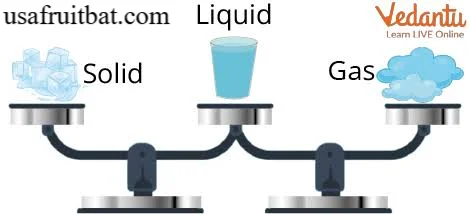
Matter is all around you. The water you drink, the food you eat, the air you breathe, and even the objects you use every day are made of matter. But have you ever wondered what happens to matter when something burns, melts, dissolves, or changes into a completely different substance? Does it disappear, or does it simply take another form? Science provides a clear answer through an important principle known as the law of conservation of matter.
This principle explains that matter cannot be created or destroyed during ordinary physical and chemical changes. Instead, atoms rearrange themselves to form new substances while the total amount of matter remains constant in a closed system. Understanding this concept helps you explore chemical reactions, everyday transformations, and many natural processes. Let’s examine its definition, history, examples, and importance in science.
What Is the Law of Conservation of Matter?
The law of conservation of matter states that matter cannot be created or destroyed during an ordinary chemical reaction or physical change. It can change its shape, size, appearance, or chemical composition, but the total amount of matter remains constant in a closed system. In simple words, matter does not suddenly disappear or appear from nowhere. It only changes from one form into another.
For example, when you melt an ice cube, it changes from solid ice into liquid water. Although its physical appearance changes, the amount of matter stays the same if nothing enters or leaves the system. Similarly, when two chemicals react, their atoms rearrange to produce new substances. The original materials may look completely different afterward, but their total mass remains unchanged.
sourecs: vedantu.com
History and Discovery of the Law of Conservation of Mass
The development of this scientific principle is closely connected to French chemist Antoine Lavoisier. During the eighteenth century, scientists were still developing their understanding of chemical reactions and the behavior of different substances. Lavoisier performed carefully controlled experiments and measured the mass of materials before and after chemical changes to understand what happened during these processes.
His experiments demonstrated that the total mass of substances remained the same when chemical reactions took place in a closed system. His work helped establish the law of conservation of mass as a fundamental principle of chemistry. Today, Lavoisier is widely recognized for his important contributions to modern chemistry, particularly his emphasis on accurate measurements and experimental evidence.
How Does the Law of Conservation of Matter Work?
To understand this principle, you first need to know that all matter is made of atoms. Atoms are the basic building blocks of elements and combine in different ways to form molecules and compounds. During ordinary chemical reactions, atoms do not simply vanish. Instead, existing chemical bonds break, new bonds form, and atoms rearrange into different combinations.
For example, hydrogen and oxygen can combine to produce water. The hydrogen and oxygen atoms present before the reaction are still present afterward, although they are now arranged differently. This explains why the total mass of the reactants equals the total mass of the products when the reaction takes place in a closed system.
The basic relationship can be expressed as:
\[ \text{Total mass of reactants} = \text{Total mass of products} \]
| Substance | Mass |
|---|---|
| Hydrogen | 4 grams |
| Oxygen | 32 grams |
| Total reactants | 36 grams |
| Water produced | 36 grams |
Examples of the Law of Conservation of Matter in Everyday Life
You can observe matter conservation in many familiar activities. Some changes happen so naturally that you may not notice the science behind them. However, whether you are cooking, freezing water, or dissolving sugar, the same basic principle helps explain how matter behaves.
- Melting ice: Ice changes into liquid water, but the amount of matter remains the same when no water escapes.
- Dissolving sugar: Sugar mixes with water and becomes difficult to see, but its particles remain present in the solution.
- Rust formation: Iron combines with oxygen to form rust, adding oxygen from the surrounding environment to the original material.
- Cooking food: Ingredients undergo physical and chemical changes, producing different substances without destroying matter.
- Burning wood: Wood reacts with oxygen and produces ash, gases, smoke, and other substances.
Real Chemical Reaction Examples of Conservation of Mass
Chemical reactions provide some of the clearest demonstrations of this principle. During a reaction, substances called reactants interact to produce new substances known as products. Although their chemical properties may change, the atoms involved are rearranged rather than lost.
Consider the reaction between hydrogen and oxygen that produces water. Two hydrogen molecules combine with one oxygen molecule to create two water molecules. The balanced equation is:
Another useful example is the reaction between baking soda and vinegar. When these substances mix, they produce carbon dioxide gas, water, and sodium acetate. If the reaction occurs in an open container, some gas escapes, making the remaining material appear lighter. However, when everything is contained in a sealed system, the total mass remains constant.
- Combustion: Fuel combines with oxygen to produce gases and other substances.
- Precipitation: Two solutions react to create an insoluble solid.
- Neutralization: An acid and a base react to produce water and a salt.
The Role of Closed and Open Systems
A system is an area or collection of materials that scientists study during an experiment. Understanding whether matter can enter or leave that system is essential when measuring mass. A closed system prevents matter from moving in or out, although energy may still be transferred. An open system allows matter to enter or escape into the surrounding environment.
For example, imagine mixing baking soda and vinegar inside a sealed plastic container. The reaction produces carbon dioxide, but the gas remains inside the container. Therefore, the total mass measured before and after the reaction should remain unchanged. This makes closed systems especially useful for demonstrating mass conservation in science experiments.
| Feature | Closed System | Open System |
|---|---|---|
| Matter exchange | No matter enters or leaves | Matter can enter or leave |
| Energy exchange | Possible | Possible |
| Gas movement | Remains contained | Can escape |
| Mass measurement | Total mass remains constant | Measured contents may change |
| Example | Sealed reaction container | Open glass of vinegar |
An important point is that an open system does not violate the conservation principle. It simply allows matter to move between the system and its surroundings.
Importance of the Law of Conservation of Matter in Science
This scientific principle plays an essential role in understanding chemistry and explaining how substances interact. Scientists use it to predict the amounts of materials required for reactions and determine how much product can be produced. Without this principle, accurately studying chemical changes and calculating quantities in laboratory experiments would be much more difficult.
Its importance also extends beyond classrooms and laboratories. Industries depend on accurate material measurements to manufacture products, reduce waste, and control chemical processes. Environmental scientists use similar ideas to understand how materials move through ecosystems, water systems, and the atmosphere.
- Chemistry education: Helps students understand chemical reactions and balanced equations.
- Industrial manufacturing: Supports accurate calculations of raw materials and finished products.
- Environmental science: Helps researchers track pollutants and substances moving through ecosystems.
- Laboratory research: Allows scientists to compare reactants and products accurately.
- Waste management: Helps explain how materials change during recycling and treatment processes.
Law of Conservation of Matter vs. Law of Conservation of Energy
The law of conservation of matter and the law of conservation of energy are two important scientific principles. Although they are related, they describe different aspects of physical processes. Matter refers to substances that have mass and occupy space, while energy refers to the ability to cause change or perform work.
The conservation of energy states that energy cannot be created or destroyed, although it can change from one form into another. For example, electrical energy can transform into heat and light when you switch on a bulb. Similarly, matter can change its physical or chemical form while its total amount remains constant in ordinary chemical processes.
| Conservation of Matter | Conservation of Energy |
|---|---|
| Focuses on matter and mass | Focuses on energy |
| Atoms rearrange during chemical reactions | Energy changes from one form to another |
| Important in chemical equations | Important in physical and chemical processes |
| Helps track substances | Helps track energy transfers |
Modern physics also explains that mass and energy are related through Einstein’s famous equation, \(E=mc^2\). This relationship is especially important in nuclear reactions, where small amounts of mass can be converted into energy.
Common Misconceptions About the Law of Conservation of Matter
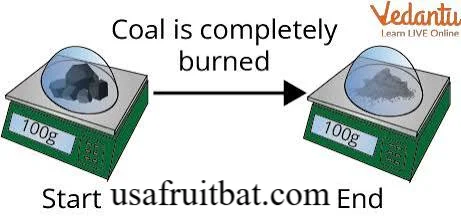
Many people misunderstand this principle because certain changes make matter appear to disappear. For example, when wood burns, most of the original material does not remain as visible ash. Instead, much of it becomes gases that spread into the surrounding air. If you only measure the remaining ash, you may incorrectly assume that matter has been destroyed.
Another common misconception is that matter always stays in the same physical form. In reality, matter can change its state, combine with other substances, or separate into different components. The important point is that these changes do not destroy matter during ordinary chemical reactions.
- Matter disappears when something burns: In reality, gases and other products are released.
- Chemical reactions destroy atoms: Ordinary chemical reactions rearrange atoms rather than destroying them.
- Dissolved substances no longer exist: Their particles remain present even when they cannot be seen.
- Open containers violate the law: Matter may escape, but the overall conservation principle still applies.
- Matter and energy are completely unrelated: Modern physics describes a relationship between mass and energy.
Experiments to Demonstrate the Law of Conservation of Matter
A simple classroom experiment can help you understand how this scientific principle works. One popular activity involves baking soda and vinegar inside a sealed container. The reaction produces carbon dioxide gas, allowing you to observe how substances change while the total mass remains constant.
- A small plastic bottle or suitable sealed reaction container
- Baking soda
- Vinegar
- A small balloon, if using a bottle setup
- A digital weighing scale
- A spoon and funnel
- Pour a small amount of vinegar into the bottle.
- Place baking soda inside a balloon using a funnel.
- Carefully attach the balloon to the bottle without allowing the ingredients to mix.
- Weigh the complete setup and record its mass.
- Lift the balloon so the baking soda falls into the vinegar.
- Allow the reaction to finish while keeping the system sealed.
- Weigh the complete setup again and compare the measurements.
Conclusion
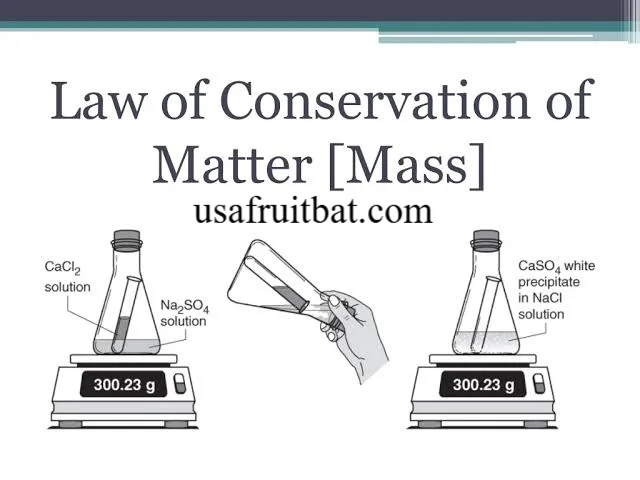
The law of conservation of matter is one of the most important principles in chemistry because it explains how matter behaves during physical and chemical changes. It shows that matter cannot be created or destroyed during ordinary chemical reactions, even when its appearance, structure, or composition changes.
From melting ice and dissolving sugar to burning wood and producing new chemical compounds, this principle helps explain countless everyday processes. Understanding atoms, reactants, products, and closed systems makes the concept easier to recognize in real life. Whether you are studying chemistry or exploring the science behind everyday activities, understanding matter conservation provides a strong foundation for learning how the physical world works.
Frequently Asked Questions
Is the law of conservation of mass and matter the same?
Yes, both terms describe the principle that total mass remains constant during ordinary chemical reactions in a closed system.
Who discovered the law of conservation of matter?
Antoine Lavoisier established the principle of conservation of mass through carefully controlled chemical experiments.
Why is matter not created or destroyed in a chemical reaction?
Atoms are rearranged into new combinations during ordinary chemical reactions rather than being created or destroyed.
What is an example of the law of conservation of matter?
Melting ice is a simple example because solid water changes into liquid water without changing the total amount of matter.
Why is a closed system important for conservation of mass?
A closed system prevents matter from entering or escaping, allowing scientists to measure the total mass accurately before and after a reaction.
Does burning wood violate the law of conservation of matter?
No, because burning wood produces ash, smoke, gases, and other substances that account for the original matter and oxygen involved.
What is the difference between conservation of matter and conservation of energy?
Conservation of matter focuses on mass and substances, while conservation of energy explains how energy changes form without being lost overall.
How can students demonstrate conservation of matter at home?
Students can observe a baking soda and vinegar reaction in a properly sealed container and compare its total mass before and after the reaction.
Also Read